Why Is My CNC Quote for a Metal Prototype So Much Higher?
Sep 07,2026 | Tommy
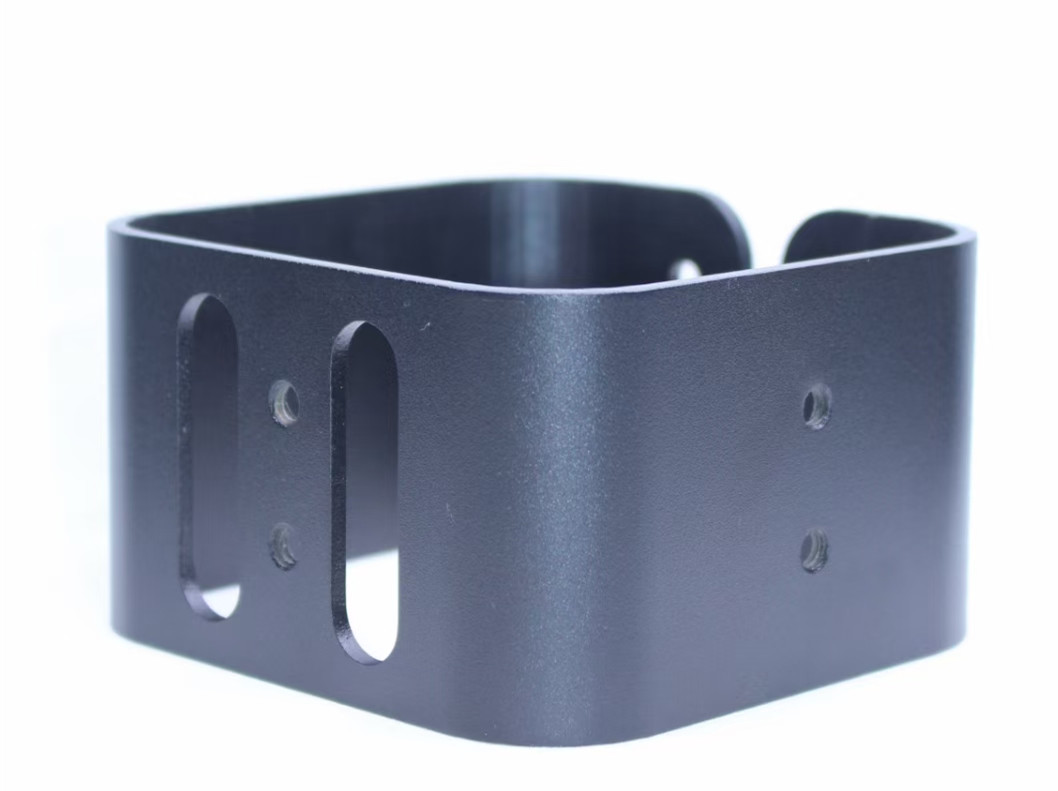
Why Is My CNC Quote for a Metal Prototype So Much Higher Than My 3D Print?
TL;DR: The Quote Isn't Wrong — It's Just Priced Differently
A $20 PLA print and a $200+ Aluminum CNC Prototyping quote for what looks like "the same part" aren't actually pricing the same thing. 3D printing charges almost entirely for material and machine time; CNC machining charges heavily for setup, fixturing, and the operator's attention — costs a printer simply doesn't have.
The fix isn't finding a cheaper shop — it's understanding which parts of a CNC quote are negotiable through design choices, and which aren't. A handful of specific changes to a file, made before it ever reaches a machinist, routinely cut an aluminum prototype quote by 30–50% without touching the material or the shop.
The Pain Points: Where the Sticker Shock Actually Comes From
The jump from a plastic print's price tag to a metal quote catches almost everyone off guard the first time, and it usually comes down to a few specific line items hiding inside that number.
Setup time, not material, drives the price. A CNC quote bakes in the machinist's time to program the toolpath, mount the material, and dial in the fixture — work that has to happen whether the order is for 1 part or 100. On a single prototype, that fixed cost lands entirely on one unit.
Every re-orientation adds a line item. Each time a part has to be unclamped, flipped, and re-clamped to reach a different face, that's additional machine time and additional risk of misalignment — and the quote reflects both.
Tight tolerances get charged by the hour, not the millimeter. A drawing that specifies ±0.01mm across the entire part forces the machine to run slower and get inspected more often everywhere, even on surfaces where that precision serves no functional purpose.
Finish assumptions inflate the number by default. Many shops quietly assume a "nice" finish is wanted and price in bead-blasting or anodizing unless told otherwise — a cost that has nothing to do with whether the part actually needs to look good.
Five Concrete Solutions: How to Bring an Aluminum CNC Prototyping Quote Down
1. Count the Setups Before Submitting the File
Every face that needs machining from a different angle adds a setup, and setups are where the real cost lives.
The solution: sketch out how many sides of the part actually need machined features. If the count is more than two, ask whether splitting the design into two simpler parts — bolted or pinned together afterward — would let each piece machine in a single setup. That single change is often the biggest lever available.
2. Separate "Needs to Be Precise" from "Needs to Exist"
A uniform tolerance across the whole drawing is the single most common way to overpay.
The solution: call out only the features that actually mate with something else — bearing bores, mounting holes, sealing surfaces — as tight tolerance, and explicitly mark everything else as standard. This lets the machinist run fast where speed doesn't cost function, and slow only where it matters.
3. Default to As-Machined Unless Told Otherwise
Finish is one of the easiest costs to accidentally pay for.
The solution: state explicitly that an as-machined finish is acceptable — visible tool marks included — unless the part will be seen by a customer or handled repeatedly. For a test-rig bracket or an internal fixture, this alone can shave 20–30% off the total.
4. Ask for the Quote Broken Down by Line Item
A single lump-sum number hides exactly where the cost is coming from.
The solution: request an itemized quote — material, setup, machine time, and finishing as separate lines. Once setup shows up as its own number, it becomes obvious whether the design or the quantity is the actual driver, and which lever is worth pulling.
5. Batch Small Orders Instead of Ordering One at a Time
Ordering "just one to test" and coming back later for more means paying the setup fee twice.
The solution: if there's any real chance a second revision or a spare will be needed, order 3–5 units in the same run. The incremental cost per additional unit is a fraction of the first, since the expensive part — the setup — is already paid for.
Comparison Table: What Actually Drives an Aluminum CNC Prototyping Quote
|
Cost Driver |
Low Impact on Price |
High Impact on Price |
|
Number of setups |
1 setup, features on one face |
3+ setups, features on multiple faces |
|
Tolerance spec |
Standard ±0.1mm throughout |
Tight ±0.01mm applied everywhere |
|
Finish |
As-machined |
Bead-blasted, anodized, hand-polished |
|
Quantity |
3–5 units in one batch |
Single unit, reordered later |
|
Geometry |
Simple pockets, through-holes |
Undercuts, deep cavities, thin walls |
|
File clarity |
Clean STEP file, marked critical dims |
Ambiguous drawing, no tolerance callouts |
FAQ: Understanding an Aluminum CNC Prototyping Quote
Q: Why did splitting my part into two pieces make it cheaper overall, even with two parts to machine now? Because each simpler piece can often be machined in a single setup, while the original combined part needed three or four re-orientations. Two cheap setups frequently beat one expensive, multi-angle one.
Q: Is it worth asking the shop which tolerances actually matter? Yes — a good shop's engineer will often flag over-specified tolerances during a DFM review before quoting, but it's worth prompting directly: ask which dimensions are driving the price, and whether relaxing the non-critical ones would bring the number down.
Q: Does ordering more units always mean spending more? Not proportionally. The first unit absorbs the entire setup cost; a second, third, or fourth unit typically adds only material and machine time, which is why 3–5 units often costs only 20–30% more than a single unit.
Q: What's the fastest way to get a lower quote without changing the design at all? Ask specifically for an as-machined finish and confirm the part doesn't need cosmetic work. This is the one lever that changes nothing about function or fit while still meaningfully lowering price.
Q: Should the same CAD file used for 3D printing be sent straight to a CNC shop? Not without review — 3D printers can produce sharp internal corners that a round CNC cutting tool physically cannot replicate. Sending the file as-is often triggers a quote for EDM work just to sharpen corners that were never meant to be sharp in metal.
Conclusion: A CNC Quote Reflects Decisions, Not Just Difficulty
An aluminum CNC prototyping quote that looks shocking next to a plastic print isn't evidence of an inflated price — it's a direct reflection of setups, tolerances, and finish choices baked into the file before it was ever sent out. Adjusting those choices, not chasing a cheaper vendor, is usually what actually brings the number down.
Ready to see where your own quote could shrink? Upload your CAD files to Easoonmade for a free DFM review — we'll flag exactly which choices are driving your price up before you commit to a run.
Comment