Vendor Parts So Bad They Look Like a Failed 3D Print?
Sep 07,2026 | Tommy
Vendor Parts So Bad They Look Like a Failed 3D Print: The Crisis of Quality in Metal Parts Manufacturing
TL;DR: When "Close Enough" Isn't Enough
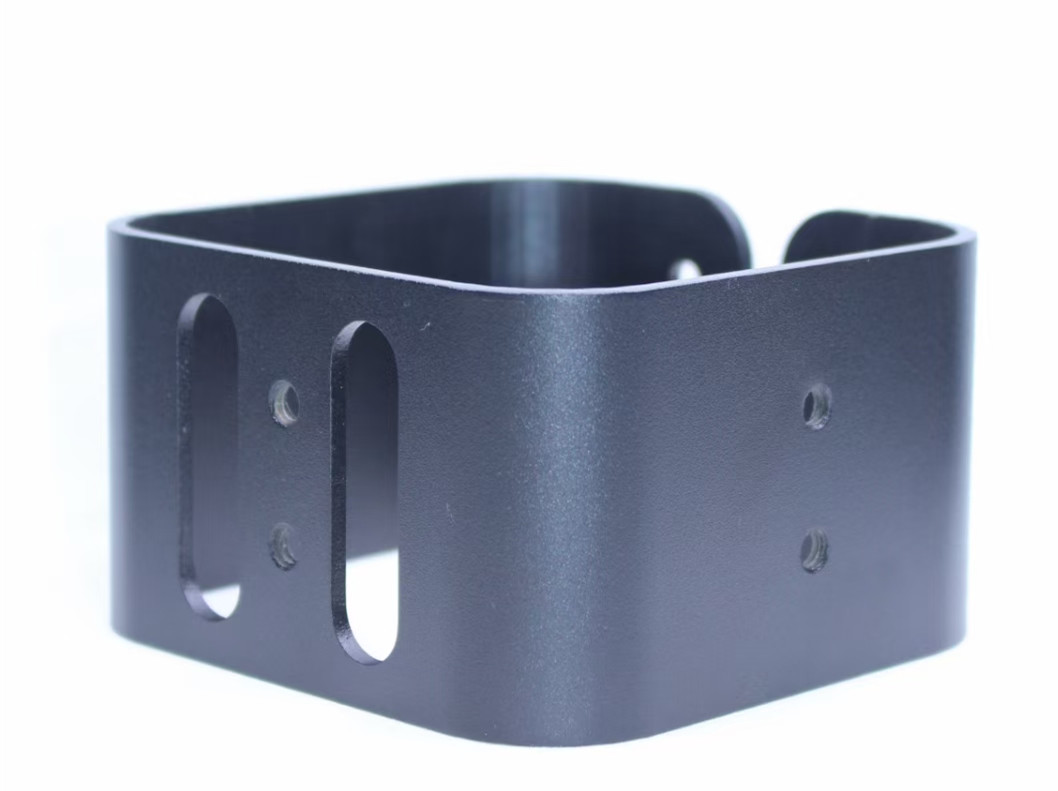
A viral post in the engineering community recently showed aluminum components for a $1M nuclear reactor inspection robot that were machined so poorly they were described as looking like a failed 3D print. For a mechanical engineer or a procurement manager, that's close to the ultimate nightmare.
The takeaway: high-stakes metal parts manufacturing is failing in a lot of places because too many shops have prioritized speed and brokerage over metrology and craftsmanship. When a $500 part can compromise a $1M project, there's no room for a vendor without a genuinely rigorous quality gate. At Easoonmade, mandatory in-process inspection, material traceability, and ISO-certified workflows exist specifically to eliminate the "scrap-in-a-box" surprise — we don't just ship parts, we ship verified data alongside them.
The Pain Points: The High Cost of Low-Quality Vendors
That "failed 3D print" story struck a chord with nearly 800 engineers because it exposed three real cracks running through the current B2B manufacturing landscape.
The ghosting of specifications. A detailed PDF drawing with GD&T (geometric dimensioning and tolerancing) gets sent over, and a surprising number of vendors treat it as a suggestion rather than a requirement — the parts arrive and fail even basic tolerance checks.
The broker problem. Plenty of "digital manufacturing" platforms are really brokers underneath. A project gets quietly outsourced to a third-tier shop the platform has never actually visited — the buyer thinks they're purchasing from a tech-forward company, but the parts are coming out of a garage running 20-year-old machines with dull tooling.
Visible tool chatter and surface gore. Poor feeds and speeds, plus worn-out spindles, produce a surface finish that looks ribbed or stepped — hence the "failed 3D print" comparison. In a nuclear or aerospace context, those surface defects aren't cosmetic; they're stress-concentration points that can lead directly to structural failure.
The reliability gap. Over a long engineering career, only a handful of truly consistent vendors tend to stand out. The inconsistency between "sample A" and "production batch B" is exactly what kills project timelines and burns through engineering budgets.
Five Concrete Solutions: How Easoonmade Solves the Vendor Quality Crisis
1. Total Material Traceability — No "Mystery Meat"
Bad machining often starts with bad material. Uncertified aluminum scrap can carry internal inclusions that cause tool chatter and a poor surface finish downstream.
The solution: every order begins with a verified mill test report (MTR), whether the material is 6061-T6 aluminum or 316L stainless steel — a chemical "birth certificate" that ensures consistent grain structure and makes the mirror-smooth finishes high-precision robotics demand actually achievable.
2. In-Process Inspection — Stopping the Error at the Spindle
The "failed 3D print" look happens when a tool breaks or a spindle starts vibrating, and nobody notices until 50 parts later.
The solution: a first-article-plus-hourly-check system, using on-machine probing to verify critical dimensions during the cycle rather than waiting for the end of the run. If a tool shows even 0.01mm of wear, it gets replaced immediately — stopping a whole batch of scrap before it ever reaches the packing table.
3. Advanced Metrology: CMM as the Final Gate
Trust in an engineering relationship is built on data, not promises. A vendor claiming a part is "within spec" without a coordinate measuring machine is simply guessing.
The solution: a comprehensive inspection report using CMM and optical measuring machines to verify hole positions, parallelism, and surface roughness (Ra). For a $1M nuclear robot, a visual inspection isn't a real quality check — only digital verification actually counts.
4. ISO 9001:2015 as a Culture, Not a Badge
Plenty of shops display the ISO logo on their website while ignoring the documentation discipline it's supposed to represent on the shop floor.
The solution: treating ISO standards as the daily operational manual, not a marketing asset — every non-conformance logged, every tool calibrated on a fixed schedule. Partnering on metal parts manufacturing this way means buying into a system built to eliminate human error, not just a certificate.
5. Direct Engineering Communication (DFM)
The worst parts usually trace back to a design that was almost manufacturable — but the vendor never said anything before cutting.
The solution: an engineering DFM review before the first chip is cut. A feature likely to cause tool vibration or a surface defect gets flagged early, functioning as a manufacturing consultant rather than a silent order-taker — so the final part isn't just technically to spec, it's optimized for the best achievable finish.
Comparison Table: High-Stakes Vendor vs. the "Failed Print" Vendor
|
Feature |
Low-Tier "Failed Print" Shop |
Easoonmade Precision Standard |
|
Material verification |
"Trust us, it's 6061" |
Full mill test reports (MTRs) |
|
Machining quality |
Visible chatter, "3D print" steps |
Ra 0.8–1.6 standard, or mirror finish |
|
Quality control |
Visual eyeball check |
CMM and optical digital verification |
|
Communication |
Ghosting, excuses |
Direct engineering support, DFM included |
|
Outsourcing |
Often brokered to unvetted shops |
Internal control, vetted supply chain |
|
Project fit |
Low-risk hobby parts |
Nuclear, robotics, medical, aerospace |
FAQ: How to Avoid a "Failed Print" Vendor Experience
Q: Why do my aluminum parts have visible "steps" or "lines" on the surface? That's typically tool chatter or a step-over issue — the result of a machine that isn't rigid enough, dull tooling, or a CNC program using a step-over too large for the finish that was actually asked for. A "failed 3D print" look is usually a direct sign of a shop cutting corners on cycle time.
Q: How do I vet a manufacturer before committing $50,000? Ask for three things: a copy of their ISO 9001 certificate, a sample CMM report from a previous project, and photos of the actual machine floor to confirm they're not simply a broker. A manufacturer confident in its own process will hand over all three without hesitation.
Q: Can tight tolerances for nuclear or robotics inspection components actually be held? Yes — tolerances around ±0.005mm are routine for the right shop. For robotics applications where bearing fits are critical, precision boring and honing ensure components move with zero unwanted play.
Q: What's the right move if a vendor sends parts that don't meet spec? Document the failure with photos and a micrometer or caliper reading, then expect a professional manufacturer to issue a return merchandise authorization and prioritize a re-run immediately. If the response is arguing or ghosting instead, that's the signal to find a different partner.
Q: Are finishing services like anodizing or passivation available? Yes, as a full-service offering — with parts inspected before they go into anodizing, specifically so surface defects can't get quietly hidden under the coating.
Conclusion: Don't Let a Bad Part Sink a Great Design
In mechanical engineering, reputation is built on how hardware actually performs. A $1M project delayed because a vendor delivered parts that look like a failed 3D print is exactly the kind of modern procurement failure that should never happen.
Metal parts manufacturing should be a transparent, data-driven process from start to finish — material certs, CMM data, and precision finishes for the robotics and industrial projects that genuinely can't afford to guess.
Tired of "failed print" quality? Contact Easoonmade today to speak with an engineer about your next high-stakes project — let's get your parts right the first time.
Comment