Square Internal Corners in CNC vs. Injection Molding: A DFM Guide
Dec 03,2025 | Tommy
The Impossible Geometry: Why Square Internal Corners Are a Nightmare for CNC
You have just finished designing a perfectly enclosed housing or a box with a stepped lip. In your CAD software, the design looks flawless: crisp lines, tight tolerances, and sharp, 90-degree angles on the inside walls where the lid is supposed to seat. It looks perfect on screen, but when you send the file for a quote, the manufacturing engineer flags it immediately.
This is one of the most common pain points in mechanical design. The issue lies in the physical limitations of Subtractive Manufacturing (CNC Machining). While your CAD software allows for zero-radius corners, the physical tools used to cut metal do not.
If you are looking to move from prototyping to mass production, you need to understand how to handle square internal corners without blowing your budget or compromising part functionality.
The Physics of the Problem: Round Tools, Square Holes
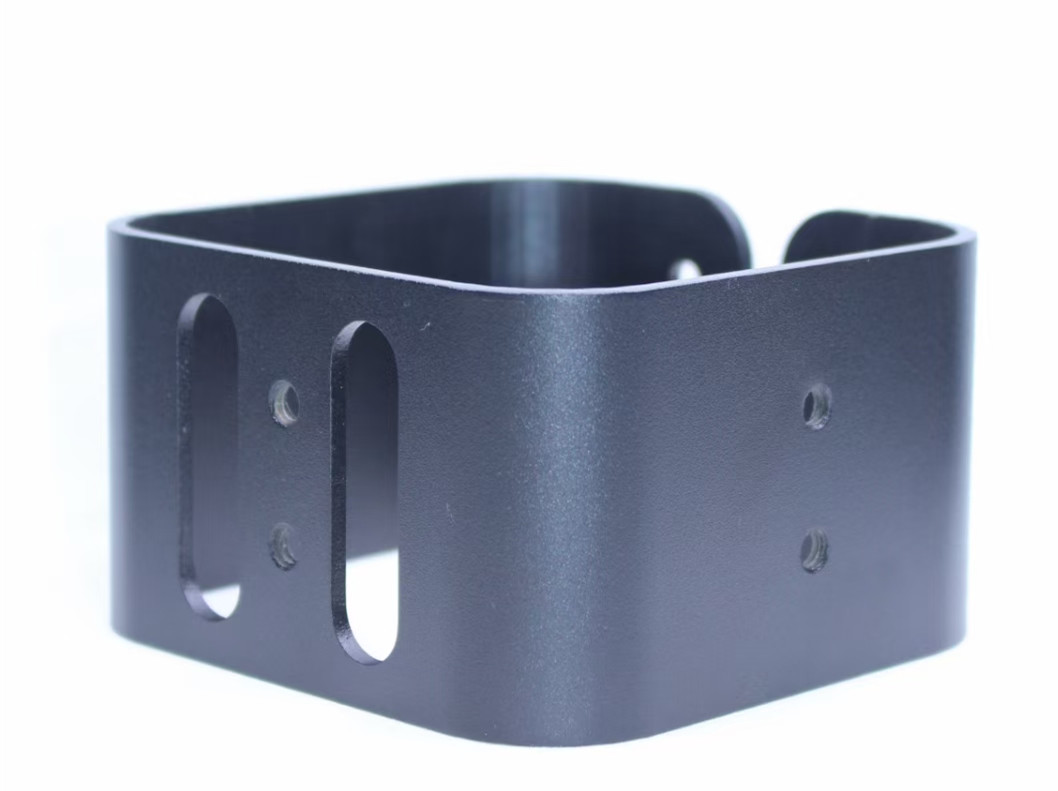
To understand why the red arrows in your design represent a manufacturing challenge, you have to look at how a CNC mill operates. CNC milling cutters (end mills) are cylindrical and rotate at high speeds to remove material.
Because the tool is round, it will always leave a radius in any internal corner it cuts. It is physically impossible for a rotating round tool to cut a perfectly sharp square corner from a top-down perspective.
If you demand a sharp corner in a standard CNC process, the machine shop has to use smaller and smaller tools to reduce the radius, which increases machining time and risk of tool breakage. However, even the smallest tool will still leave a microscopic radius; it will never be a true 90-degree angle.
Solution 1: Design Modification (The "Dog-Bone" Approach)
If your part requires a square rectangular object to fit inside that pocket (like a battery or a PCB), the most cost-effective solution is to change the design rather than the manufacturing method.
Engineers often use "Dog-bone" or "T-bone" fillets. This involves cutting a small circular over-cut into the corners. This allows the mating square part to sit flush against the walls without interference from the corner radius. While this changes the aesthetic slightly, it significantly reduces machining costs and allows the use of standard tooling.
Alternatively, if the mating part does not have sharp corners, simply adding a corner radius to your internal walls that matches standard tool sizes (e.g., 3mm, 6mm) is the best Design for Manufacturing (DFM) practice.
Solution 2: Electrical Discharge Machining (EDM)
Sometimes, design changes are not an option. You might need a perfect seal, or the cosmetic requirements prohibit dog-bone fillets. In this case, how do you achieve a true square internal corner?
The answer is EDM (Electrical Discharge Machining), specifically Sinker EDM.
In this process, a custom electrode (usually made of copper or graphite) is machined into the exact square shape required. High-voltage electricity is then used to burn the material away, creating a perfectly sharp corner.
Pros:
-
Achieves true 90-degree sharp corners.
-
High precision.
Cons:
-
Significantly increases cost (requires making a custom electrode + the EDM process).
-
Slower lead times.
Mass Production: Can Injection Molding Do Square Corners?
The user explicitly asked: Can mass production achieve these right angles?
The short answer is yes.
When you transition from CNC machining (prototyping) to Injection Molding (mass production), the rules change. In injection molding, the part is formed by liquid plastic filling a mold cavity.
The mold tool itself is made of steel. To create the square corner in your plastic part, the mold tool must have a corresponding square protrusion. Mold makers create these square features using EDM or by building the mold with segmented inserts.
Therefore, you do not necessarily need to change your design for injection molding. The process can replicate the sharp corners shown in your image.
However, a warning on stress: Just because you can mold a sharp corner doesn't mean you should. Sharp corners in plastic parts act as "stress concentrators." When the part is under load or impact, the stress gathers at the sharp corner, leading to cracks and failure. It is almost always recommended to add at least a minimal radius to internal corners in molded parts to improve material flow and part durability.
How HLH Prototypes Solves This for You
Navigating the gap between a CAD model and a physical part requires experience. This is where HLH Prototypes excels as a manufacturing partner.
When you submit a design with sharp internal corners to HLH, their engineering team doesn't just reject it or guess your verification. They apply a comprehensive DFM review process:
-
For Rapid Prototyping (CNC): HLH engineers will identify the sharp corners and ask if they are critical for assembly. If they are not, they will suggest a standard corner radius to save you money. If they are critical, they will deploy their precision EDM capabilities to create the feature exactly as drawn.
-
For Mass Production (Injection Molding): HLH will analyze the mold flow. If the sharp corners pose a risk of cracking or warping, they will advise on the minimum viable radius that maintains your assembly requirements while ensuring part longevity.
Whether you need the speed of CNC or the scalability of injection molding, understanding the limitations of corner geometry is the key to a successful product launch.
Ready to get your design validated? Upload your CAD files to HLH Prototypes today for a professional DFM review.
Comment