How to Fix Uneven Anodizing on 5052 Aluminum After Welding | Custom Sheet Metal Solutions
Dec 03,2025 | Tommy
Why Does 5052 Aluminum Turn Uneven After Anodizing? (Common Pain Point Explained)
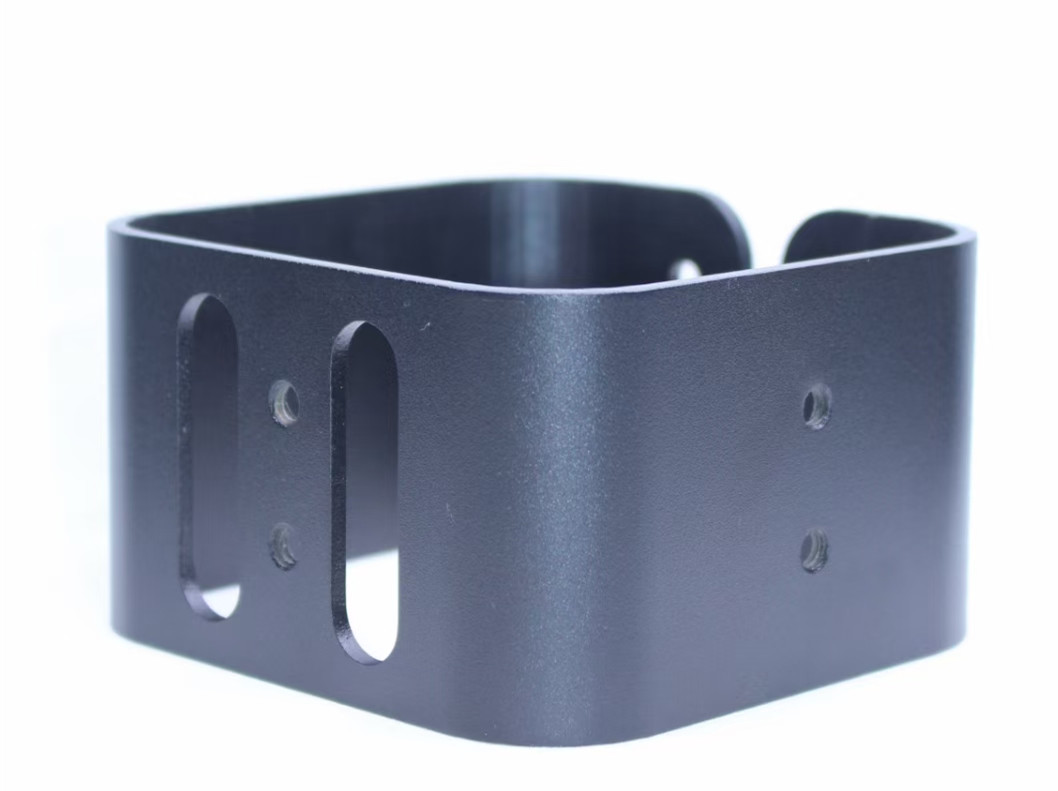
Many engineers and buyers face a frustrating situation: a CNC-bent and welded 5052 aluminum part looks perfect in raw metal, but after anodizing, the color becomes uneven, especially around welded or hidden areas. The example shown above—where a welded joint traps acid and affects the final anodized finish—is one of the most common challenges in custom sheet metal fabrication.
This color inconsistency does not always indicate poor workmanship. In many cases, it comes from the material properties of 5052, the heat-affected zone, and surface conditions after welding. So what can be done to prevent or reduce this issue? And how do major suppliers such as Xometry typically deal with it?
This blog breaks everything down step by step.
What Causes Anodizing Color Mismatch on 5052 Aluminum?
1. Welding Changes the Surface Density
Welding generates heat that changes the microstructure of the aluminum around the joint. This heat-affected zone absorbs the anodizing dye differently, resulting in a noticeably darker or lighter shade.
Related keyword: welding discoloration aluminum
2. Acid Residue Trapped in Corners or Gaps
During cleaning or pre-treatment, chemical solutions can become trapped in tight corners or between welded layers. After anodizing, this trapped residue creates blotches or stains.
This is very common in sheet metal parts with overlapping structures, such as the part in your pictures.
3. 5052 Aluminum Is Not the Most “Color-Stable” Alloy for Anodizing
Compared with 6061, aluminum 5052 often shows more variation in color because of its magnesium content. It anodizes well, but not always with perfect uniformity—especially after welding.
Low-competition keyword: anodizing 5052 magnesium effect
How Can You Fix Uneven Anodizing on Welded 5052 Aluminum? (Q&A Format)
Q1: Can polishing the welded area help?
A: Yes. Manual polishing, orbital sanding, or Scotch-Brite finishing can reduce the sharp contrast between welded and non-welded areas. The goal is to create a uniform surface roughness before anodizing.
Q2: Does chemical etching before anodizing help?
A: Most anodizing shops will do a light etch. However, a deep etch can help even out the surface color—but it also rounds edges and reduces dimensional accuracy. For cosmetic parts, deeper etching is often worth considering.
Q3: Can changing the anodizing type solve the problem?
A: Sometimes.
-
Type II (standard) anodizing shows color differences more easily.
-
Type III hard anodizing can reduce color variation, but cannot eliminate it entirely.
Related keyword: anodizing troubleshooting guide
Q4: Can the welding process be adjusted?
A: Yes.
Using lower heat input, smaller filler rod, or TIG welding can reduce heat-affected zone discoloration. Some shops also use post-weld blending to smooth transitions.
Q5: Is powder coating a better choice?
A: If the goal is a perfectly uniform color across the entire part—including welded zones—powder coating may be a more reliable option than anodizing.
How Do Top Suppliers Like Xometry Handle This?
Xometry and other Tier-1 fabrication suppliers typically follow these steps:
1. They warn customers about color variation in welded 5052 aluminum
Most high-volume suppliers clearly state that anodizing uniformity cannot be guaranteed when welding is involved. This avoids false expectations.
2. They apply thorough pre-cleaning and ultrasonic washing
Professional shops use multi-stage cleaning to prevent chemical residue from being trapped during anodizing.
3. They perform post-weld mechanical finishing
Grinding, polishing, or bead blasting is used to create a more consistent surface before anodizing.
Related keyword: aluminum welding prep
4. They recommend controlled welding parameters
Lower heat input = less anodizing color difference.
5. For cosmetic parts, they suggest design adjustments
Xometry often recommends:
-
avoiding overlapping plates
-
avoiding deep cavities where acid can hide
-
switching from 5052 to 6061 for better color consistency
-
switching from anodizing to powder coating if perfect color match is required
What Is the Most Practical Solution for Your Project?
If your part is primarily functional, small color differences may be acceptable. But if cosmetic appearance is important, consider:
-
post-weld surface smoothing
-
bead blasting before anodizing
-
material change
-
coating change
-
design modification to avoid trapped chemical zones
Every solution depends on your tolerance level, cost, and desired finish.
Comment