Recommendations for Reliable US-Based CNC Suppliers?
Sep 07,2026 | Tommy
Recommendations for Reliable US-Based CNC Suppliers?
TL;DR: The "Sweet Spot" of Modern Manufacturing
If you're searching for CNC machining services that can handle 50–100 parts a month with a sub-3-week turnaround, you're really looking for the Goldilocks of the manufacturing world — a shop large enough to run 5-axis machines and in-house EDM, but small enough to still care about a low-volume order.
A truly reliable partner needs three things: automated-fast quoting speed, material-specific expertise (especially with copper and steel), and integrated finishing services. Easoonmade specializes in exactly this "bridge production" zone — the responsiveness of a local shop combined with the technical capacity of a global precision manufacturer.
The Pain Points: Why "Reliable" Is Hard to Find
A common frustration among professional buyers is that the market splits into two extremes: digital giants that are fast but expensive, and old-school shops that are affordable but slow. Neither extreme actually serves the 50–100 unit order well.
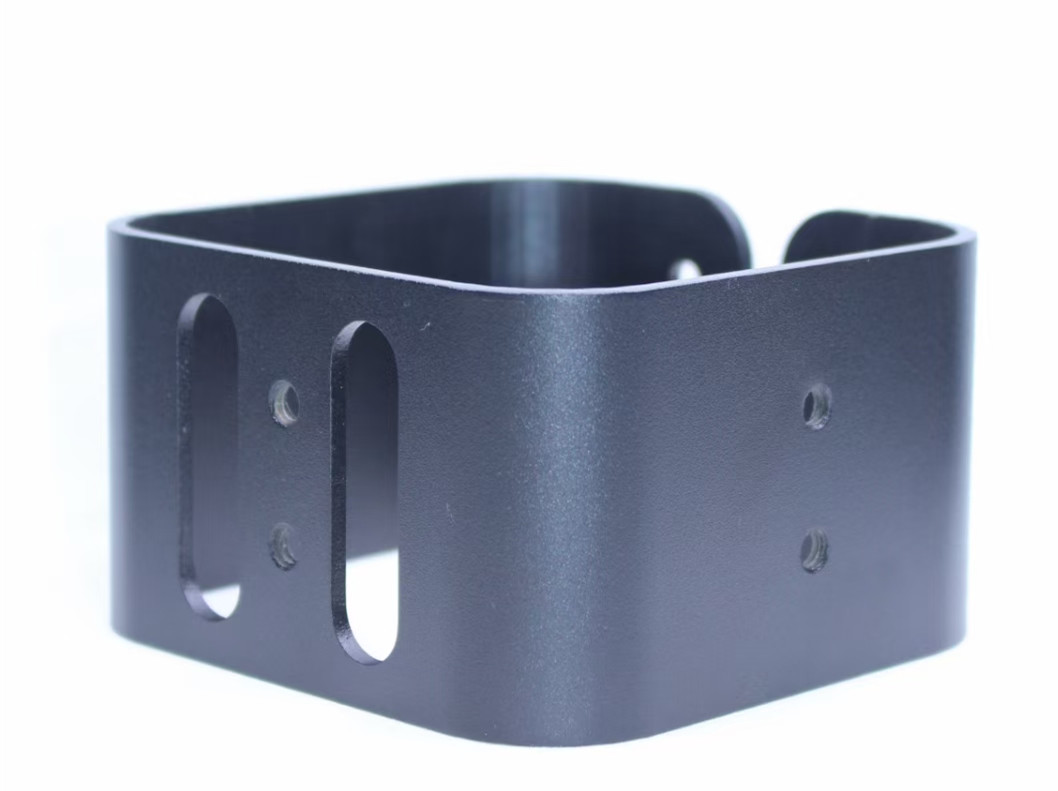
The quote-ghosting problem. An RFQ goes out for 50 aluminum housings, and it takes the shop seven days just to reply. On a fast-moving hardware project, a one-week delay in quoting becomes a one-week delay in shipping before production has even started.
The 3-week deadline barrier. Most traditional shops quote a standard lead time of 6–8 weeks. Needing parts inside 21 days often means paying a 50% expedite fee — one that quietly kills the project's margins.
Material struggles. Nearly every shop can machine 6061 aluminum. Far fewer can handle oxygen-free copper, which is soft and gummy and clogs cutting tools, or hardened steel, which demands serious machine rigidity.
The finishing fail. A great CNC shop is found — but they outsource anodizing to a third party. That adds two weeks to the lead time and creates a quality vacuum where nobody takes responsibility if the surface finish comes back wrong.
The no-man's-land volume. 50–100 parts is too many for a prototype-only shop and too few for a mass-production house, which often means inconsistent pricing and "filler job" status rather than real priority.
Five Concrete Solutions for Sourcing Low-Volume Precision Parts
1. Prioritize Technical Quoting Over Purely Automated Quoting
Instant-quote platforms are fast, but they routinely miss design nuances that surface as design-for-assembly problems later.
The solution: rapid technical quoting with a 24-hour turnaround, where an actual engineer reviews the file for EDM requirements, tolerance stacking, and material suitability — so the price quoted is the price that actually produces a functional part.
2. Master the Mix of 3-Axis and 5-Axis Milling
At the 50–100 part scale, efficiency comes down to reducing setups. Every manual re-clamp adds labor cost and another chance for error.
The solution: 5-axis milling for complex geometries in aluminum and steel, machining nearly all surfaces in a single setup. That keeps GD&T tolerances tight and cuts production time enough to hit a genuine 3-week window.
3. Integrated EDM for Sharp Internal Corners
A spinning CNC drill physically cannot cut a perfectly sharp internal corner. A square pocket for a sensor or mating part needs EDM (electrical discharge machining) instead.
The solution: wire EDM and sinker EDM integrated alongside the CNC centers, so a difficult internal feature never has to ship out to a separate shop — keeping the whole project under one roof and on schedule.
4. Dedicated Material Lines for Copper and Stainless Steel
Copper needs different spindle speeds and coolant strategies than aluminum. Run both on the same setup, and copper parts come back with burrs and degraded conductivity.
The solution: dedicated workflows for the "difficult" materials — C101/C110 copper for electronics, 303/304/316 stainless steel for medical and industrial use — each with its own tooling and speeds for a clean, burr-free finish every time.
5. In-House Anodizing and Surface Finishing
Surface finishing is where most 3-week deadlines quietly die.
The solution: finishing managed as an integrated production step, not an outsourced afterthought — Type II/III anodizing, passivation, and electroless nickel plating all under the same QC standard applied at the CNC machine. No third-party delay, no finger-pointing if a finish comes back wrong.
Comparison Table: Sourcing Strategies for CNC Machining
|
Feature |
Large Digital Platforms |
Local "Mom & Pop" Shops |
Easoonmade Hybrid Model |
|
Quoting speed |
Instant, automated |
3–7 days |
24 hours, technical review |
|
Lead time (50 parts) |
1–2 weeks at a premium price |
4–8 weeks |
2–3 weeks, standard |
|
Material range |
Limited, standard alloys |
Varies widely |
Aluminum, steel, copper, titanium |
|
Complexity (EDM / 5-axis) |
Limited to simple geometry |
Often 3-axis only |
Full 5-axis and EDM |
|
Technical support |
Minimal, self-service |
High but slow |
Dedicated project engineer |
|
Unit price (100 pcs) |
Very high |
Moderate |
Highly competitive |
FAQ: Professional Sourcing for CNC Machining Services
Q: Can you actually turn around 100 parts in under 3 weeks? Yes, provided the design for manufacturing is clear from the start. Using 5-axis machines to cut down on setups and managing finishing in-house typically moves a project from quote to shipping in about 15–18 business days.
Q: Why is copper more expensive to machine than aluminum? Copper is soft and gummy, which makes it stick to cutting tools. It needs slower machining speeds and specialized cutters to avoid tool breakage and keep the surface finish clean, and its high thermal conductivity makes heat management a real factor during the cut.
Q: Do you provide ISO-certified quality reports? Yes — every precision order comes with a dimensional inspection report, and medical or aerospace projects can get full material traceability (MTRs) and a certificate of conformance.
Q: Is 3-axis or 5-axis better for a 6061 aluminum part? It depends on the geometry. Features on only one or two sides usually make 3-axis more cost-effective. Complex features across multiple faces often make 5-axis cheaper in practice, since it eliminates the labor cost of building multiple custom jigs and fixtures.
Q: How do you keep anodizing consistent across batches? Consistency comes down to controlling the alloy (never mixing 6061 and 7075 in the same batch) and the tank chemistry. Digital color matching and tightly controlled chemical baths keep part #1 and part #100 looking identical.
Conclusion: Reliability Is a Result of Process, Not Luck
Finding a CNC machining services provider that stays dependable month after month takes a partner who actually understands the specific pressures of low-volume production. Whether the material is aluminum, steel, or copper, the real goal is removing friction from the supply chain — not chasing the cheapest quote.
At Easoonmade, that's the exact gap we're built to fill: the speed of a digital-age quoting process paired with the hands-on technical expertise of a master machine shop.
Stop waiting on your quotes and start building your product. Upload your CAD files to Easoonmade today for a 24-hour technical quote and a 3-week delivery guarantee — let's get your project moving.
Comment