How Would You Manufacture This Part from Metal? | Easoonmade Guide
Sep 22,2026 | Tommy
How Would You Manufacture This Part from Metal?
A CAD model lands on r/manufacturing with one blunt question in the title: "How would you manufacture this part from metal?" The part itself is the problem — a six-inch, spider-like lattice shell, tapered walls, mounting eyelets buried inside overhangs, and webbing that exists purely for looks. Within hours the thread fills with machinists, toolmakers, and foundry engineers arguing over whether it's even makeable without warping, cracking, or blowing the budget.
If you're staring at a similarly stubborn organic geometry — a generative mesh, a sculpted enclosure, a part your CAM software keeps flagging — this guide breaks down exactly why parts like this fight back, and lays out five manufacturing paths that actually get them into production.
TL;DR: Quick Takeaways
- The core problem: thin lattice webbing, inconsistent wall thickness, buried overhangs, and precision mounting points make straight 5-axis CNC either impossibly expensive or geometrically impossible.
- Prototyping / under 100 units: metal 3D printing (DMLS/SLM) or investment casting from a 3D-printed sacrificial pattern.
- 100–10,000+ units: modular sheet metal fabrication (laser-cut, formed, welded) or die casting, once the design has been through real DFM review.
- The rule that saves the most money: check whether the lattice is load-bearing. If it's purely cosmetic, splitting the part into sub-assemblies or thinning non-critical walls collapses tooling cost and unit price.
- Where to start: upload your CAD file to Easoonmade (easoonmade.com) for a free DFM review and a manufacturing quote across CNC, casting, additive, and sheet metal.
Why Lattice and Shell Parts Fight the Shop Floor
Before picking a process, it helps to understand exactly what's breaking quotes and tool paths:
+-----------------------------------------------------------------------------------+
| STRUCTURAL & DFM CHALLENGES |
+-----------------------------------------------------------------------------------+
| 1. Thin, unsupported webbing --> tool chatter, vibration, warping |
| 2. Buried internal overhangs --> undercuts unreachable by 3- or 5-axis CNC |
| 3. Variable wall thickness --> shrinkage voids and porosity in casting |
| 4. Tight mounting tolerances --> secondary machining after casting/printing |
+-----------------------------------------------------------------------------------+
Tool access. Milling cutters need a straight line to the surface. Curved undercuts and intersecting lattice bars often have none, short of custom tooling or a full multi-axis setup that erases any cost advantage.
Support removal. FDM and standard resin printing struggle here too — breaking supports off spidery ribs usually breaks the ribs.
Uneven cooling. Pour molten metal into a shape that swings from thick eyelets to hair-thin webbing, and the thin sections cool first, pulling the part out of shape or leaving shrinkage voids behind.
Material behavior. Copper and its alloys conduct heat too well for clean chip evacuation; stainless and superalloys chew through tooling. Either way, machinability drops as complexity rises.
Five Ways to Actually Build It
Which path wins comes down to volume, budget, strength requirements, and how fast you need parts in hand.
- Metal 3D Printing (DMLS/SLM) — best for 1–50 units. A fiber laser fuses metal powder in 20–40 micron layers, so the printer never "sees" an undercut the way a cutter does — lattices, internal channels, and organic topology all print as drawn. No tooling cost, and materials span 316L and 17-4PH stainless, AlSi10Mg aluminum, Ti6Al4V titanium, Inconel 718, and copper alloys. The trade-off is per-part cost and an as-printed surface around Ra 6.3–12.5 µm, so mounting faces usually need a secondary CNC pass or bead blasting.
- Investment Casting from a Printed Pattern — best for 50–2,000 units. Instead of cutting a wax-injection tool, print a burnable resin pattern on an SLA/DLP printer, coat it in ceramic slurry, burn it out, and pour metal into the cavity. Molten bronze, brass, aluminum, or stainless flows into thin ceramic channels under vacuum or centrifugal force, so fine webbing and cosmetic detail survive the process, and the surface finish comes out smooth enough to skip heavy post-processing. It's a natural bridge: start on printed patterns for speed, move to steel tooling once volume justifies it.
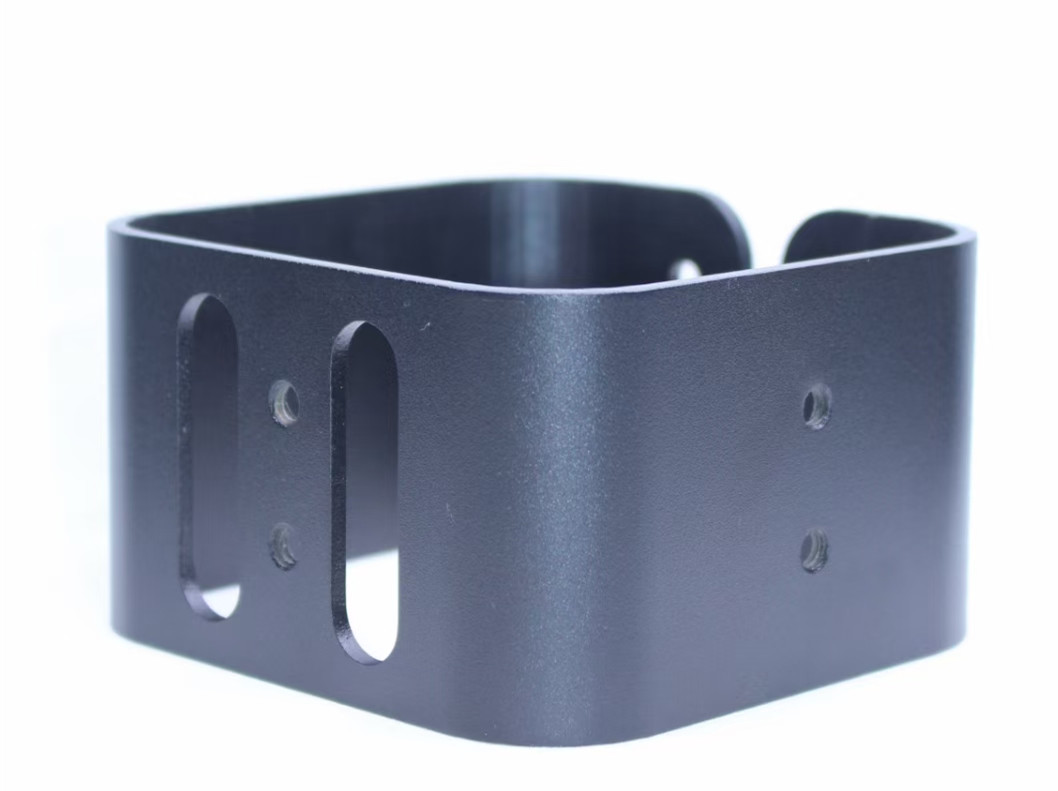
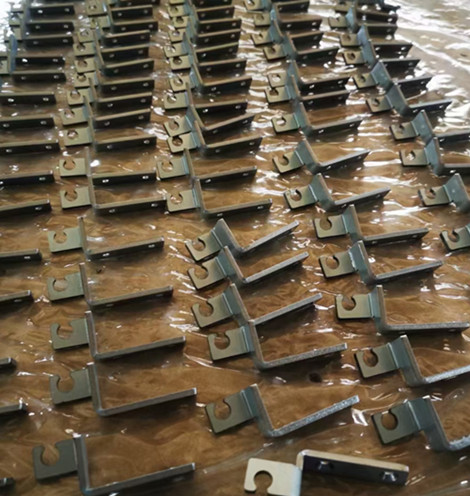
- Modular Sheet Metal Fabrication — best for 1,000–50,000+ units. If the lattice is decorative rather than structural, the highest-leverage DFM move is to stop treating it as one solid part. Laser- or waterjet-cut the flat pattern from 1.5–4mm sheet, form it over a curved die or hydroforming block, machine the heavy mounting eyelets separately on a CNC lathe or mill, then weld, rivet, or braze the pieces together and blend the joints. Splitting the geometry this way can cut unit cost by up to 70% against solid machining or printing, with production cycles measured in seconds per part once tooling is set.
- High-Pressure Die Casting (HPDC) — best for 5,000–100,000+ units per year. At real volume, aluminum (A380/ADC12) or zinc (Zamak 3/5) die casting becomes the default. It only works if the design follows the rules: 1.5°–3° draft on every vertical wall so the part ejects cleanly, generous fillets (R ≥ 1.0mm) at lattice intersections to stop stress concentration and mold wear, and wall thickness held to a consistent 2.0–4.0mm to avoid sink marks and gas porosity.
- Metal Injection Molding (MIM) — best for parts under 100mm at 10,000+ units. MIM blends fine metal powder with a polymer binder, injects it like plastic, debinds it, and sinters it to roughly 98% theoretical density. It handles extremely intricate small geometry at tolerances around ±0.3–0.5%, but tooling runs $10,000–$30,000+, so it only pays off once volume is genuinely high.
Process Comparison at a Glance
|
Feature |
DMLS / Metal 3D Printing |
Investment Casting |
Sheet Metal Stamping & Assembly |
HPDC |
MIM |
|
Optimal volume |
1–100 pcs |
50–2,000 pcs |
1,000–50,000 pcs |
5,000–100,000+ pcs |
10,000–500,000+ pcs |
|
Tooling cost |
$0 |
Low ($200–$2,000) |
Moderate ($1,500–$5,000) |
High ($8,000–$30,000) |
Very high ($12,000–$35,000) |
|
Unit cost |
High |
Moderate |
Low |
Very low |
Lowest at volume |
|
Lead time |
3–7 days |
2–4 weeks |
2–3 weeks |
4–8 weeks |
6–10 weeks |
|
Geometric complexity |
Unlimited |
High |
Moderate (needs DFM) |
Moderate (needs drafts) |
High |
|
Typical materials |
Stainless, Al, Ti, Inconel |
Bronze, Al, steel, copper |
Steel, stainless, Al |
Aluminum, zinc |
Stainless, titanium, steels |
|
Surface finish |
Ra 6.3–12.5 µm |
Ra 3.2–6.3 µm |
Ra 1.6–3.2 µm |
Ra 1.6–3.2 µm |
Ra 0.8–1.6 µm |
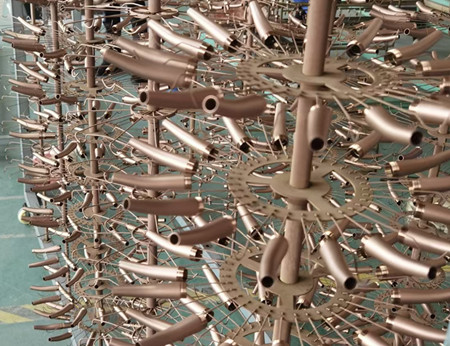
Once the base part exists, finishing closes the gap between "manufactured" and "presentable": vibratory tumbling blends seam lines, bead blasting evens out a matte finish across curved lattice surfaces, and electroplating or anodizing lets you build in an economical alloy and finish it to look like something far more expensive.
FAQ
- How do I get an accurate quote for a complex metal part? Upload STEP, IGES, or X_T CAD files along with a 2D drawing that calls out critical dimensions, surface finish, material grade, and expected quantity. Submit them at Easoonmade.com for a rapid quote and a free DFM review.
- Can a standard desktop FDM printer make a metal part directly? No — plain PLA/ABS FDM can't print metal. Metal-filled filament systems can, after debinding and sintering, and standard resin or FDM printers are commonly used to print sacrificial patterns for investment casting instead.
- I want a copper look without copper's cost — what should I use? Pure copper is expensive and hard to machine or cast cleanly due to its thermal conductivity. Casting or machining the part in zinc alloy or aluminum and finishing it with electroplated copper or a PVD antique-copper coating gets the same look for less.
- How do I redesign a complex CAD model to cut manufacturing cost? Keep wall thickness consistent instead of mixing thick bases with paper-thin ribs, add 1.5°–3° draft if die casting is on the table, eliminate undercuts where possible or split them into sub-components, and relax cosmetic tolerances to ±0.1mm instead of ±0.01mm wherever function allows.
- Which process should I start with if I'm not sure of my final volume yet? Start with metal 3D printing or a printed-pattern investment casting run — both skip tooling entirely, so you can validate fit and function before committing to a die-cast or MIM tool.
Turn Your Complex Metal Concepts into Reality with Easoonmade
A part that looks unmanufacturable on first glance usually just needs the right process — and the right DFM eye — applied to it. At Easoonmade, our engineering team works across CNC machining, investment and die casting, metal 3D printing, sheet metal fabrication, and custom surface finishing, and reviews every file for manufacturability before a single quote goes out.
📩 Ready to get started? Visit easoonmade.com to upload your CAD model and request a custom metal part manufacturing quote today.
Comment