Custom CNC Machining Motorcycle Parts: Billet Precision | EasoonMade
Sep 12,2026 | Tommy
Is CNC Billet Really as Strong as Forged for Motorcycle Parts?
Anyone who's spent time in custom bike-build and motorsport forums has run into this debate. A rider or shop owner is choosing between a forged triple clamp and a CNC-machined billet one, and someone inevitably says forging wins on strength, full stop. Others push back — with the right billet stock and design, CNC-machined parts hold up just fine, and you get precision and design freedom forging can't match.
Both sides have a point, and the real answer depends on the part, the load case, and how the machining is actually done. For custom builders, aftermarket brands, and race teams sourcing one-off or small-batch motorcycle components, understanding this trade-off — and knowing how to machine billet parts correctly — is the difference between a part that lasts and one that fails at the worst possible moment.
This guide breaks down when CNC billet is the right call, where it falls short of forging, and the specific process controls that make a billet-machined motorcycle part genuinely reliable.
TL;DR: The Executive Summary
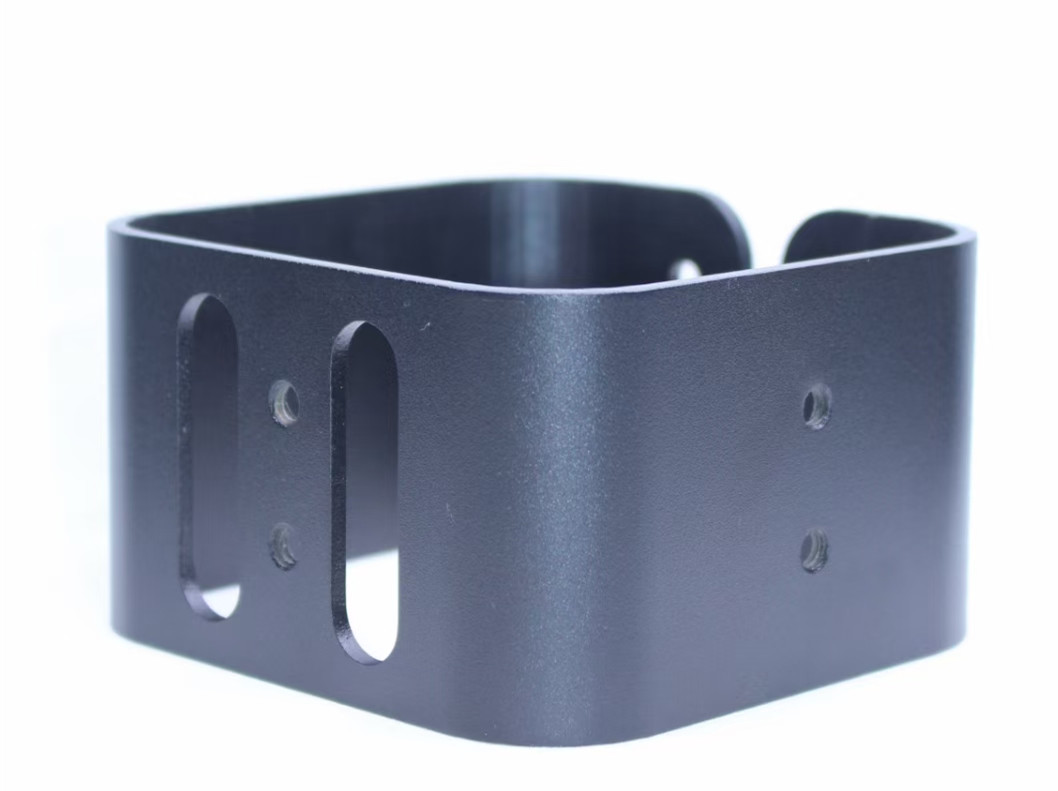
Forging generally wins on raw impact toughness for the highest-load applications because of its refined, continuous grain flow. But for the vast majority of motorcycle components — triple clamps, rearsets, engine covers, sprockets, brake components, custom brackets — properly designed CNC-machined billet aluminum (typically 6061-T6 or 7075-T6) delivers equal or better real-world performance, tighter tolerances, better fitment, and far more design freedom than forging, without the tooling investment forged parts require. The key variables that separate a reliable billet part from a weak one are grain-direction awareness in the design, correct alloy selection for the load case, and dimensionally-aware anodizing. EasoonMade builds all three into every custom motorcycle CNC project.
The Pain Points: Why Custom Motorcycle Parts Are Hard to Get Right
The Forged-vs-Billet Strength Question. Forged parts have continuous internal grain flow that follows the part's shape, giving genuinely higher impact toughness for parts like connecting rods or crank components. But billet machining cuts across the grain of the raw stock, and if the design and toolpath don't account for that, wall sections can be weaker than they look on paper.
Tight-Tolerance Fitment Across Bike Variants. A single aftermarket part — a rearset bracket, a swingarm spool, a triple clamp — often needs to fit multiple model years or trims of the same bike. Small deviations in bore spacing or fastener pattern that seem trivial on a drawing become a part that simply won't bolt on.
Anodizing Changes Final Dimensions. Anodized finishes are extremely popular for motorcycle parts (color, corrosion resistance, wear resistance), but the anodizing process actually converts surface aluminum into oxide and builds outward. If final tolerances are set before this is accounted for, bores tighten up, threads bind, and bearing fits go out of spec.
Low-Volume Economics. Custom motorcycle parts are rarely ordered in the thousands. A shop might need 20 triple clamps or 50 brake caliper brackets — a volume where traditional casting or forging tooling costs are impossible to justify, but where "one-off machining" pricing can also get expensive fast if the supplier isn't set up for repeat small batches.
Complex Geometry With Deep Pockets and Thin Walls. Lightweight motorcycle components often combine deep pockets, thin webs, and sharp internal corners for weight savings — exactly the geometry that increases tool deflection risk and threatens tolerance if the machining strategy isn't planned around it.
5 Specific Solutions for Reliable Custom Motorcycle CNC Parts
- Grain-Direction-Aware Design Review Before cutting any metal, our engineers review part geometry against expected load paths and orient the billet stock so the primary stress direction runs with, not across, the strongest grain orientation available in the raw material. For genuinely high-impact parts (some crank or connecting-rod-adjacent components), we'll flag when forging is actually the better process and say so.
- Application-Matched Alloy Selection 6061-T6 is the workhorse for most brackets, covers, and structural components — a strong balance of machinability, corrosion resistance, and finishing flexibility. For higher-stress parts like triple clamps and rearsets, we step up to 7075-T6, which offers significantly higher strength at a modest weight and machinability trade-off.
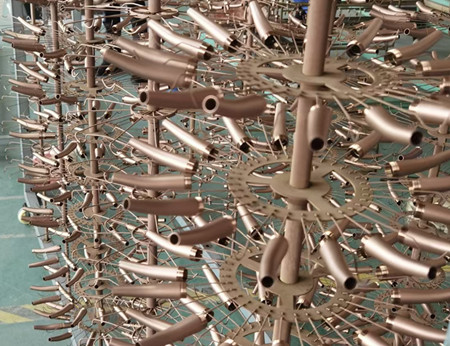
- Dimension Planning Around the Anodizing Process We calculate anodizing build-up before final dimensions are frozen, and mask threaded holes, bearing bores, and sealing faces that can't tolerate coating thickness. This is decided at the design stage, not discovered after a batch of parts won't assemble.
- Multi-Axis Machining for Complex Geometry 4- and 5-axis CNC machining lets us cut deep pockets, undercuts, and organic curved surfaces in a single setup, holding tolerances down to ±0.0003 in. (±0.0076 mm) on critical features, without the repositioning error that comes from multiple 3-axis setups.
- Batch-Optimized Fixturing for Small-Run Economics For repeat orders of 20–200 units, we build dedicated fixturing once, then run subsequent batches at a fraction of the per-part setup cost of true one-off machining. This lets aftermarket brands and race teams get real production economics without committing to casting or forging tooling.
Comparison: Forged vs. CNC Billet vs. Cast for Motorcycle Parts
|
Feature |
Forged |
CNC Billet Machining |
Sand/Die Cast |
|
Best For |
Highest-impact parts (rods, cranks) |
Brackets, triple clamps, covers, rearsets |
High-volume repeat parts (1000+) |
|
Impact Toughness |
Highest |
High (with correct design) |
Lower, prone to porosity |
|
Design Complexity |
Limited by die shape |
Very high — any CAD geometry |
Moderate |
|
Tolerance Capability |
Moderate |
Excellent (±0.0003 in.) |
Moderate |
|
Tooling Cost |
High (forging dies) |
None |
High (casting dies) |
|
Best Fit for Low Volume (10–200 units) |
Poor economics |
Excellent |
Poor economics |
FAQ: Common Questions About Custom Motorcycle CNC Parts
Q: Will a CNC billet triple clamp really hold up to track use? A: Yes, when the alloy and design account for the actual load path — 7075-T6 billet triple clamps are widely used in racing applications and routinely match or exceed OEM cast or forged equivalents in real-world use.
Q: Why did my anodized part not thread together correctly? A: This almost always means anodizing build-up wasn't accounted for before final machining dimensions were set. Threads and bearing fits need to be masked or dimensioned with the coating thickness in mind from the start.
Q: Can you match an existing part without a CAD file? A: Yes. We 3D scan the original part or a good sample, reconstruct clean CAD geometry from it, and can adjust for wear, fitment corrections, or design improvements before machining.
Q: What's the minimum order quantity for custom motorcycle parts? A: There's no hard minimum — we regularly run true one-off prototypes as well as small batches of 20–200 units. Batches benefit from lower per-part setup cost once dedicated fixturing is built.
Q: How do I know if my part needs forging instead of billet machining? A: If the part sees sustained high-cycle impact loading in a small cross-section — classic examples are connecting rods or certain crank components — forging's grain flow gives a genuine advantage. For the majority of brackets, clamps, and covers, correctly designed billet is the more practical and cost-effective choice.
Why Choose EasoonMade for Your Custom Motorcycle Parts?
The forged-versus-billet debate misses the real point: most part failures don't come from choosing the "wrong" process, they come from a design or finishing step that didn't account for how the part actually gets made. At EasoonMade, our engineers review grain orientation, alloy selection, and anodizing dimensional impact before a single billet is loaded into the machine — so the part that shows up matches the part you designed.
Whether you need a single prototype triple clamp or a 100-unit production run for an aftermarket brand, our team delivers precision-machined motorcycle components ready to bolt on and perform.
Have a custom motorcycle part in mind? Submit your design files to EasoonMade for a professional engineering review and quote today.
Comment