Low-Volume Overmolding Alternative for Robotics | Case Study | Easoonmade
Apr 04,2026 | Tommy
The Manufacturing Bottleneck in Multi-Material Robotics
Developing advanced hardware, particularly in the rapidly evolving field of robotics, frequently exposes a severe gap in traditional manufacturing supply chains. Engineering teams often design components that require multiple material properties—such as a rigid structural core combined with a soft, shock-absorbing exterior. While these designs are excellent for performance, they present a massive logistical hurdle when transitioning from single prototypes to pilot production runs.
Recently, a client approached Easoonmade with exactly this dilemma. They were finalizing the development of a new humanoid robot and required a specialized head connection module. The design was large, complex, and required two distinct materials: a rigid internal structure for mechanical fastening, and a soft outer rubber layer for sealing and impact protection. Their total production requirement was only 300 sets.
The traditional manufacturing route for a part like this is two-shot injection molding (also known as double-color or double-shot injection). However, for a batch of 300 large parts, the tooling costs for a complex, multi-action steel mold were exorbitant, running into tens of thousands of dollars. Furthermore, the mold fabrication alone would take a minimum of eight to ten weeks, severely delaying their product launch timeline. They needed a viable low-volume overmolding alternative that could deliver functional, multi-material parts without the crushing capital expenditure and months of waiting.
Engineering a Hybrid Solution: Escaping the Tooling Trap
When clients face an impasse between prototype budgets and mass-production tooling, Easoonmade leverages a hybrid manufacturing strategy. Instead of trying to force a single, ill-suited manufacturing method to handle the entire job, our engineering team deconstructed the client’s problem. We proposed a strategy that combined the speed of additive manufacturing with the material versatility of urethane casting.
This hybrid approach would entirely bypass the need for hard steel tooling, effectively serving as a highly efficient two-shot injection molding alternative. By utilizing technologies that require zero upfront mold costs for the rigid parts and only low-cost silicone molds for the soft parts, we could dramatically reduce both the financial risk and the lead time for the client.
Step 1: The Rigid Core via PA12 3D Printing Services
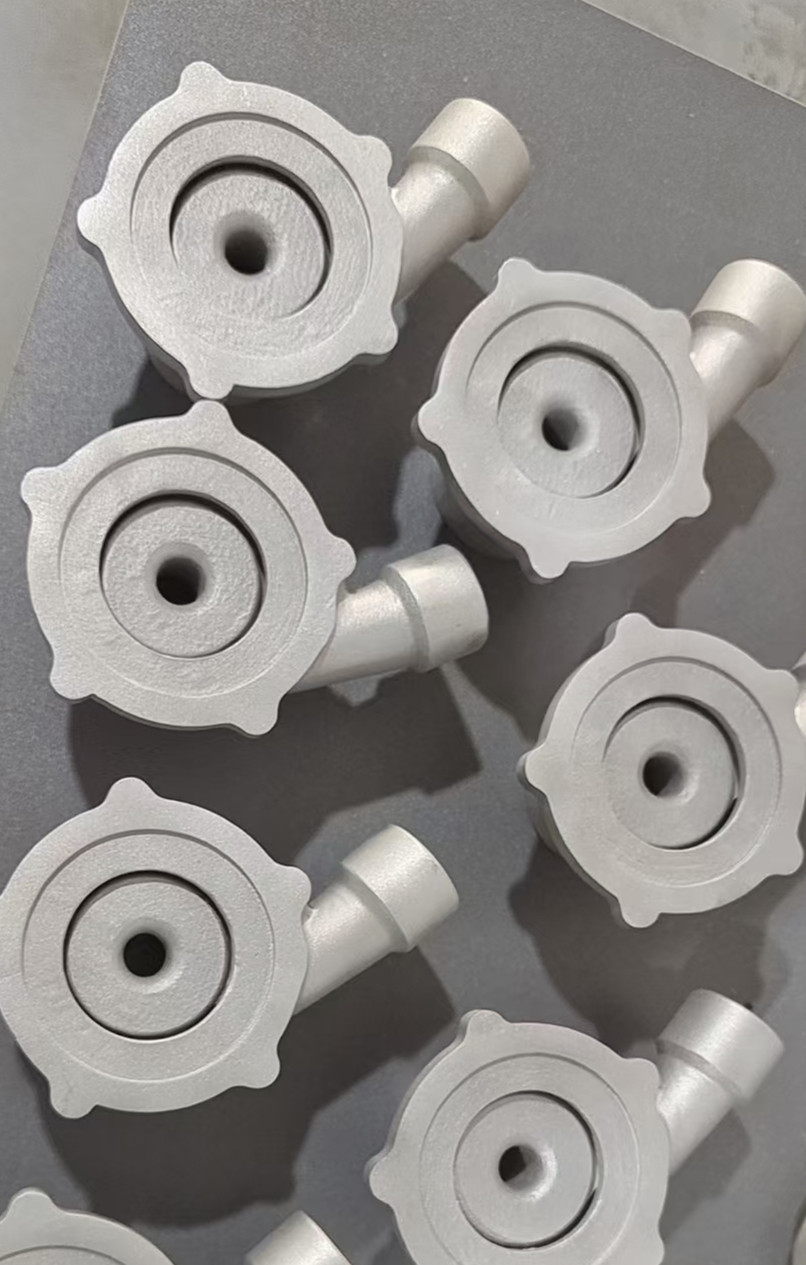
The first phase of production focused on the rigid internal structure of the head connector (similar to the threaded, funnel-like components pictured above). For this, we utilized our in-house HP Multi Jet Fusion (MJF) fleet.
We selected Nylon PA12 as the material for the core. In humanoid robot prototyping, the structural integrity of connection points is non-negotiable. MJF PA12 is an engineering-grade thermoplastic that yields near-isotropic mechanical properties, meaning the parts are equally strong in all directions. It easily handles the stress of threaded fasteners, mechanical loads, and the continuous vibration inherent in robotic movement.
Because MJF requires no tooling, we were able to transition directly from the client's approved CAD files to physical production. We nested the rigid connector cores into our high-capacity print beds, producing the necessary volume in a matter of days rather than weeks. This established the strong, dimensionally accurate "bone" of the component rapidly and cost-effectively.
Step 2: The Soft Exterior via Vacuum Casting Urethane
With the rigid PA12 cores completed, the challenge shifted to applying the soft rubber overmold. In traditional overmolding, the rigid plastic part is placed into a second mold, and molten rubber (like TPE or TPU) is injected around it. To replicate this process without steel tools, we utilized vacuum casting.
First, we 3D printed a master pattern of the entire assembled part (the core plus the intended rubber exterior). From this master, we created highly precise, custom silicone molds.
We then took the rigid PA12 cores we had just printed and suspended them precisely within the cavity of the silicone molds. Under a complete vacuum environment, we injected a specialized soft-touch urethane—specifically, an 8400 series rubber substitute. The vacuum environment ensures that the liquid urethane flows seamlessly around the complex geometry of the PA12 core, eliminating air bubbles, voids, or surface imperfections.
Achieving the Perfect Bond
One of the most critical failure points in multi-material rapid manufacturing is delamination—where the soft rubber peels away from the hard plastic under stress. Achieving a chemical and mechanical bond equivalent to traditional injection molding is difficult.
However, the natural surface finish of an MJF-printed PA12 part provides an unexpected advantage. The slightly porous, micro-textured surface of the nylon acts as an exceptional mechanical key. When the liquid 8400 urethane is poured into the vacuum mold, it penetrates these micro-pores before curing. Once the urethane sets, it creates an incredibly strong, permanent bond with the nylon core. The result is a cohesive, dual-material component that performs exactly like a traditionally overmolded part, capable of withstanding the operational rigors of a humanoid robot.
Factory Execution: Delivering 150 Sets in 17 Days
In the hardware development cycle, execution speed is just as valuable as cost savings. The client needed their initial pilot batch urgently to proceed with assembly and software integration testing.
Because Easoonmade operates an integrated facility with 15 MJF machines and a dedicated vacuum casting laboratory under one roof, we executed this hybrid manufacturing process in parallel. While the final PA12 cores were still cooling, the silicone molds for the casting phase were already curing.
Through highly orchestrated production scheduling, we successfully manufactured, overmolded, inspected, and delivered the first 150 complete sets to the client in just 17 days. This rapid turnaround allowed the robotics team to keep their R&D schedule firmly on track, avoiding a multi-month delay waiting for steel molds.
Redefining Agile Hardware Development
This case study exemplifies why modern engineering teams must look beyond traditional manufacturing constraints. By combining our PA12 3D printing services with advanced vacuum casting urethane techniques, Easoonmade provided a definitive low-volume overmolding alternative.
We delivered 150 complex, dual-material robotic assemblies in less than three weeks, saving the client tens of thousands of dollars in tooling and months of idle waiting time. The remaining 150 units were subsequently produced on a scheduled, on-demand basis, allowing the client to manage their cash flow and inventory efficiently.
If your engineering team is facing a manufacturing bottleneck due to complex multi-material designs, low-volume requirements, or restrictive tooling budgets, Easoonmade has the factory-direct capacity and engineering expertise to engineer a solution. Contact our team today with your CAD files to explore how our hybrid manufacturing strategies can accelerate your hardware development.
Comment