Zinc Die Casting Services for Custom Metal Parts | Easoonmade
Sep 07,2026 | Tommy
How Are These Made? What to Search to Have Them Made in the U.S.?
TL;DR: The Short Answer
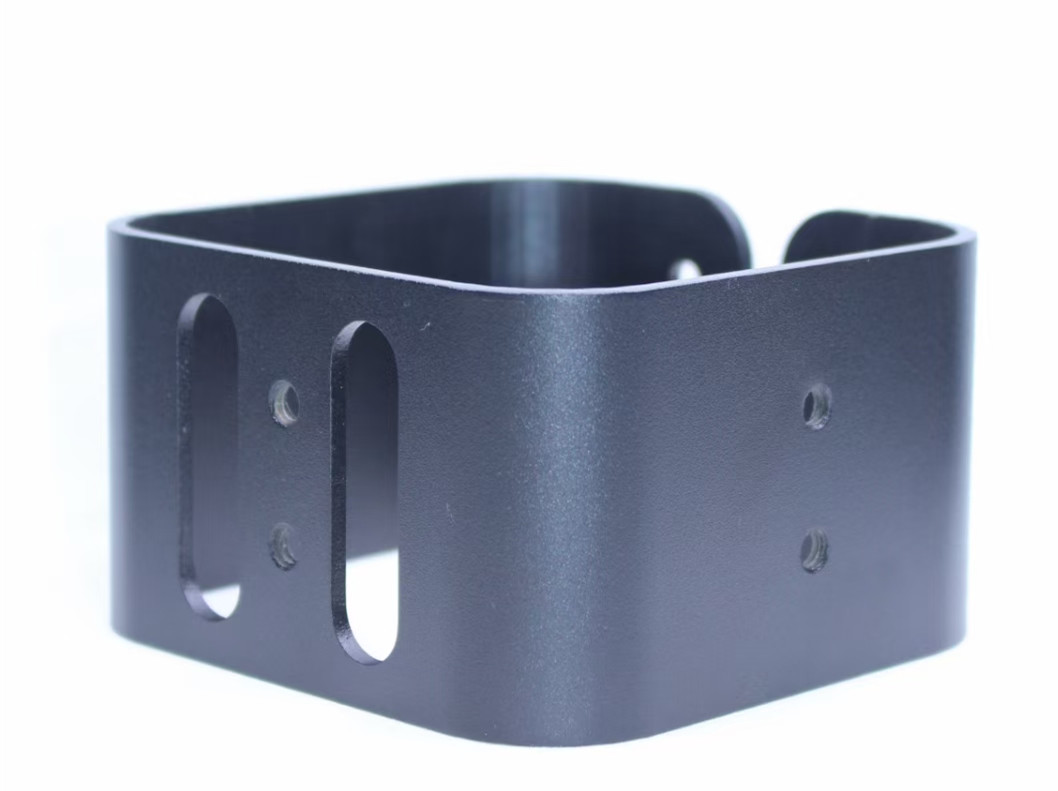
If you're holding a complex metal design — a handle, a decorative bracket, or a precision electronic housing — and you need it durable, heavy-feeling, and cleanly finished, it was almost certainly made through Zinc Die Casting.
To find a partner in the U.S., search for "Precision Zinc Die Casting Manufacturers," "Contract Metal Manufacturing," or "Zamak Casting Services." Zinc die casting remains the gold standard for high-volume commercialization because it balances intricate detail, structural strength, and low per-unit cost better than almost any other process. At Easoonmade, we bridge the gap between your CAD files and the factory floor, so your sourcing strategy — whether U.S.-based or global — is optimized for both cost and quality.
The Pain Points: Why "Making It" Is Harder Than It Looks
Turning a design into a physical, sellable product is rarely as simple as it looks on a rendering. Based on the frustrations designers and small brands repeatedly raise in manufacturing communities, three walls tend to show up in almost the same order:
The Process Confusion. Most first-time product developers start with 3D printing or CNC machining because that's what built their prototype. Both are excellent for a handful of units, but the economics collapse once you're trying to sell 10,000 pieces. Knowing exactly when to switch to die casting is often the line between a profitable product line and an expensive hobby.
The Search Term Void. If you don't yet speak the industry's language — "Zamak," "draft angle," "flash," "parting line" — your search results will surface hobbyist shops and job shops, not the industrial manufacturers capable of running commercial volume reliably.
The Minimum Order Trap. Many domestic manufacturers carry high minimum order quantities or steep tooling costs (the price of the steel mold itself), which can leave a small or mid-sized brand stuck between "too big for a prototype shop" and "too small for a tier-one factory."
Five Concrete Solutions to Move from Design to Commercial Production
- Identify the Material First — Why Zinc Is the Professional's Choice
Before searching for a manufacturer, confirm that zinc is actually the right material for your part. Compared with aluminum, zinc is heavier (giving it a "premium" hand-feel), has a lower melting point (which extends the life of the expensive steel mold), and allows for noticeably thinner walls without sacrificing strength.
The solution: specify a Zamak 3 or Zamak 5 alloy if your design needs intricate surface texture, electroplating (chrome, nickel, or gold finishes), or tight dimensional tolerances. If the part needs to feel like solid metal but has complex internal hollows or fine detail, zinc die casting is the process built for that job.
- Optimize for DFM (Design for Manufacturing) Before You Quote
A design that looks flawless on screen can be genuinely impossible to cast. In die casting, molten metal is injected under high pressure into a steel mold; once it solidifies, the mold has to open and eject the part cleanly — and that mechanical step drives most of the design constraints.
The solution: build in draft angles (slight tapers on vertical walls) so the part releases without sticking, and plan your parting line — the seam where the two mold halves meet — so it lands somewhere cosmetically acceptable. At Easoonmade, every project starts with a DFM audit specifically so your file is ready for high-pressure injection before a single dollar of tooling is cut.
- Use the Right Search Terms for U.S. Sourcing
A search for "metal maker" is too broad to be useful. Finding the right U.S. partner means searching the way the industry actually talks:
- "High-pressure zinc die casting companies [state]"
- "Zamak 3 casting services for consumer goods"
- "Turnkey metal manufacturing and finishing"
- "Contract hardware manufacturing USA"
The solution: prioritize manufacturers that offer post-processing in-house — de-burring, polishing, plating. A true one-stop shop means you're not shipping heavy, unfinished metal parts between three separate factories before they're sellable.
- Understand the Real Costs of Commercialization
Commercializing a die-cast part involves two very different cost buckets: capital expenditure and operating expenditure.
- Tooling (the mold): this is the real hurdle. A quality H13 steel mold for zinc die casting can run anywhere from roughly $5,000 to $25,000 depending on part complexity and cavity count.
- Unit price: once tooling is paid for, per-part cost drops dramatically — often to just a few dollars each.
The solution: if you're still validating demand, ask about bridge tooling — lower-cost, shorter-life molds sized for smaller runs. Once you're confident in volume north of 50,000 units, invest in multi-cavity tooling that produces four or eight parts per cycle to drive unit cost down further.
- Bridge the Gap with an Engineering-Led Sourcing Partner
The distance between "I have a design" and "I have a container of finished product" is bigger than most first-time manufacturers expect, and most factories assume you're arriving with production-ready files and a clear logistics plan.
The solution: Easoonmade functions as your engineering and sourcing arm through that gap — refining the design for die casting, managing tooling fabrication, and overseeing quality control from first shot to final shipment. Whether you want U.S.-based production for speed or a global supply chain for cost efficiency, the goal is the same: full transparency at every stage.
Comparison Table: Manufacturing Processes for Metal Designs
|
Feature |
Zinc Die Casting |
CNC Machining |
Metal 3D Printing |
Investment Casting |
|
Best for |
High volume (1,000+) |
Low volume / prototyping |
Complex geometries |
Artistic / low volume |
|
Surface finish |
Excellent, plating-ready |
Good, visible tool marks |
Rough, needs finishing |
Good, natural look |
|
Tooling cost |
High ($5K–$20K+) |
None |
None |
Moderate |
|
Unit price |
Very low |
High |
Extremely high |
Moderate |
|
Speed at mass production |
Fast — seconds per part |
Slow — minutes to hours |
Very slow |
Moderate |
|
Material strength |
High |
Very high |
Variable |
High |
FAQ: Common Questions About Making Metal Products
Q: Can I use zinc die casting for a run of just 50 pieces? Technically yes, but it isn't cost-effective — tooling cost stays the same whether you make 50 units or 50,000. For very small runs, CNC machining or 3D printing is usually the smarter choice. Die casting typically starts making financial sense in the 500–1,000 unit range.
Q: Why choose zinc over aluminum for my design? Zinc allows for near-zero draft in some geometries and much thinner walls, and it plates more easily in finishes like nickel, chrome, or brass. If the product is a cabinet handle, a heavy-duty latch, or anything meant to feel premium in the hand, zinc typically delivers a more "luxury" result than aluminum.
Q: How do I know if a manufacturer is actually good? Look for ISO 9001 certification, and ask for a First Article Inspection (FAI) report before full production. A capable manufacturer should readily show samples of comparable complexity and be able to walk you through their gating system and quality-control process.
Q: What exactly is "Zamak"? Zamak refers to a family of alloys made from Zinc, Aluminum, Magnesium, and Copper. Zamak 3 is the most widely used grade for die casting in North America because of its strong, well-balanced physical and mechanical properties.
Q: Can Easoonmade help me find or manage a manufacturer in the U.S.? Yes. Easoonmade specializes in sourcing and manufacturing management — helping vet U.S.-based facilities that match your volume and quality requirements, or offering offshore alternatives when margins are tighter.
Conclusion
Turning a design into a product means shifting your thinking from aesthetics to mechanics. Zinc die casting is the process behind a huge share of the world's most successful hardware and metal-component brands. Understand the tooling investment, learn the industry's vocabulary, and you can move from a rough sketch to commercial-scale production with far fewer surprises along the way.
Comment