Looking for a USA manufacturer for small batch CNC jobs and anodizing?
Sep 22,2026 | Tommy
Looking for a USA manufacturer for small batch CNC jobs and anodizing?
Your first batch sold out. That's the good problem. The bad problem shows up right behind it: the shop that made batch #1 either wants a six-week lead time for batch #2, or wants you to commit to a quantity ten times bigger than what you actually need.
This is exactly the situation a creator described on r/CNC: a first CNC-machined product line had just launched and was already selling faster than expected, with the poster specifically looking for a domestic or fast-turnaround partner who could handle 6061 aluminum machining and anodizing under one roof, without the lead times or minimums that come standard at most job shops.
It's a common wall to hit. Large domestic machine shops are generally built around multi-thousand-piece automotive and aerospace contracts — a 50 to 1,000-piece hardware reorder doesn't fit their scheduling model or their pricing structure. This guide breaks down why small-batch restocks are structurally hard to source, and five practical ways to solve it.
TL;DR: Summary & Key Takeaways
- The core problem is scheduling priority, not capability. Most domestic shops can machine 50–1,000 pieces of 6061 aluminum. They just don't prioritize it against larger standing contracts, which is where the 6–10 week lead times come from.
- Machining and anodizing need to be single-sourced. Splitting the job across a machine shop and a separate anodizer adds shipping time, doubles handling risk, and creates a liability gap the moment a part comes back out of tolerance or cosmetically flawed.
- 6061-T6 is the right alloy for a reason. Good machinability, solid strength, reasonable cost, and excellent response to both Type II decorative and Type III hardcoat anodizing.
- Setup fees, not machine time, dominate small-batch cost. A $300 setup fee spread across 50 parts is $6/part before a single chip is cut — this is the real lever to manage, not just per-part pricing.
- The fix is a digital, on-demand manufacturing partner. Easoonmade runs CNC machining and in-house anodizing as one process, with standardized setups built for fast reorders.
Pain Point Restated: Why Small-Batch Restocks Are Genuinely Hard
Going from prototype-scale to a real reorder exposes bottlenecks that don't show up in the first small test run.
Setup fee amortization punishes low volume specifically. Every CNC job needs fixture prep, CAM programming, and tool probing regardless of whether you're running 50 pieces or 5,000. On a 50-piece order, that fixed cost gets divided across almost nothing, so setup can be the single largest line item on your quote — often larger than material and machine time combined.
Multi-vendor fragmentation doubles your operational load. Machining Shop A ships to Anodizing Shop B, which ships back to you. That's two lead times stacked, two freight legs, and two invoices to reconcile — for what should be one finished part.
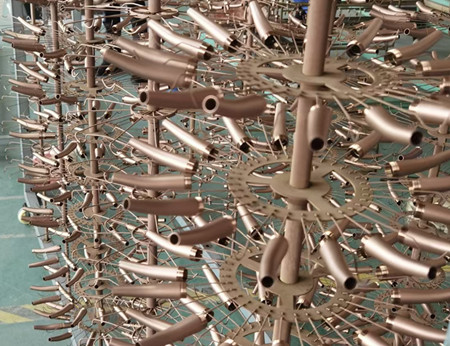
Cosmetic defects have nowhere to hide on anodized aluminum. Anodizing requires racking parts with physical electrical contact points in a chemical bath. Get the racking wrong and you get bare spots or uneven film buildup exactly where customers will look first — the visible faces.
Fragmented vendors create a liability blind spot. If a batch comes back out of tolerance, the anodizer says the machinist cut it oversize; the machinist says the etching step ate the dimension. Neither is accountable, and you're the one holding 500 unusable parts while they argue.
Small orders get scheduled last. A shop running large standing contracts has no incentive to interrupt a production run for your 100-piece reorder. You go in the queue behind everyone paying for more machine time.
5 Solutions for Small Batch 6061 Aluminum CNC & Anodizing
Solution 1: Single-source, on-demand digital manufacturing (recommended)
Best for: 10–2,000 units, rapid restocks, strict cosmetic requirements.
A digital manufacturing partner that runs both CNC machining and anodizing in-house eliminates the vendor hot-potato problem entirely. One engineering team owns the part from raw stock to finished, anodized, boxed product.
- Single point of accountability. If a part is out of spec, there's one team to answer for it — no finger-pointing between machinist and anodizer.
- Standardized short-run tooling setups. Digital manufacturers build repeatable fixturing and CAM templates specifically for reorder-friendly quantities, which cuts setup cost dramatically versus a one-off job shop quote.
- Faster turnaround by design. Because the whole process lives under one roof, there's no shipping leg between machining and finishing — parts move straight from the mill to the anodizing line.
Solution 2: Domestic machine shop network (machining only)
Best for: teams with an existing anodizing relationship, or parts that don't need finishing.
Regional and networked domestic shops can offer fast turnaround on the machining step alone, and "Made in USA" matters for some product lines and government/defense-adjacent work. The trade-off is that you're still managing the anodizing step separately, so this solution only fully solves half the pain point described above — plan for a second vendor relationship and the shipping time that comes with it.
Solution 3: Sub-contracted anodizing with a managed handoff
Best for: machine shops without in-house anodizing capability, when a managed logistics process is available.
If your machinist doesn't anodize, the next best option is a formal, managed sub-contract relationship rather than an ad hoc one — meaning the machine shop owns the QC handoff, inspects parts before and after anodizing, and takes responsibility for the finished result rather than treating anodizing as "someone else's problem" once the part leaves their dock. This narrows the liability gap without fully closing it, and it's meaningfully better than sourcing the two vendors independently yourself.
Solution 4: Design for Anodizing (DFA) optimization
Best for: any product with visible, cosmetic anodized surfaces.
A significant share of "batch #2 came back wrong" complaints trace back to a design that was never reviewed for anodizing in the first place. DFA review catches this before you commit to a production run:
- Racking point placement — designing in a location for the electrical contact point that doesn't land on a visible face.
- Surface finish specification — a bead-blasted or brushed pre-anodize finish reads very differently than a machined finish once anodized, and needs to be called out explicitly.
- Sharp internal corners — these can hold excess current density during anodizing, causing localized color or film-thickness variation.
Catching these on paper is free. Catching them after 500 anodized parts come back with visible flaws is not.
Solution 5: Bulk raw-material staging for faster reorders
Best for: products with a predictable reorder cadence.
If 6061 bar or plate stock is pre-staged and pre-certified for your part before the reorder is even placed, you cut a meaningful chunk of lead time off every subsequent batch. This is a strategy worth discussing directly with your manufacturing partner once you're past the first reorder and into a repeatable cadence — it trades a small inventory carrying cost for consistently faster turnaround.
Comparing Small-Batch Manufacturing Options
|
Feature / Option |
On-Demand Digital Factory |
Domestic Machine Shop Network |
Sub-Contracted Anodizing |
DFA-Optimized Design |
|
Ideal volume |
10–2,000 pcs |
50–5,000 pcs |
Depends on machinist |
Any volume |
|
Machining + anodizing |
Single source |
Machining only |
Split, but managed |
N/A (design phase) |
|
Typical lead time |
5–10 days |
2–6 weeks |
4–8 weeks (2 legs) |
Adds 1–2 days upfront |
|
Setup fee impact |
Low (standardized) |
High (custom setups) |
High (doubled) |
Reduces rework risk |
|
Liability clarity |
Single vendor |
Single vendor (machining only) |
Shared, managed |
Prevents disputes |
|
Cosmetic QC risk |
Low |
N/A for anodizing |
Moderate |
Low (designed in) |
Frequently Asked Questions
- Why does small batch CNC machining cost more per part than large runs?
Setup costs — fixturing, CAM programming, tool probing — are fixed regardless of quantity. Spread across 50 pieces instead of 5,000, that fixed cost dominates the unit price. Choosing a partner with standardized, repeatable setups for reorders is the main lever to bring that cost down. - Why is 6061 aluminum the standard choice for small-batch hardware parts?
It machines cleanly and quickly, holds good structural strength for its weight, costs less than many alternative alloys, and responds well to both Type II decorative and Type III hardcoat anodizing — making it a strong default unless your application specifically needs a different alloy's properties. - Why shouldn't I use separate vendors for machining and anodizing?
Splitting the job adds a full shipping leg between two vendors, doubles the handling and packaging risk, and creates a liability gap: if a part comes back out of tolerance or cosmetically flawed, each vendor can point at the other's process step. A single-source partner removes that gap entirely. - What causes racking marks or uneven anodizing color?
Racking marks come from the physical electrical contact points required during the anodizing bath. Uneven color usually comes from inconsistent current density across the part, often due to sharp internal corners or a racking point placed in a visible area. Both are largely preventable with a DFA review before machining begins. - How fast can I get a reorder of 6061 aluminum parts, machined and anodized?
With a single-source, on-demand partner running standardized short-run tooling, 5–10 business days from approved design to finished, anodized parts is realistic for most 50–1,000 piece reorders — versus 6–10 weeks at a traditional job shop juggling larger contracts.
Scale Your Small-Batch Reorders with Easoonmade
Selling out shouldn't mean a six-week wait for batch two. At Easoonmade, we give hardware creators and small brands a single-source path from CAD file to anodized, finished parts.
- Precision 3/4/5-axis CNC machining for 6061 and other common alloys.
- In-house Type II and Type III anodizing — no second vendor, no shipping leg between steps.
- Instant DFM/DFA feedback to catch cosmetic and dimensional issues before machining starts.
- Standardized short-run tooling built specifically for fast, repeatable reorders.
📩 Upload your CAD files at easoonmade.com for a free DFM review and a fast small-batch quote.
Comment