Small Batch (100-500) Hardware Runs: Sourcing 200 Aluminum Enclosures
Aug 10,2026 | Tommy
Small Batch (100-500) Hardware Runs: How Do I Find a Manufacturer for 200 Aluminum Enclosures?
TL;DR: The "Missing Middle" Strategy
For most hardware startups, finding a partner for 200 units is notoriously hard — you're too large for a local job shop but too small for a Tier 1 OEM. The practical strategy:
- The sweet spot: look for High-Mix, Low-Volume (HMLV) specialized manufacturers built specifically for bridge production, not full-scale OEM runs.
- Process selection: for 200 enclosures, sheet metal fabrication usually beats CNC machining on cost due to lower setup fees, while CNC remains the right call for complex brackets.
- Cost saver: standardize your material (Al 6061 or Stainless 304) and simplify surface finishes to avoid high minimum order quantities on chemical processes.
The Startup Pain Point: The "Valley of Death" in Manufacturing
You've closed your seed round or wrapped a successful Kickstarter, and now you need 200 aluminum enclosures and 200 internal steel brackets. Three brutal realities show up almost immediately:
- The ghosting effect. Large OEMs won't return your emails, because a 200-unit run doesn't come close to their $50k minimum order.
- The setup fee trap. A local shop quotes $2,000 in NRE (non-recurring engineering) fees. Spread across 200 units, that's $10 added to every single part before a spindle even turns.
- The DFM gap. A design that worked fine as a 3D-printed mockup often can't be bent or milled efficiently at 200-unit scale — prototyping tolerances and bridge-production tolerances are not the same problem.
Five Solutions for 100-500 Unit Hardware Production
1. Transition from CNC to sheet metal where possible
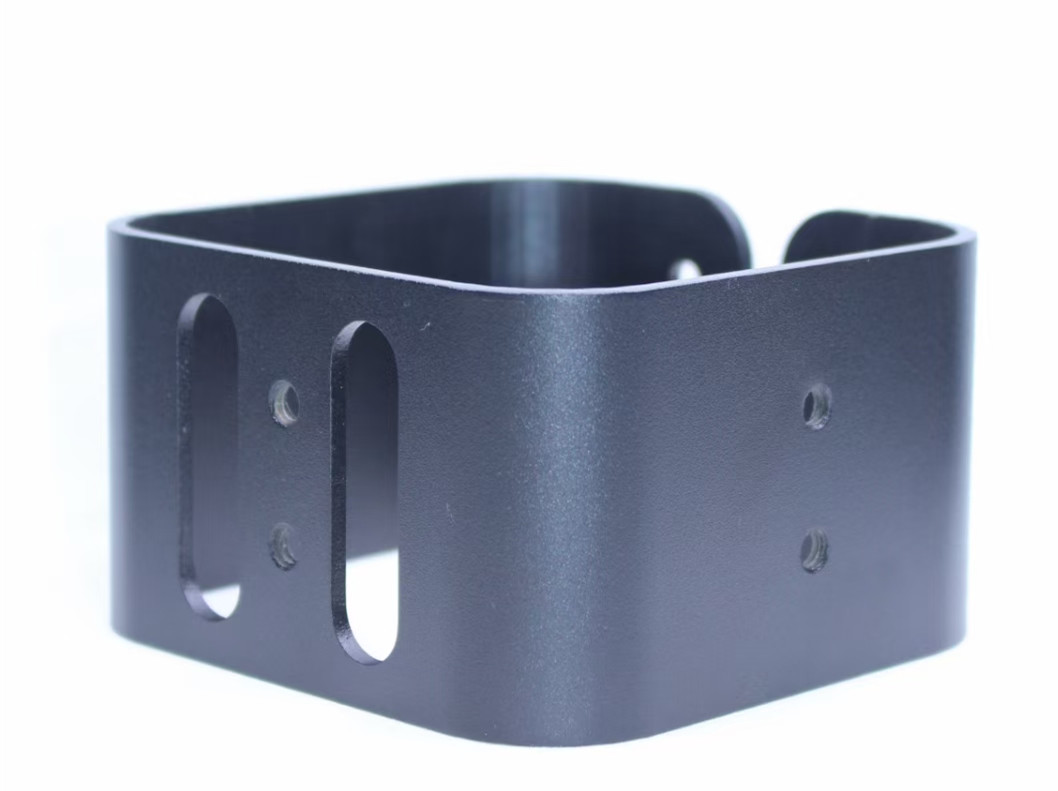
Startups default to CNC machining because it feels premium — but for an enclosure, a milled aluminum block is roughly 90% waste. Redesign the enclosure for sheet metal fabrication instead: at 200 units, laser cutting and CNC bending carry near-zero tooling cost compared to die casting or injection molding. The result is a professional, rugged metal housing at roughly 40% of the cost of a fully-milled CNC part.
2. Leverage quick-turn digital manufacturers
Traditional job shops rely on manual quoting, which is slow and expensive at this volume. Look instead for suppliers built around bridge production — automated DFM feedback and workflows optimized for fast setup rather than long-run throughput. These shops actively want the 100–500 unit range; it's their core business, not a favor they're doing you. A good signal: quantity-discount tiers that specifically start at 50, 100, and 250 units.
3. Consolidate material and hardware specs
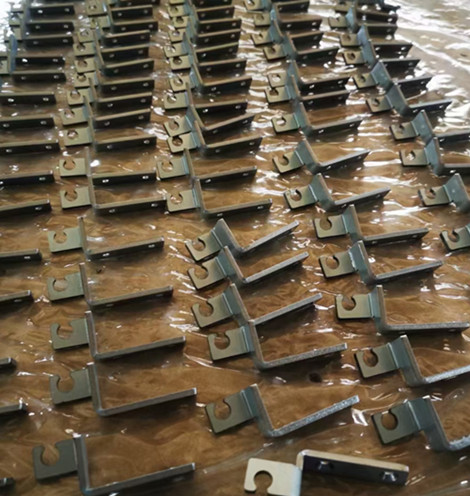
If your enclosure is aluminum 6061 but your bracket is stainless 304, you're paying for two entirely separate material setups. Where engineering specs allow, make both parts from the same material and thickness — this lets the shop nest your parts on the same sheet or draw from the same bar stock, cutting both raw material waste and setup time. On hardware, use off-the-shelf PEM fasteners instead of custom-threaded holes.
4. Choose batch-friendly surface finishes
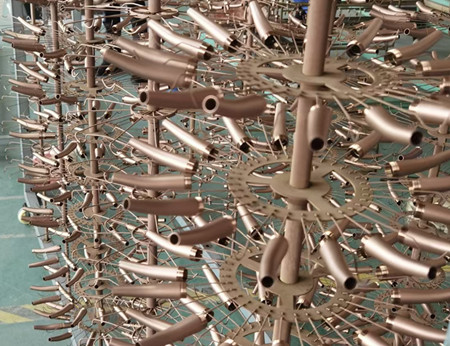
Custom colors or exotic coatings (Type III hard-coat anodizing, for example) often carry a minimum batch charge that can exceed $500. Stick to standard powder coating (black, white, grey) or clear anodizing — these run as shared "running baths" at most shops, meaning your 200 units can go into the tank alongside another client's order, saving you the dedicated setup fee entirely.
5. Design with a bridge-tooling mindset
Don't design for 10,000 units yet, but don't stay stuck in prototype mode either. Add slot-and-tab self-alignment features to your brackets. This eliminates the need for the manufacturer to build a custom assembly jig — one of the biggest hidden costs in small-batch production, and one that rarely shows up until the quote comes back.
Process Selection for a 200-Unit Run
|
Feature |
CNC Machining |
Sheet Metal Fabrication |
Hybrid (CNC + Sheet) |
|
Best for |
Complex, high-precision brackets |
Electronic enclosures, panels |
High-end consumer tech |
|
Tooling cost |
$0 (setup fees only) |
Low (bending brake setup) |
Moderate |
|
Lead time |
10–15 days |
5–10 days (fastest) |
15–20 days |
|
Unit cost |
High (material waste) |
Low (efficient) |
Moderate |
|
Est. setup fee |
$150–$400 |
$100–$250 |
$300–$600 |
FAQ: Navigating the 100-500 Unit Run
Q1: Should I manufacture domestically or offshore for 200 units? For 200 units, domestic (US/EU) production is often the better call once you factor in shipping costs and lead time. That said, if the parts need significant manual assembly or complex secondary finishes, offshore production (Vietnam, China) can still save 30–50%, even after air-freight costs.
Q2: How do I ensure quality without a full-time QA engineer on-site? Request a First Article Inspection (FAI). The shop produces one unit, sends photos or the physical part for your sign-off, and only then runs the remaining 199 — catching design or process issues before they multiply across the batch.
Q3: Can I get an "Apple-level" finish on a 200-unit budget? That level of finish usually means bead-blasting plus Type II anodizing. It's achievable at 200 units, but expect the price to run roughly 2x a standard tumbled or powder-coated finish.
Q4: How much does switching from CNC to sheet metal actually save at 200 units? For enclosure-style parts, moving from a milled CNC block to sheet metal fabrication typically cuts cost by around 60%, since you eliminate both material waste and long CNC cycle times — the trade-off is that sheet metal geometry is more constrained than what CNC can produce.
Q5: What's the single biggest hidden cost startups miss at this volume? Custom assembly jigs and fixtures. A design that requires manual alignment during assembly forces the shop to build (and charge for) a dedicated jig — designing in self-locating features up front avoids that cost entirely.
Conclusion: Scalability Is a Design Choice
200 units genuinely is a difficult number — but it's also the ideal stress test for your supply chain. By choosing a manufacturer built around the HMLV (high-mix, low-volume) model, and optimizing your design for sheet metal or simplified CNC, you can bridge the gap from garage prototype to a market-ready product without absorbing OEM-scale fees along the way.
Looking for a partner who doesn't ghost small-batch orders? Upload your STEP files to EASOON MADE for an instant DFM review and a 200-unit production quote.
Comment