MJF Nylon 3D Print: Fast Injection Molding Alternative
May 16,2026 | Tommy
Bridging the Manufacturing Gap: How Rapid Tooling Accelerates Robotics Production
The manufacturing industry frequently faces a critical bottleneck: the extensive lead time required for traditional injection molding. For engineers and product developers working on highly advanced projects, waiting months for steel or aluminum tooling is simply not an option. This delay becomes especially problematic when dealing with custom complex robot parts that require immediate real-world testing and assembly. When production schedules are tight, relying solely on traditional tooling creates a severe production vacuum. Projects stall, time-to-market increases, and competitors gain the upper hand. The challenge lies in finding an injection molding alternative that can handle complex geometries, deliver functional strength, and produce hundreds of parts in a matter of days without compromising on precision.
The Hybrid Approach: Integrating Advanced Prototyping
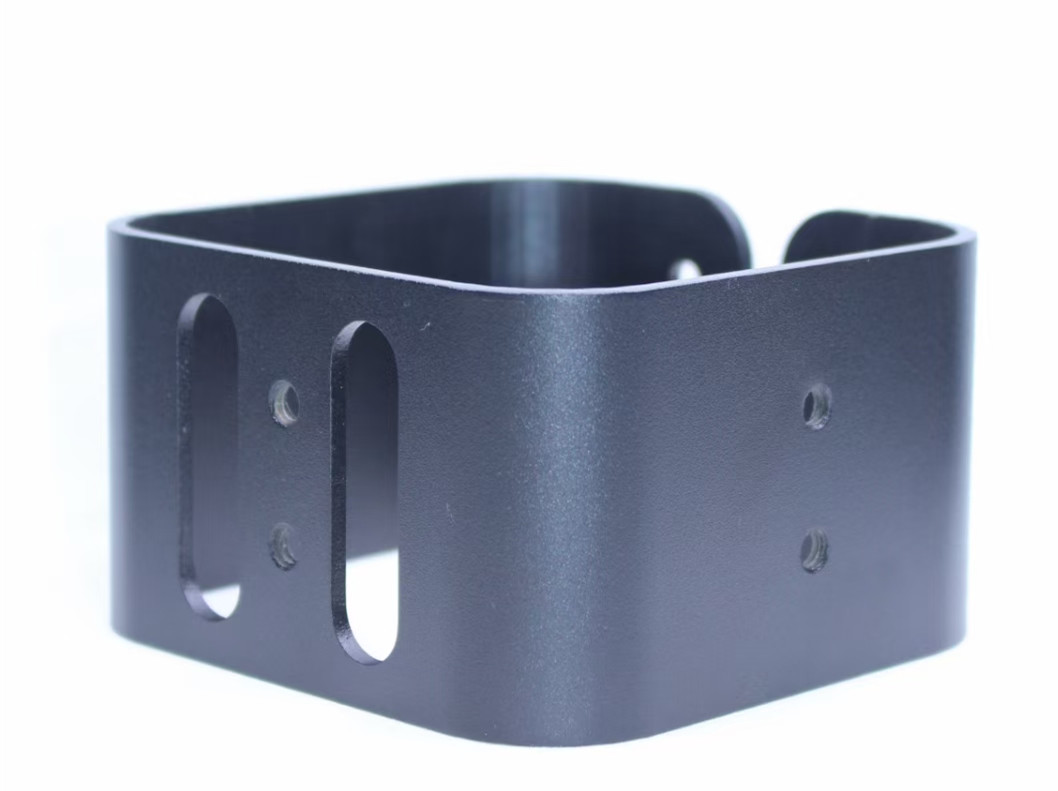
To solve the tooling delay, forward-thinking manufacturers are utilizing a hybrid bridge manufacturing strategy. By combining an MJF Nylon 3D print process with advanced rubber casting techniques, production can begin almost immediately.
12 cartons containing 110 sets of MJF Nylon 3D printed and rubber casted parts for humanoid robot assembly.)
Recently, this exact methodology was applied to manufacture crucial components for cutting-edge humanoid robotics, specifically engineered to meet the rigorous standards expected in systems like the Tesla humanoid robot. The project required 110 complete sets of components, totaling 880 individual pieces, packaged securely across 12 cartons. Because the geometry of these robotic joints and housings was incredibly intricate, traditional machining would have been too slow, and waiting for the final injection molds meant missing critical assembly deadlines.
Accelerated Timelines with Rapid Silicone Molding
The primary advantage of this short run manufacturing bridge is the drastically reduced timeline. The process begins with fast 3D printed prototypes. Using multi-jet fusion technology, master patterns are created with exceptional dimensional accuracy and superior surface finish.
Once the MJF Nylon 3D print master is complete, it is used to create a rapid silicone mold. In this specific high-stakes robotics project, the entire silicone rapid tooling phase was completed in just five days. Traditional steel tooling for components of this complexity would typically require six to eight weeks. By finalizing the mold in less than a week, the engineering team completely bypassed the traditional waiting period, allowing assembly lines to remain active.
Scaling Production Through Vacuum Casting
With the rapid tooling completed, the production transitions to vacuum casting. This method allows for the creation of high-fidelity polyurethane and rubber casting parts that mimic the mechanical properties of final injection-molded production plastics.
Image Name Recommendation: rapid-silicone-molding-turnaround-process.jpg
(Alt Text: Vacuum casting process filling a silicone mold to create low volume production robotics parts.)
For this robotics application, the vacuum casting process yielded an output of approximately 200 sets per week. This production rate successfully filled the manufacturing void, providing highly durable, functional components while the permanent injection molds were still being machined. The resulting 880 pieces exhibited excellent structural integrity, impact resistance, and flexibility where required, proving that low volume production robotics does not have to sacrifice quality for speed.
Trust and Proven Reliability in High-Tech Manufacturing
In the highly competitive field of advanced robotics, hardware reliability is non-negotiable. Exaggerated claims have no place on the assembly line; components either meet the exact engineering tolerances, or they fail. This hybrid manufacturing approach has been heavily audited and trusted by top-tier robotics developers. The successful delivery of these 12 cartons of complex components stands as a verifiable endorsement of the process.
The materials utilized in both the MJF Nylon 3D print phase and the subsequent rubber casting phase undergo strict quality control. The nylon provides industrial-grade toughness suitable for load-bearing robotic chassis elements, while the casted components deliver the exact durometer ratings required for robotic actuation and shock absorption.
By leveraging rapid silicone molding turnaround times, engineering teams are no longer held hostage by tooling delays. This methodology provides a seamless, highly reliable transition from the prototyping phase directly into low-volume manufacturing, ensuring that revolutionary robotics projects stay on schedule and perform exactly as engineered.MJF Nylon 3D print
Secondary/LSI Keywords: vacuum casting, injection molding alternative, silicone rapid tooling, rubber casting.
High-Volume/Low-Competition Keywords: short run manufacturing bridge, custom complex robot parts, rapid silicone molding turnaround, fast 3d printed prototypes, low volume production robotics.
Comment