Thoughts on what manufacturing process to use?
Sep 22,2026 | Tommy
Thoughts on what manufacturing process to use?
This is the question that decides whether a part program makes money or quietly bleeds it. And it almost never has a universal answer — it has an answer for your geometry at your volume.
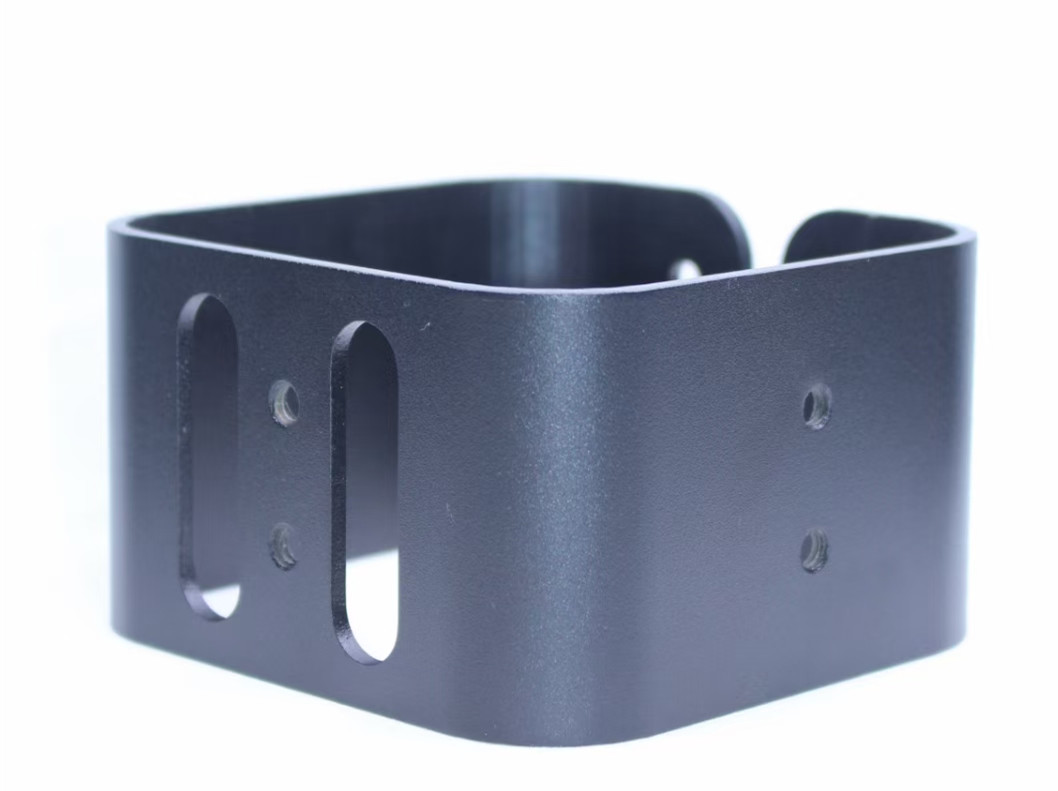
Take a concrete case that came up on r/manufacturing: an aluminum sway bar bushing bracket, annual forecast around 8,000 units. The project lead had five candidates on the table — sand casting, high-pressure die casting, full CNC machining, aluminum extrusion, and stamped sheet metal — and correctly ruled out machining early, noting it would be far too expensive at that quantity.
That instinct was right, but the reasoning matters more than the conclusion. Below is the full trade-off analysis for mid-volume aluminum structural brackets, five viable production routes, and why extrusion plus secondary CNC wins this particular fight.
TL;DR: Summary & Key Engineering Takeaways
- The winner at ~8,000 units: aluminum extrusion + secondary CNC. Extrude the U-profile, saw to width, drill and tap the mounting holes on a drill-tap center, anodize. Lowest unit cost, lowest tooling risk, best fatigue strength.
- Extrusion beats die casting at this volume on tooling math. An HPDC steel tool runs $18,000–$35,000+. An extrusion die runs $1,500–$3,500. Over one year of 8,000 pieces, that difference alone is roughly $2–$4 per part in pure tooling amortization.
- Extrusion also beats casting on material properties. Wrought 6061-T6 has better tensile and fatigue performance than cast A380, and no internal gas porosity — which matters on a cyclically loaded suspension component.
- CNC from billet fails on yield, not capability. Cutting a U-arch from solid 6061 scraps over 70% of the block as chips and burns long cycle times. It's the right choice for the first 200 pieces and the wrong one for 8,000.
- Stamping needs uniform wall thickness. Performance bracket designs with heavy bolt seats and thick ribs don't stamp well from heavy-gauge aluminum.
- Easoonmade handles custom extrusion die design, high-speed sawing, precision CNC finishing, casting, and anodizing under one roof.
Pain Point Restated: The 8,000-Unit Gray Zone
Volumes between roughly 5,000 and 15,000 units per year are genuinely hard to source. Below that range, machining wins because tooling dominates. Above it, hard tooling wins because unit price dominates. In the middle, the two curves cross, and picking the wrong side of the crossover is expensive in a way that only becomes visible six months later.
Tooling amortization is the primary variable. A $25,000 multi-cavity die-casting tool spread across a single year's 8,000 pieces adds over $3.10 per part before you've paid for a gram of aluminum. If the program doesn't reorder, you never recover it.
Fatigue life is a safety requirement, not a spec sheet line. A sway bar bushing bracket takes continuous cyclic load, chassis flex, and road impact. Porosity in a cast part becomes a crack initiation site. Wrought material with aligned grain structure does not have that failure mode.
Material yield quietly destroys machining economics. Chips are aluminum you paid for and then paid again to remove. High-waste geometry plus 3-axis mill hours is a per-part cost that doesn't improve with quantity.
Secondary operations are unavoidable regardless of route. Cast, extruded, or stamped — mounting holes, threads, and flat mating faces still need machining to hold ±0.05 mm. Budget for it in every scenario rather than treating it as a penalty on one.
5 Manufacturing Routes for This Part
Solution 1: Aluminum extrusion + secondary CNC (recommended)
Best for: constant cross-section profiles, tight tooling budgets, structural loading, 2,000–30,000 units/year.
A sway bar bushing bracket is essentially a uniform U-profile with mounting feet. That is exactly the geometry extrusion was invented for.
Workflow:
- Profile extrusion — push heated 6061-T6 or 6082-T6 through a custom steel die to produce a continuous bar matching the U-arch and feet.
- Precision sawing — cut the bar into blanks at the required width (typically 40–60 mm), automated, seconds per cut.
- CNC drill and tap — a drill-tap center or multi-spindle fixture puts in the bolt holes and spot faces in seconds per part.
- Anodize — Type II clear or black for road salt and moisture resistance.
Why it wins: die cost under $3,500, near-zero material waste, ~240 MPa yield strength in 6061-T6, grain structure aligned with the load path, and machine time measured in seconds rather than minutes.
Solution 2: High-pressure die casting
Best for: volumes above ~20,000/year with genuinely complex 3D geometry.
HPDC injects molten A380 or ADC12 into hardened steel under high pressure. Cycle times are seconds and raw material cost per part is low. It also allows features extrusion physically cannot produce — non-linear stiffening ribs, angled mounting tabs, varying wall sections.
The trade-off at 8,000 units is the tooling barrier plus reduced mechanical properties. Cast alloys give up meaningful tensile and fatigue strength relative to wrought 6061-T6. If your design truly requires complex 3D features, HPDC is correct — but confirm the design actually needs them before paying for the tool.
Solution 3: Progressive stamped sheet metal
Best for: simplified uniform-thickness brackets at 50,000+ units/year.
If the design can be flattened into a formed heavy-gauge strip — 4–6 mm 5052-H32 or 6061-T4 — stamping delivers the lowest piece price of any route. But forming heavy structural aluminum risks outer-radius cracking without careful annealing, and stamping cannot produce varied wall thickness, counterbored bolt seats, or thick structural ribs. Redesigning the part to suit stamping is a real engineering project, not a sourcing decision.
Solution 4: Permanent mold gravity casting or investment casting
Best for: complex geometry where HPDC tooling can't be justified but density matters.
Gravity casting uses reusable steel molds without high-pressure injection. Tooling lands around $5,000–$10,000, with better mechanical properties and lower gas porosity than HPDC. The cost is slower cycles, higher unit price than extrusion, and meaningful secondary flash trimming and grinding.
Solution 5: Hybrid short-run (extrusion blanks + 5-axis milling)
Best for: pilot runs of 500–2,000, launch bridging, or performance variants.
Source off-the-shelf structural U-channel or a soft-tooled custom profile, then 5-axis mill weight-reduction pockets, custom slots, or logos into the blank. This gets you production-representative parts while the full process is being optimized, with essentially no tooling commitment.
Process Selection Comparison Matrix (8,000 brackets/year)
|
Process |
Tooling Cost |
Unit Price @ 8k |
Material Strength |
Lead Time to First Part |
Best Suited Geometry |
|
Extrusion + CNC |
Very low ($1.5k–$3.5k) |
Lowest |
High (wrought 6061-T6) |
3–4 weeks |
Constant cross-section U-shape |
|
High-pressure die casting |
High ($18k–$35k) |
Low |
Moderate (cast A380) |
6–10 weeks |
Complex 3D features and ribs |
|
Full CNC from billet |
$0 |
Prohibitively high |
High (6061-T6) |
3–5 days |
Prototypes under ~500 pcs |
|
Progressive stamping |
High ($12k–$25k) |
Very low |
Moderate (5052/6061) |
5–8 weeks |
Uniform sheet thickness bends |
|
Permanent mold casting |
Moderate ($6k–$12k) |
Moderate |
Moderate to high |
4–6 weeks |
Thick heavy structural castings |
Frequently Asked Questions
- Why extrusion over die casting at 8,000 units?
Tooling amortization and material properties both favor extrusion. The $18k–$35k die-cast tool imposes a heavy per-unit penalty over a modest annual run, while extrusion tooling stays under $3,500. Wrought 6061-T6 also outperforms cast A380 in fatigue, which matters on a suspension bracket. Paired with automated secondary drilling, extrusion matches or beats die casting on unit cost at this volume. - What alloy should an extruded suspension bracket use?
6061-T6 is the automotive structural standard — strong strength-to-weight ratio, good corrosion resistance, excellent fatigue life, and it anodizes cleanly in clear or black. 6082-T6 is a common European equivalent with slightly higher strength. - How do you hold tight hole tolerances on an extruded part?
Extrusion holds roughly ±0.2 to ±0.4 mm on profile dimensions, which is fine for the arch but not for bolt holes. The holes, flat mating faces, and threads are cut in a secondary CNC operation that holds ±0.02 to ±0.05 mm. - At what volume does die casting become the better choice?
Generally above 20,000–25,000 units per year, or sooner if the program is multi-year and the tool cost can amortize across 60,000+ pieces. Run the crossover with your actual forecast rather than a rule of thumb. - How do I get a real process evaluation for my design?
Upload your STEP or IGES model and 2D drawings to Easoonmade.com. Our manufacturing engineers run a DFM review, price the part across extrusion, casting, and machining, and return a comparative quotation.
Optimize Your Automotive Parts Production with Easoonmade
Choosing the right process before tooling is cut is the cheapest engineering decision you will ever make. At Easoonmade, we help automotive brands, hardware startups, and tier suppliers turn CAD into cost-effective production parts.
- Custom aluminum extrusion: profile and die design, die fabrication, high-speed automated sawing.
- Secondary precision CNC: drilling, tapping, milling, tight-tolerance finishing.
- Die casting and investment casting for complex 3D components.
- Surface finishing: Type II and Type III anodizing, powder coating, bead blasting.
📩 Upload your CAD files at easoonmade.com for a free DFM review and an instant manufacturing quote.
Comment