Best Chinese CNC Machining Manufacturer: ISO 13485 Precision Parts
Aug 19,2026 | Tommy
Best Chinese CNC Machining Manufacturer for High Quality Precision Parts?
TL;DR: Bridging the Gap Between Prototype and Production
The "quality cliff" is the most common failure point in Chinese manufacturing — the first five samples are perfect, but the production batch of 500 fails to hold tolerance. For medical-grade robotics, the fix isn't finding "a CNC shop." It's partnering with an ISO 13485 certified advanced manufacturing center that integrates 5-axis CNC machining, sheet metal, and metal 3D printing under one quality management system (QMS). Consistency comes from digital traceability and rigorous metrology — the goal is a 100th stainless steel shaft that's identical to the first.
The Pain Points: Why Robotics and Medical Projects Fail in Sourcing
In the B2B medical and robotics space, "supplier inconsistency syndrome" tends to come down to the same four failure points:
- The tolerance myth. Plenty of factories quote ±0.005mm to win the bid, but lack the thermal-controlled environment or high-end 5-axis machines needed to actually hold that tolerance across a full 24-hour production cycle.
- The certification gap. For medical robotics, ISO 9001 is rarely sufficient on its own. Without ISO 13485, there's no real guarantee of material biocompatibility, formal risk management, or sterile-environment protocols.
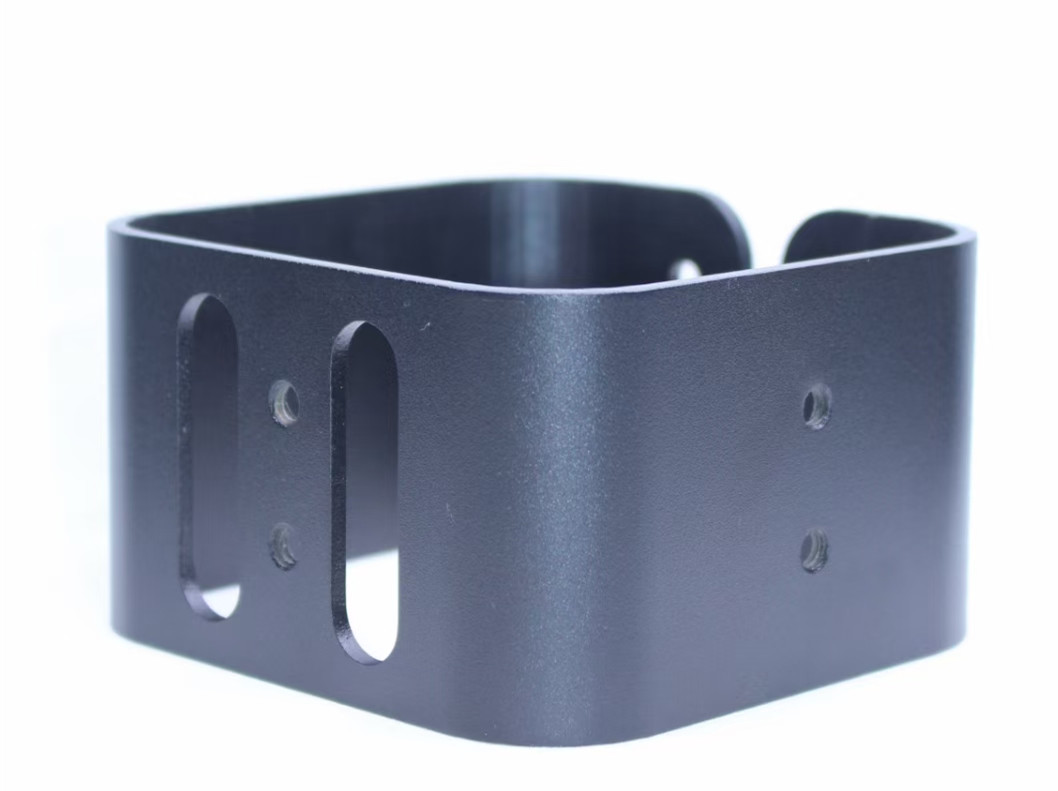
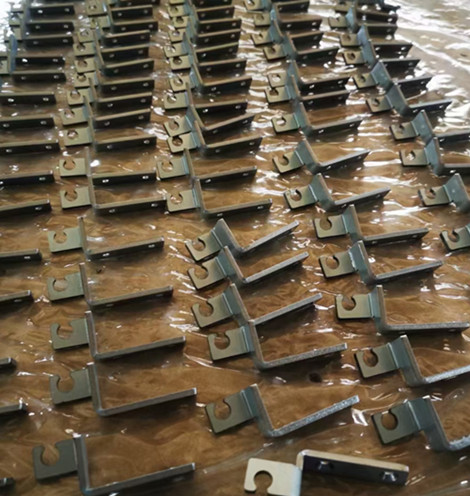
- Logistical fragmentation. Sourcing aluminum housings from one CNC shop, internal brackets from a separate sheet metal fabricator, and complex manifolds from a third 3D printing vendor creates a tolerance stack-up nightmare — when parts don't fit at assembly, every vendor points at the other two.
- Material integrity. Tight-tolerance turning on stainless steel shafts requires properly stress-relieved bar stock. Budget suppliers often use low-grade material that warps after machining, leading to concentricity failures downstream.
Five Solutions: How to Eliminate the "Quality Cliff"
- Integrated advanced manufacturing under one roof
Housing CNC milling, precision turning, sheet metal, and metal 3D printing (DMLS) in a single facility solves the logistics fragmentation problem directly. When one supplier is 3D printing a complex titanium housing and CNC machining the stainless steel shaft that fits inside it, they own the fitment end to end — in-process assembly checks confirm parts are ready for the robotics line before they ever ship.
- Build on an ISO 13485 and AS9100 certified quality core
Certification only means something when it's audited, not just claimed. An ISO 13485 quality system gives every part a real paper trail — full Material Test Reports (MTR), heat treatment certificates, and Certificates of Conformity (CoC). For medical device companies, that documentation is what removes regulatory risk when the device goes in front of the FDA or EMA.
- Use hybrid production: metal 3D printing plus CNC finishing
Traditional 5-axis CNC often struggles with internal pockets or lightweight lattice structures in aluminum housings. The fix is a hybrid workflow: 3D print the near-net shape in AlSi10Mg to capture complex internal cooling or weight-reduction geometry, then CNC-finish the high-tolerance mating surfaces (down to ±0.005mm). This hybrid approach is both faster and more accurate than relying on CNC alone for that kind of geometry.
- Rely on automated metrology, not manual spot-checks
Quality tends to fall off a cliff when inspection depends on a human catching a drifting tolerance. CMM (Coordinate Measuring Machines) and OMM (Optical Measuring Machines) remove that risk — every batch comes with a detailed inspection report, and if a tool starts wearing during a stainless steel turning run, automated sensors catch the micron-level drift and stop the machine before scrap accumulates.
- Keep pilot and production on the same machine
Quality usually drops the moment a job moves from a high-end prototype machine to a cheaper production machine. The fix is process discipline: the machine that qualifies the prototype should be the same machine — running the same standardized work instructions (SWI), tooling, speeds, and feeds — that runs full production, regardless of batch size.
Why Advanced Manufacturing Outperforms Traditional Shops
|
Feature |
Standard CNC Shop |
High-End Sheet Metal Shop |
ISO 13485 Hybrid Facility |
|
Machining precision |
±0.05mm |
±0.2mm |
±0.005mm (5-axis CNC) |
|
Complexity capacity |
Limited by tool path |
Simple bends |
Effectively unlimited (metal 3D printing) |
|
Material traceability |
Rare / on request |
Low |
Full MTR (medical grade) |
|
Internal channels |
Impossible |
N/A |
Achievable (3D printed) |
|
Logistics |
CNC only |
Sheet metal only |
CNC + sheet metal + 3D print, one vendor |
|
Scaling risk |
High (quality cliff) |
Moderate |
Low (digital process lock) |
FAQ: Solving Your Robotics Sourcing Challenges
Q1: Can you hold tight tolerances on stainless steel shafts? Yes — Swiss-type turning and precision grinding on stainless steel (304, 316L, 17-4 PH) can routinely hold ±0.005mm while maintaining the concentricity requirements high-speed robotics actuators need.
Q2: Why choose metal 3D printing for aluminum housings instead of pure CNC? If a housing has internal fluid channels, integrated heat sinks, or needs to be ultra-lightweight, DMLS 3D printing outperforms pure subtractive machining on geometry. Printing the housing and then CNC-machining the bearing seats gets you both the complex geometry and a medical-grade finish where it matters.
Q3: Do you offer ISO 13485 documentation for small batches? Yes. Whether the order is 5 prototypes or 500 production units, a proper QMS applies the same level of medical-grade scrutiny and documentation regardless of volume.
Q4: How do you handle the transition from prototype to scale? A digital-twin approach works best: once a prototype is approved, CAM programming and machine parameters get locked into the ERP system. Scaling up then means adding machine hours, not re-deriving the process from scratch.
Q5: What's the fastest way to check whether a supplier can actually hold what they quote? Ask for their Material Test Reports and inspection data from a past production run at your target volume — not just their prototype samples. A supplier confident in their process will have CMM/OMM inspection reports readily available; one relying on manual spot-checks usually won't.
Conclusion: The Partner Your Robotics Project Deserves
Stop gambling on suppliers who hope to hit your tolerances. For B2B medical and robotics firms, the cost of a failed production batch is too high to treat sourcing as an afterthought. Choosing an ISO 13485 certified CNC and metal 3D printing China partner gets you the speed of a prototype shop combined with the reliability of a tier-1 medical manufacturer.
Comment