Which Aluminum Process to Design for to Keep Costs Down? | EasoonMade
Sep 17,2026 | Tommy
Which aluminum process to design for to keep costs down?
A version of this question shows up constantly among mechanical engineers moving a design from CAD toward production: "I need 2,000 to 3,000 aluminum parts a year. I don't want to design the same bracket three separate times just to get comparable quotes for CNC, die casting, and sheet metal. Which process should I actually design for from the start?"
This is arguably the single highest-leverage decision in hardware development. Design for Manufacturing (DFM) isn't a buzzword here — designing for one process and discovering mid-project that a different process actually fits the volume better can cost weeks of redesign time and real money. This guide works through the 2,000–3,000 unit "grey zone" specifically, so the process gets picked before the first line is drawn in CAD, not after.
TL;DR: The Executive Summary
At an annual volume of 2,000–3,000 units, Aluminum Extrusion is usually the most cost-effective option when the part has a consistent cross-section, and Permanent Mold (gravity) Casting tends to win when the geometry is more complex. If the part is structural and needs the strength of a wrought alloy, CNC machining can still compete at this volume — but only with fixturing designed for high-part-count batches. High-Pressure Die Casting only becomes the right call once a project is guaranteed to run long enough (typically 3+ years) to amortize its much higher tooling cost.
The Pain Points: Why "Designing It Three Times" Is a Trap
Draft Angles vs. Square Edges. A CNC-first design usually has clean 90-degree vertical walls. Moving that design to casting later means adding 1–3 degrees of draft so the part can release from the mold — and retrofitting draft after the fact can quietly break assembly tolerances that were dialed in around square edges.
Wall Thickness Consistency. Casting needs uniform wall thickness to avoid sink marks and cooling cracks; CNC largely doesn't care. A part optimized purely for CNC machining is often effectively un-castable without a substantial redesign.
The Tooling Gamble. A $20,000 die-casting mold spread across 2,000 parts adds $10 to every single unit's real cost — so a part that looks cheap to cast at $5 each is actually $15 once tooling is amortized, and that number needs to be compared honestly against a $14 CNC quote, not against the raw casting price.
Material Property Mismatches. 6061-T6, the common CNC alloy, is meaningfully stronger than A380, the common casting alloy. A part engineered around 6061's strength can fail if it's later switched to a cast alloy without re-verifying the design margins.
5 Solutions: Choosing the Right Aluminum Process for 2,000–3,000 Units
- Redesign for Extrusion Where Geometry Allows If the part — a bracket, an arm, a rail — can take on a consistent cross-section, extrusion is hard to beat on cost. Tooling is typically only $1,000–$3,000, and the workflow is straightforward: extrude a long profile in the part's cross-sectional shape, then CNC-cut it to length and drill mounting features, combining the speed of a continuous process with CNC-level feature precision.
- Permanent Mold Casting for Complex Mid-Volume Geometry High-pressure die casting's $30k+ steel molds don't make sense at 2,000 units, and sand casting is too rough for most applications without heavy post-machining. Permanent mold (gravity) casting sits in between — steel or iron molds with tooling typically in the $5k–$10k range and a surface finish well ahead of sand casting — and at roughly 2,000 units, total cost-per-part including tooling amortization is often at its lowest here.
- Fixture-Optimized CNC for Structural Parts When a part genuinely needs 6061-T6 strength, CNC may be unavoidable — but the design itself can still be optimized for volume. Designing the part to be machined from flat plate or standard bar stock, rather than requiring complex 5-axis movement, allows multi-part "tombstone" fixturing that machines 20–40 parts in a single cycle, driving labor cost down significantly at this volume.
- Investment Casting for Organic, Structural Geometry For parts that are genuinely complex and curved — think aerospace-adjacent or high-end automotive structural components — investment casting using 3D-printed wax patterns can produce internal geometry CNC simply can't reach. Per-unit cost runs higher than die casting, but entry tooling cost is far lower, making it viable at a 2,000-unit run where HPDC tooling wouldn't be justified.
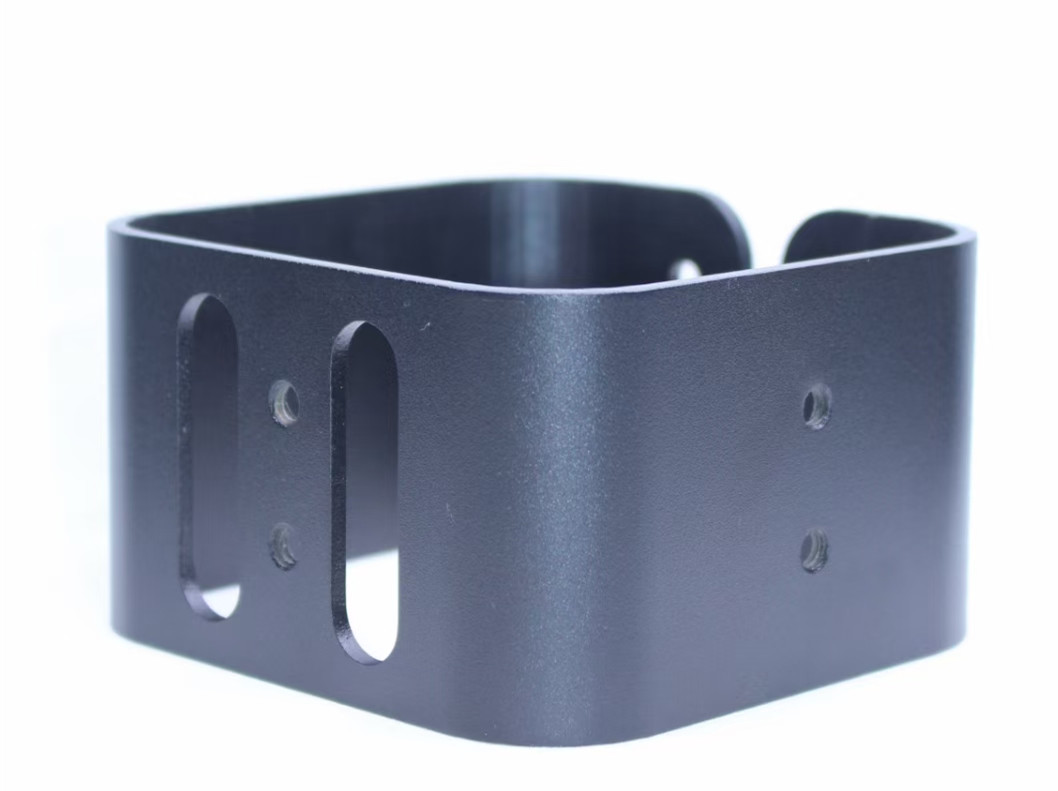
- Sheet Metal as a Structural Alternative Not every "arm" or bracket needs to be a solid block of aluminum. Redesigning as 5052 sheet metal, laser-cut and CNC press-brake formed, can bring tooling cost to essentially zero. Ribbing or swage lines add back structural rigidity in thin sheet without a return to solid stock.
Comparison: Aluminum Manufacturing Costs at ~2,500 Units/Year
|
Process |
Tooling Cost |
Unit Price |
Lead Time |
Geometric Flexibility |
|
CNC Machining |
$0 |
High |
2–3 Weeks |
Moderate |
|
Aluminum Extrusion |
$1,500–$3k |
Lowest |
4–6 Weeks |
Low (2D profile only) |
|
Permanent Mold Casting |
$5,000–$8k |
Low |
6–8 Weeks |
High |
|
Die Casting (HPDC) |
$25,000+ |
Very Low |
10–12 Weeks |
Highest |
|
Sheet Metal |
$0–$500 |
Moderate |
1–2 Weeks |
Moderate (folded) |
FAQ: Key Considerations for Aluminum Design
Q: At what volume does die casting actually become cheaper than CNC? A: The break-even point generally falls somewhere between 3,000 and 5,000 units. Below that, the hardened steel die's cost usually makes total cost of ownership higher than CNC or gravity casting, even though the per-part casting price looks lower on paper.
Q: Can I design for CNC now and move to die casting later if volume grows to 10,000+ units? A: Yes, if the design follows "forward-compatible" DFM principles from the start — a roughly 1.5-degree draft on vertical walls and consistent wall thickness even while being CNC machined — so the transition later doesn't require a ground-up redesign.
Q: Why is extrusion tooling so much cheaper than casting or die casting tooling? A: Extrusion tooling is essentially a shaped plate with an opening cut through it — pushing hot aluminum through that opening is a fast, continuous process, which is fundamentally simpler and cheaper than building a cavity mold. Any bracket- or rail-shaped part is worth checking against extrusion first.
Q: How does alloy choice change based on the process? A: Each process has a "native" alloy it's optimized for — 6061-T6 for CNC machining, A380 or A356 for casting, and 6063 for extrusion. Picking the alloy that matches the intended process from the start avoids property mismatches later.
Q: What's the biggest mistake engineers make at this volume range? A: Locking in a CNC-optimized geometry (square edges, no draft, inconsistent wall thickness) before getting a second opinion on whether casting or extrusion actually fits the volume better — that's exactly the "design it three times" trap this question is trying to avoid.
Why Partner with EasoonMade?
Nobody wants to design the same part three separate times just to compare quotes. A useful manufacturing partner gets involved during the CAD phase, not after tooling decisions are already locked in — reviewing a preliminary design against multiple processes and showing concretely what changes would unlock casting or extrusion savings, rather than returning a single quote with no context.
Whether the right fit turns out to be high-speed CNC milling, permanent mold casting, or a custom extrusion profile, getting that comparison before committing to one process is what actually keeps a 2,000–3,000 unit run profitable.
Stop guessing and start designing for profit. Submit your project to EasoonMade today for a free manufacturing process consultation and quote.
Comment