"Why Do Suppliers Offer Ambitious Delivery Dates Without Explaining Capacity?
Jul 09,2026 | Tommy
"Why Do Suppliers Offer Ambitious Delivery Dates Without Explaining Capacity?"
TL;DR
When medical and aerospace buyers move parts from rapid prototyping into low-volume production, the failures rarely come from a shop's machining ability — they come from five predictable process gaps: tight tolerances quoted without a technical conversation, small-batch orders quietly deprioritized behind large production runs, delivery dates promised without accounting for downstream bottlenecks like anodizing or heat treat, missing or incomplete documentation on parts that require full traceability, and status updates that stay "everything's fine" right up until they aren't. Each of these has a concrete fix: a real tolerance conversation before quoting, dedicated low-volume capacity, lead times that include every downstream process step, documentation delivered as a standard part of the shipment, and proactive updates the moment a risk appears. Suppliers that close these five gaps are the ones medical and aerospace buyers keep coming back to.
The Pattern Behind the Complaints
Anyone sourcing precision parts for orthopedic instruments, endoscopic components, surgical robotics, aerospace brackets, turbine accessories, or precision shaft assemblies has likely run into some version of the same story: the quote comes back fast, the tolerance callout gets a confident "±0.01mm, no problem," and the delivery date sounds reasonable. Then the parts arrive with bore diameters out of spec, coaxiality that doesn't meet the print, or dimensions that shifted after surface treatment — and the whole batch can't be assembled.
Reddit threads on manufacturing sourcing capture this well: one commenter called quoting tight tolerances without asking a single clarifying question "a huge red flag," and another described receiving parts with nonconformances, damaged sealing surfaces, poor anodizing, and missing features. None of this is really about whether a shop can hit a tolerance. It's about whether the shop asks the right questions before committing to one — and whether the rest of the process (scheduling, finishing, documentation, communication) is built to actually deliver on that commitment.
Pain Point 1: Tight Tolerances Quoted Without a Technical Conversation
A ±0.01mm callout on a medical or aerospace print gets a same-day "no problem" with no follow-up questions about datum structure, fixturing, or how the tolerance survives post-machining processes like anodizing or heat treat. Parts come back with bore diameters out of tolerance, coaxiality that fails inspection, or dimensions that shifted after surface treatment — and assembly becomes impossible.
What this actually signals: a shop willing to commit to a number without understanding how it will be held is a shop that hasn't thought through the process yet. The commitment should come after a conversation about datums, fixturing strategy, and how much dimensional movement to expect from finishing steps — not before.
Pain Point 2: Small-Batch Orders Get Deprioritized
Orders of 10, 20, or 50 pieces get a fast, friendly quote — but the shop's real revenue comes from runs of 5,000 or 10,000 units. So the quote is fast and the production is slow. Buyers hear "material's waiting," "machine's occupied," "next week," while their job quietly gets pushed behind a larger, more profitable order. Industry data on small-batch orders shows this isn't anecdotal: batches under 100 units correlate with a measurably higher rate of delay and rejection compared to production-scale runs.
What this actually signals: a shop needs a scheduling model where prototype and low-volume work has protected capacity, not just leftover capacity between production jobs.
Pain Point 3: Delivery Dates Promised Without Accounting for Downstream Steps
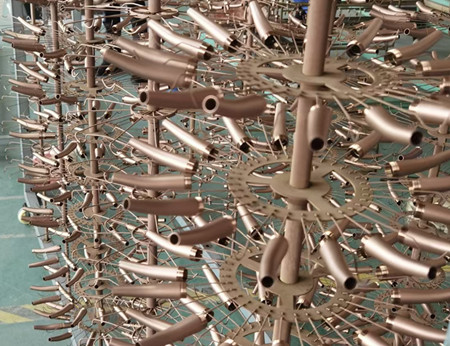
A buyer asks for delivery in two weeks and gets a "no problem." Machining finishes on time — but then the part sits in an anodizing queue, a heat-treat queue, or a laser-marking queue, each with its own backlog outside the shop's direct control. Two weeks becomes five. Industry commentary on this pattern is blunt: suppliers offer ambitious delivery dates without explaining their actual capacity, and lead times explode after machining specifically because the supplier loses visibility and control once parts leave the building for outside processing.
What this actually signals: a lead time quote that only covers machining time isn't a real lead time. It has to include every outside process step the part actually needs, with realistic queue times for each vendor in that chain.
Pain Point 4: Documentation Treated as an Afterthought
In medical and aerospace sourcing especially, buyers increasingly report parts arriving physically correct but missing the paperwork that makes them usable: no Material Certification, no Certificate of Conformance, no First Article Inspection, no full dimensional inspection report, no traceability records. Aerospace buyers are particularly sensitive to this, and for good reason — as one industry observation puts it, the paperwork is part of the deliverable, and missing or incorrect certifications can get an entire shipment rejected regardless of part quality.
What this actually signals: documentation isn't an add-on service. For regulated industries, it needs to ship with the parts as a default, not something the buyer has to chase down after delivery.
Pain Point 5: Status Updates That Don't Reflect Reality
Week one: "Everything is on schedule." Week two: "Everything is fine." Week three: "Actually, we have a problem." The underlying issue — a material shortage, a failed machining operation, an anodizing rework — was usually known internally well before week three, but the buyer only finds out once it's too late to plan around it. Procurement managers consistently name this as the single most frustrating pattern in supplier relationships.
What this actually signals: "on schedule" should mean something. A supplier that reports status accurately, including early warning of risk, is worth more to a buyer than one that reports only good news until it can no longer avoid the bad news.
Five Solutions That Address All of This
- Require a technical conversation before quoting tight tolerances.Datum structure, fixturing approach, and expected dimensional shift from finishing should all be discussed before ±0.01mm-class tolerances get committed to in writing.
- Give low-volume and prototype orders dedicated capacity.Don't schedule 10-piece medical or aerospace orders into the same queue as 10,000-piece production runs — protect a lane for them so they don't get bumped.
- Quote lead times that include every downstream process.Anodizing, heat treat, laser marking, and any other outside process should be factored into the delivery date with realistic queue times, not left as an unstated risk.
- Make documentation a standard deliverable, not a request.Material Certs, COC, FAI, inspection reports, and traceability records should ship with the parts automatically for medical and aerospace work.
- Report status honestly, including bad news early.A supplier that flags a material shortage or a failed operation the day it happens gives the buyer time to plan. One that waits until week three doesn't.
Comparison: Reactive Supplier vs. Proactive Supplier
|
Issue |
Reactive Supplier |
Proactive Supplier |
|
Tight tolerance quoting |
"No problem" with no follow-up questions |
Discusses datums, fixturing, and post-finish dimensional shift before committing |
|
Small-batch scheduling |
Fast quote, slow production — bumped behind large orders |
Dedicated capacity/lane for low-volume and prototype work |
|
Delivery date accuracy |
Quoted date covers machining only |
Quoted date includes anodize, heat treat, and every outside process step |
|
Documentation |
Material Cert, COC, FAI, or traceability missing at delivery |
Full documentation package ships automatically with every order |
|
Status communication |
"On schedule" until a problem can no longer be hidden |
Risks flagged the same week they're identified |
FAQ
Why is a fast "yes" on a tight tolerance actually a warning sign? Because a tolerance in the ±0.01mm range can't be reliably committed to without understanding datum structure, fixturing strategy, and how much a part will move during anodizing or heat treat. A supplier that skips those questions is guessing, not committing.
Why do small orders take longer than large ones, even though they're simpler? Because shops generate most of their revenue from large production runs, small orders often get scheduled around that larger work rather than ahead of it — even when the quoted lead time suggested otherwise.
Why does a two-week lead time turn into five weeks? Most delivery estimates only account for machining time. Once a part leaves the shop for anodizing, heat treat, or marking, it enters queues the original supplier doesn't fully control, and that's usually where the real delay happens.
Why does missing paperwork matter if the part itself is fine? In regulated industries like medical and aerospace, documentation such as Material Certs, COC, FAI, and traceability records is often a contractual or regulatory requirement. A physically good part without the right paperwork can still cause an entire shipment to be rejected.
What should a supplier tell me if something goes wrong mid-production? They should tell you the same week it happens — not after several more weeks of "everything is fine" status updates. Early notice is what lets a buyer actually plan around a delay instead of absorbing it at the last minute.
Comment