"The Machine Shop Should Have Flagged That Before Cutting Material" — 5 Broken Promises in Medical CNC Manufacturing (And How to Fix Every One)
Jun 23,2026 | Tommy
"The Machine Shop Should Have Flagged That Before Cutting Material" — 5 Broken Promises in Medical CNC Manufacturing (And How to Fix Every One)
TL;DR
Five failures repeat across medical and aerospace CNC supply chains: no DFM before quoting, tolerance promises without inspection data, prototype orders deprioritized behind production runs, inconsistent surface finishing, and suppliers who hide problems until it's too late. None of these are inevitable. All of them are process failures — and all of them have a documented fix. If your supplier isn't doing these things before the first chip hits the floor, find one who is.
The Forum Said It First
Engineers don't complain quietly. Across machining forums and manufacturing communities, the same frustrations surface with enough regularity to call them industry-wide:
"The machine shop should have flagged that before cutting material."
"Anybody can say they can hold tolerance. The inspection report tells the real story."
"Prototype jobs always seem to get pushed behind production work."
"The machining was fine. The anodizing ruined the part."
"Bad news early is better than bad news late."
Five quotes. Five distinct failure modes. And behind each one, a real project delayed, a real assembly that didn't fit, a real engineer who had to explain the schedule slip to their program manager.
Here's what's actually going wrong — and what a competent supplier does differently.
Failure 1: No DFM Before Quoting
What happens: The customer uploads a STEP file and a PDF drawing. The supplier responds: "Can do." Production begins. Three days in, the machinist discovers the internal radius is too tight for any available end mill, the deep cavity requires a reach-to-diameter ratio no standard tool can achieve, the thin wall deflects under cutting forces, and one of the hole patterns geometrically cannot be fixtured for machining without relocating the datum.
The result: redesign, remachining, and a project timeline that slipped by weeks — for a problem that was visible in the CAD file on day one.
What customers actually need: A supplier who runs DFM analysis before the quote leaves the building. Not a cursory glance — a documented review that identifies undersize radii, inaccessible features, thin-wall deflection risk, and fixturing conflicts, and returns specific modification recommendations with engineering rationale.
The question is not whether your part can be machined. It's whether it can be machined to your tolerance, on your timeline, with your surface finish, at your budget — and a supplier who skips DFM cannot answer that question honestly.
Failure 2: Tolerance Promises Without Proof
What happens: The customer specifies ±0.01mm bore diameter, coaxiality within 0.005mm, and flatness on a sealing surface. The supplier says: "No problem." The parts arrive. CMM inspection reveals bore diameters at the outer limit of tolerance on 60% of parts, coaxiality failures on two of five datum references, and a flatness deviation that prevents the gasket from sealing.
Assembly fails. The batch is rejected. The supplier offers a discount on the next order.
What customers actually need: This is where the 5-axis CNC vs 3-axis question becomes directly relevant for complex medical custom metal parts. A 3-axis setup requires multiple fixturing operations to reach compound-angle features — and each re-fixturing introduces datum shift error that accumulates directly into your tolerance budget. A 5-axis setup machines complex geometry in a single setup, eliminating repositioning error and producing measurably better geometric consistency on coaxiality and true position callouts.
But process selection alone is not enough. Customers need: a First Article Inspection report with full CMM data covering every Key Product Characteristic, a material certificate traceable to heat lot, and SPC data demonstrating process stability across the production run. "No problem" is not a quality system. An inspection report is.
Failure 3: Prototype Orders Pushed to the Back of the Queue
What happens: The customer needs 10 pieces for DVT. The quoted lead time is 10 days. The actual lead time is 4 weeks — because a 500-piece production order came in after the prototype was scheduled, and the supplier rescheduled accordingly without notification.
The customer finds out when they follow up on day 12 and are told the parts haven't started yet.
What customers actually need: Prototype and small-batch work — 5, 10, 20 pieces for EVT, DVT, or regulatory submission — operates on a fundamentally different timeline than production. Development schedules are not flexible. A one-week slip in a prototype can push a product launch by a full quarter.
Customers need three things: a realistic lead time confirmed against actual shop capacity at the time of order, weekly progress updates with milestone confirmation, and a supplier who has a dedicated capacity allocation for prototype work — not one who treats small orders as schedule fillers between production runs.
Failure 4: Surface Finishing That Undoes the Machining
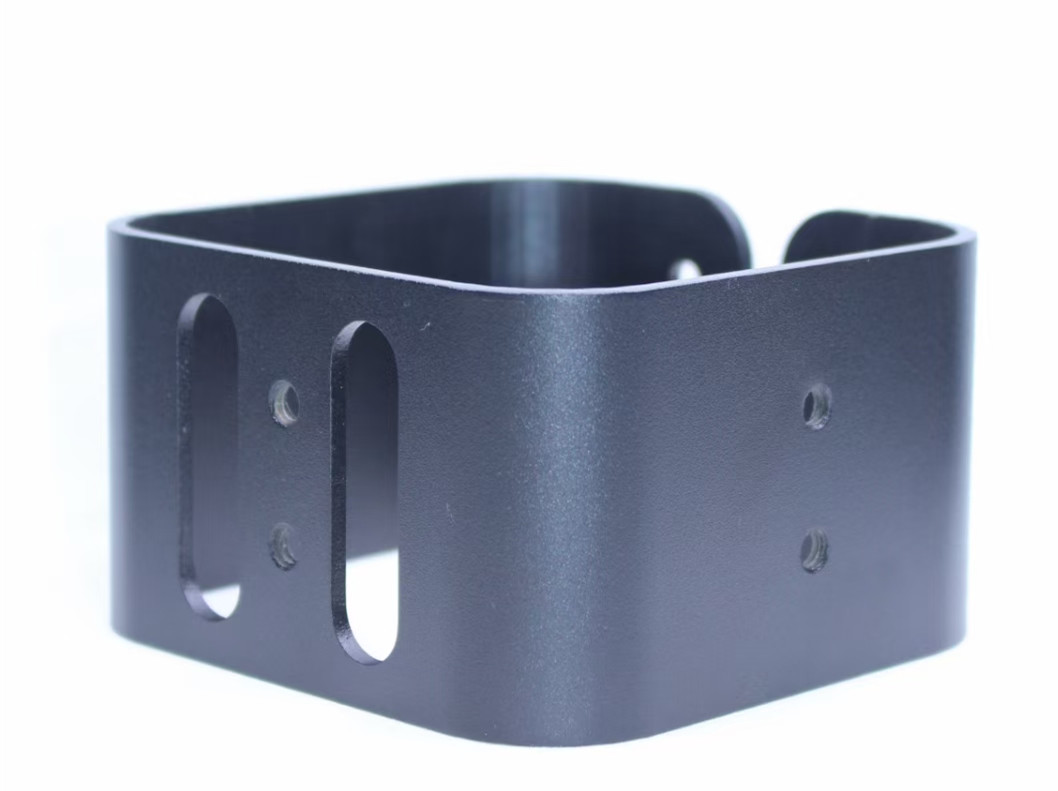
What happens: The machined dimensions are correct. The anodizing isn't. The customer ordered Type II black anodize on an aluminum medical enclosure. The parts arrive with visible color variation across the batch — some matte, some with a slight purple undertone — plus handling scratches on two parts and a surface inclusion on one anodized face that will be visible in the final assembly.
"The machining was fine. The anodizing ruined the part."
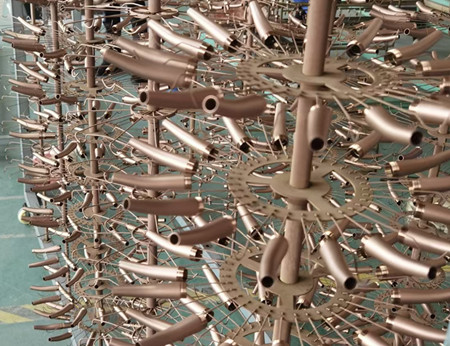
This is especially common with aluminum components requiring black or color anodizing, where bath chemistry variation, rack contact point placement, and pre-treatment surface condition all affect the final result — and most suppliers subcontract finishing without managing the process.
What customers actually need: Pantone or RAL color confirmation before production, a physical limit sample approved by the customer before batch processing, individual part packaging to prevent contact damage in transit, and a supplier who owns the surface finishing relationship — not one who drops the parts at a subcontractor's dock and hopes for the best.
Failure 5: Communication That Only Surfaces Problems at the Last Minute
What happens: The customer asks for a status update mid-production. The supplier replies: "Everything is on schedule." Two weeks later: "We found a problem." The actual sequence of events: raw material was on backorder for five days, a CNC program error scrapped the first run of parts, and the anodizing subcontractor rejected the batch for surface prep issues and required a reprocess cycle. The customer knew none of this until delivery was already late.
"Bad news early is better than bad news late."
A supplier who surfaces problems early gives the customer options: expedite an alternative material, adjust the downstream assembly schedule, reallocate engineering resources. A supplier who hides problems until the last moment eliminates all of those options and transfers the entire cost of the delay onto the customer.
What customers actually need: Proactive communication at defined milestones — material receipt confirmed, first-off inspection passed, surface finishing completed, parts shipped — with same-day notification if any milestone is at risk, including the specific cause and the revised timeline.
Comparison Table: What Separates Reliable Suppliers From the Rest
|
Evaluation Criteria |
Reliable Supplier |
Unreliable Supplier |
|
Pre-quote process |
DFM report with specific modification recommendations |
Immediate "can do" with no review |
|
Tolerance evidence |
CMM report, Cpk data, FAI with datum documentation |
Verbal assurance only |
|
Axis capability |
5-axis for complex geometry; documents setup strategy |
3-axis default; re-fixtures without disclosing error risk |
|
Prototype priority |
Dedicated capacity allocation; confirmed lead time |
Small orders deprioritized behind production runs |
|
Surface finishing |
Pantone/limit sample approval; owns subcontractor QC |
Subcontracts without process control or color verification |
|
Communication |
Proactive milestone updates; immediate risk notification |
Status updates only when customer asks; problems disclosed late |
|
Quality documentation |
FAI, SPC, material cert, inspection report per shipment |
Certificate of conformance only |
FAQ
Q1: When does 5-axis CNC actually matter vs. 3-axis for medical parts?
5-axis machining is not always necessary — but for complex medical custom metal parts with compound angles, deep internal features, or tight coaxiality requirements, it eliminates the repositioning error that accumulates across multiple 3-axis setups. If your part requires more than two fixturing operations on a 3-axis machine, 5-axis will produce better geometric consistency and almost always reduce total cycle time despite higher hourly rates.
Q2: What should a DFM report actually contain?
A useful DFM report identifies every feature that presents manufacturing risk, states the specific risk (tool access, wall thickness, fixturing conflict, tolerance achievability), proposes a modification with engineering justification, and flags features that are feasible but require special tooling or process steps that affect cost or lead time. A one-line email saying "looks fine" is not a DFM report.
Q3: Why do anodizing results vary between batches?
Anodize color and texture are sensitive to bath temperature, sulfuric acid concentration, current density, pre-treatment surface condition, and alloy composition. 6061-T6 and 7075-T6 anodize differently even with identical process parameters. Batch-to-batch consistency requires tightly controlled chemistry, a qualified limit sample, and inspection against that sample before shipment — practices that subcontracted finishing operations frequently skip.
Q4: How do I verify a supplier's actual prototype lead time before ordering?
Ask for their current shop load and confirmed available capacity dates — not a standard quoted lead time. A supplier with integrity will tell you their next available start date based on actual scheduling. If they quote you 10 days without checking their current queue, that number is not a commitment; it's an estimate designed to win the order.
Q5: What is the minimum documentation package I should require for medical CNC parts?
At minimum: a First Article Inspection report with full CMM dimensional data, a material certificate with heat lot traceability, a surface treatment process record (if applicable), and a Certificate of Conformance referencing the specific drawing revision. For regulated medical device applications, add a PPAP package and process FMEA. If your supplier cannot produce these documents, they are not equipped for medical supply chain requirements.
Comment