
The Hidden Failure Point: Solving Hardware Reliability in Metal Forming
For many engineers, the most frustrating stage of product development isn't the initial design, but the assembly. You’ve invested in high-quality laser cutting and bending, only to have a PEM nut pop out during final assembly or a threaded stud strip because the host material wasn't properly prepared. In the world of metal forming, hardware insertion is often treated as an afterthought, leading to loose fasteners, misaligned threads, and compromised structural integrity of the entire enclosure.
How do you ensure that every fastener remains permanently anchored, even under high torque or vibration? At Easoonmade.com, we treat hardware insertion as a critical sub-discipline of metal forming, utilizing specialized equipment and pressure-controlled processes to ensure 100% reliability.
Precision Press Riveting: Our 3-Station Capability
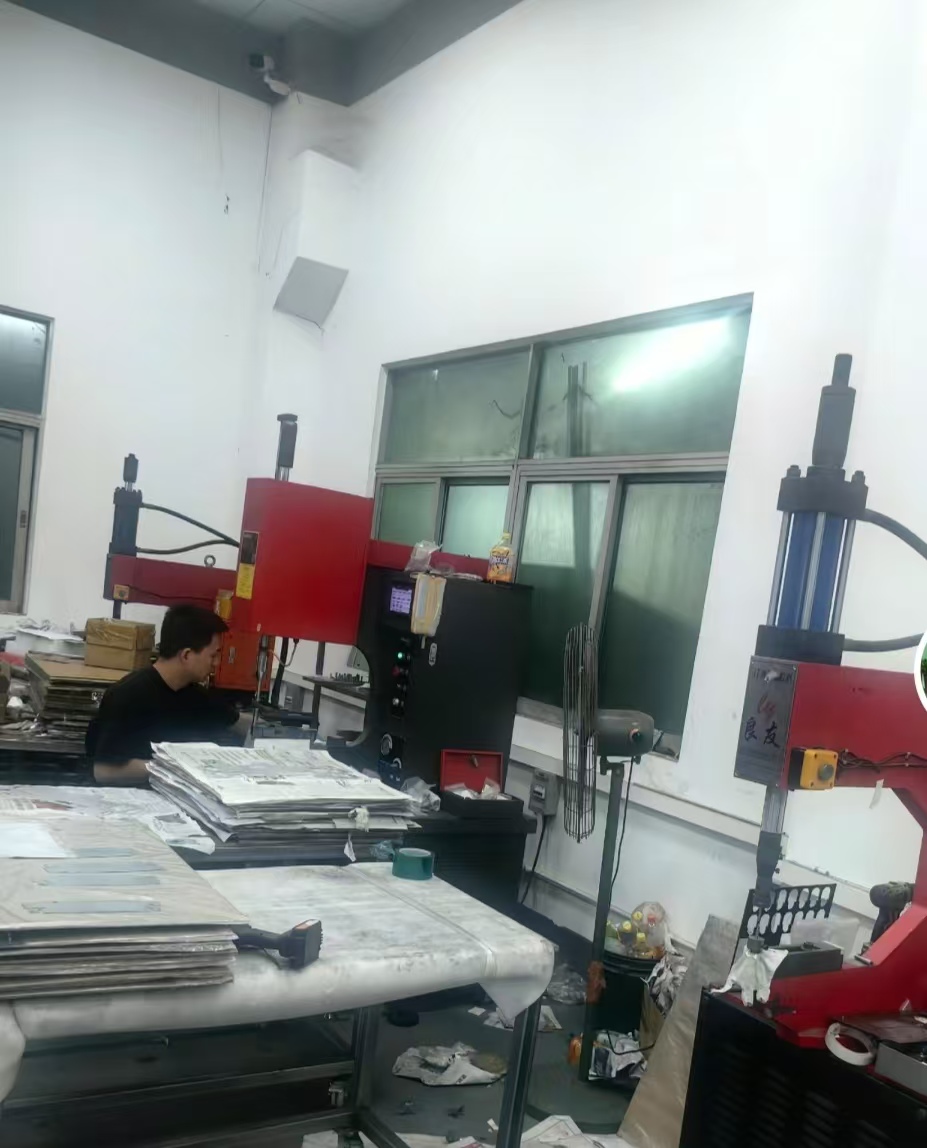
The image above highlights a dedicated section of our facility equipped with 3 specialized press riveting machines. Unlike manual hammering or primitive arbor presses, these machines are designed for high-repetition, high-accuracy metal forming tasks.
-
Controlled Pressure Application: Each machine allows for precise adjustment of the "squeeze" force. This is vital because different materials and fastener sizes require specific tonnages to flow the metal into the fastener's clinching ring without deforming the surrounding area.
-
Consistency Across Batches: With three stations, we can set up dedicated lines for different fastener types (e.g., nuts, standoffs, and studs), ensuring that settings remain consistent throughout a production run.
-
Complex Geometry Handling: The throat depth and anvil setup of these machines allow us to reach into tight corners of pre-bent enclosures, a common challenge in metal forming for medical and industrial electronics.
Material-Specific Metal Forming Challenges
Different metals behave differently under the localized pressure of hardware insertion. Our expertise covers the most common industrial materials:
-
Aluminum: While easy to form, aluminum can easily "mushroom" or crack if the pressure is too high. We use specialized anvils to maintain surface flatness.
-
Stainless Steel: As a much harder material, stainless steel requires significantly higher pressure and specific "hardened" fasteners. Our machines provide the necessary force to ensure the host metal flows correctly into the fastener.
-
Copper: Often used for electrical busbars, copper is soft and highly conductive. We ensure that the metal forming process doesn't leave unsightly marks or burrs that could interfere with electrical connectivity.
Technical FAQ: Hardware Insertion & Metal Forming
Q: Why choose press riveting over welding for fasteners?
A: Press riveting is a "cold" metal forming process. Unlike welding, it introduces no heat, meaning there is no thermal distortion, no discoloration, and the backside of the part remains flush and aesthetically clean. This is essential for high-end medical equipment housings.
Q: What tolerances can you maintain during the insertion process?
A: We typically maintain a positional tolerance of ±0.1mm for fastener locations. By using dedicated jigs and fixtures on our press machines, we ensure that the fasteners align perfectly with the mating holes on your PCBs or other internal components.
Q: Can you install hardware into very thin sheets?
A: Yes. We specialize in metal forming for thin-gauge materials (starting from 0.8mm). For extremely thin sheets, we select specific "miniature" clinching hardware designed to stay secure without bulging the material.
Q: How do you verify the quality of the "join"?
A: We perform periodic "push-out" and "torque-out" tests based on the fastener manufacturer’s specifications. This ensures that the metal forming interaction between the part and the fastener meets the required industrial strength standards.
Applications in High-Precision Industries
Our hardware insertion and metal forming services are vital for:
-
Medical Device Chassis: Where internal components must be mounted securely with zero risk of a fastener falling into sensitive electronics.
-
Telecommunications Racks: Requiring dozens of threaded standoffs that must be perfectly perpendicular for rack-mount card guides.
-
Industrial Power Supplies: Where copper busbars require heavy-duty studs for high-current cable connections.
Why Partner with Easoonmade.com?
At Easoonmade, we bridge the gap between simple fabrication and complex assembly. Our investment in 3 dedicated press riveting stations demonstrates our commitment to the "final 10%" of the manufacturing process—the part that ensures your product is actually buildable. We offer a low-risk environment for low-volume press riveting prototypes and the scalability needed for mass production.
By integrating hardware insertion directly into our metal forming workflow, we reduce your logistical overhead and provide a "ready-to-assemble" component straight from our factory to your line.