
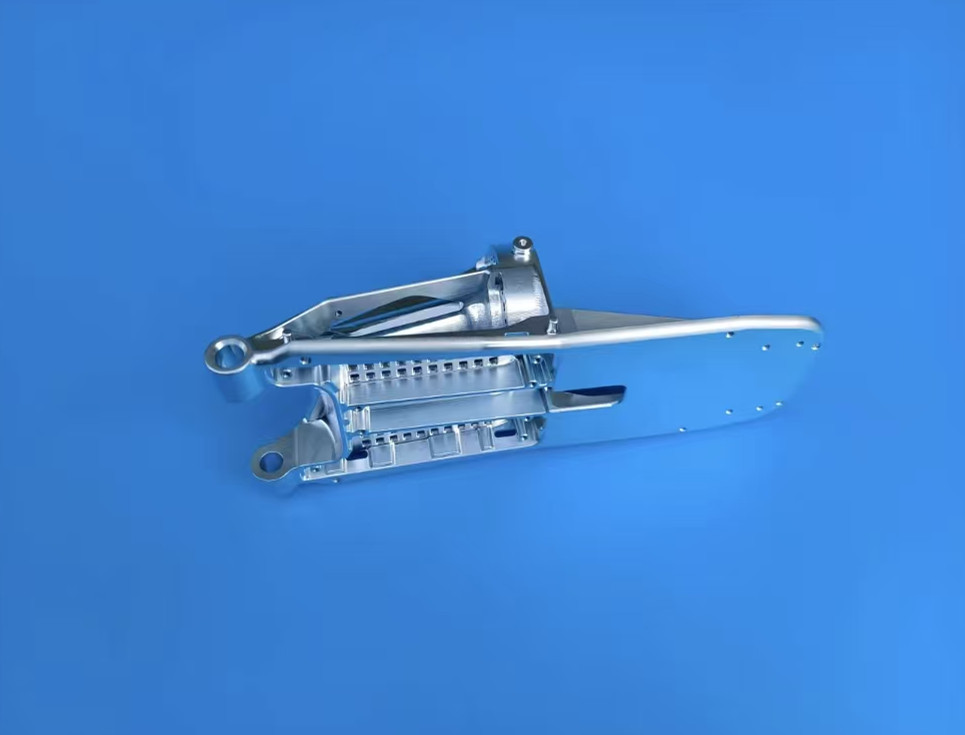
Precision CNC for Robots — meeting tight-tolerance needs in modern robotic systems
Engineering teams developing robotic platforms often face challenges when sourcing mechanical components that require consistent tolerances, stable dimensional accuracy, and reliable structural performance. In many projects, robot components differ greatly in geometry and functional requirements, meaning each part may require a different machining approach or manufacturing route. When tolerances are too tight for conventional production — or when prototype iterations are needed before mass production — Precision CNC for Robots becomes a practical and dependable solution.
This product page focuses on CNC-machined robotic parts designed for industrial robots, automation equipment, humanoid platforms, robotic motion systems, research projects, and custom robotic mechanisms.
Component Requirements Define the Machining Strategy
Different robotic parts carry different structural and precision demands. The machining process is selected based on shape complexity, tolerance class, and functional load conditions rather than a single fixed workflow.
For example, compact components such as sensor brackets, joint caps, or servo mounts often require small-scale milling with stable dimensional repeatability, especially when these parts interact with bearings or shaft interfaces. On the other hand, structural housings, base frames, or robotic arm sections may require multi-axis CNC machining to manage large surfaces, curved profiles, and chamfered transitions.
For high-precision rotating parts — such as robot joints, couplings, or gearbox shafts — lathe turning combined with secondary milling is often applied to maintain roundness and concentricity. Where weight reduction is important, lightweight aluminum machining and internal cavity milling can support improved motion efficiency.
Through task-specific machining selection, Precision CNC for Robots helps match part geometry with the most suitable manufacturing process.
Applications of Precision-Machined Robot Components
Precision CNC machining for robotic systems is widely used across:
-
industrial automation robots
-
robotic assembly equipment
-
humanoid and service robots
-
inspection and testing robots
-
collaborative robot platforms
-
mobile robot chassis and motion units
-
research prototypes and engineering validation builds
Common machined robot components include:
-
robot arm brackets and mounting plates
-
servo motor housings and shaft adapters
-
sensor and camera mounting fixtures
-
linear actuator interfaces
-
gearbox covers and precision joint rings
-
control module frames and protective shells
-
lightweight structural reinforcement parts
Each component is produced according to functional positioning accuracy, mating geometry, and load behavior required in its working environment.
Material Selection for Robotic Machining Projects
Material choice is determined by mechanical performance, environmental exposure, and motion design intent.
Typical materials used in Precision CNC for Robots include:
-
aluminum alloys for lightweight structural parts
-
stainless steel for wear-resistant or load-bearing components
-
tool steel for connecting interfaces requiring strength stability
-
engineering plastics for isolation brackets and non-conductive frames
Low-volume or prototype robotic components can also be processed in alternative materials during early testing, before switching to final production materials once dimensional and performance targets are validated.
Balancing Dimensional Accuracy With Practical Manufacturing
Instead of prioritizing extreme tolerances across an entire part, the machining strategy emphasizes precision where functionally necessary, especially in:
-
bearing seats
-
shaft holes
-
alignment faces
-
servo interfaces
-
sliding tracks
-
coupling junctions
Other surfaces may adopt more practical tolerances to support cost-efficiency and shorter production cycles.
This approach is especially valuable in:
-
low-volume robotic prototypes
-
engineering validation builds
-
small-batch production runs
By aligning tolerance control with actual working conditions, Precision CNC for Robots helps maintain both manufacturing stability and cost balance.
Supporting Early Development and Iterative Engineering
In many robotics projects, design adjustments occur frequently during early testing. CNC machining enables:
-
quick revisions across design iterations
-
small-batch production without tooling investment
-
geometry adjustments based on test results
This makes it suitable for:
-
R&D robotics teams
-
small robotics manufacturers
-
automation integration companies
-
labs and engineering departments
The goal is not to oversell performance claims, but to provide a practical machining route that supports predictable engineering outcomes.