Revolutionizing Acrylic Fabrication
▌ Solving Industry Pain Points
Traditional acrylic manufacturing traps innovators in a costly cycle:
- 6-12 week lead times for custom designs
- $3,000+ mold investments even for prototypes
- 500-unit MOQs excluding small-batch projects
- Limited geometric complexity from outdated techniques
Our Precision Acrylic Part Manufacturing disrupts this model through digital-first fabrication:
✅ 72-hour turnaround for most orders
✅ Zero tooling costs (<100 units)
✅ MOQ 1 with bulk-order pricing
✅ ±0.05mm tolerance for mission-critical parts
mermaid
复制
graph LR
A[Your Design] --> B[AI-Driven Process Selection]
B --> C[3D Engraving/CNC Cutting]
B --> D[Multi-Layer Bonding]
B --> E[Optical Polishing]
C & D & E --> F[Quality Control] --> G[48-72hr Shipping]
▌ Application-Specific Solutions
1. Retail & Exhibition Displays
Problem: Generic displays fail brand aesthetics; minimum orders exceed budget.
Solution: Custom Acrylic Displays with Transparent 3D Effects:
- Backlit logo walls with depth-engraved branding
- Multi-layer interactive kiosks (MOQ 1-50 units)
- Keyword Target: "Boutique acrylic retail fixtures rapid turnaround"
2. Medical & Scientific Components
Problem: 12-week delays for FDA-approved prototypes.
Solution: Precision Acrylic Part Manufacturing for: - Microfluidic chips with 50μm channels
- Surgical guide prototypes (ISO 13485 compliant)
- Keyword Target: "Low-volume acrylic labware fabrication"
3. Architectural Signage
Problem: Limited dimensionality in traditional signage.
Solution: 3D Engraving for: - Topographic maps with 5mm relief depth
- Holographic-effect directional signs
- Keyword Target: "Small-batch architectural acrylic lettering"
4. Consumer Electronics
Problem: Injection molding costs prohibitive for prototypes.
Solution: Thin-wall (<1mm) Precision Acrylic Part Manufacturing: - Transparent device housings with snap-fit joints
- Tactile control panels with back-engraved icons
- Keyword Target: "Low-MOQ acrylic enclosure prototyping"
▌ Adaptive Manufacturing Process Matrix
| Design Requirement | Optimal Process | Technical Advantages |
|---|---|---|
| Sharp Edges (±0.1mm) | CNC Laser Cutting | Kerf <0.15mm, no post-processing |
| Depth Effects (0.1-8mm) | 3D Engraving | 0.025mm depth control, 7-axis precision |
| Optical Clarity (>92%) | Diamond Tool Polishing | Light diffusion <2% |
| Multi-Layer 3D Effects | Optical Adhesive Bonding | Bubble-free seams, UV resistance |
▌ Technical Breakthroughs Driving Efficiency
1. Dynamic Process Selection Engine
Our proprietary AI analyzes your 3D model to automatically assign:
- High-Speed Cutting for flat geometries
- Variable Depth Engraving for textures
- Hybrid Fabrication for complex assemblies
Slashes production planning from 5 days → 15 minutes 2. Transparent 3D Effects Technology
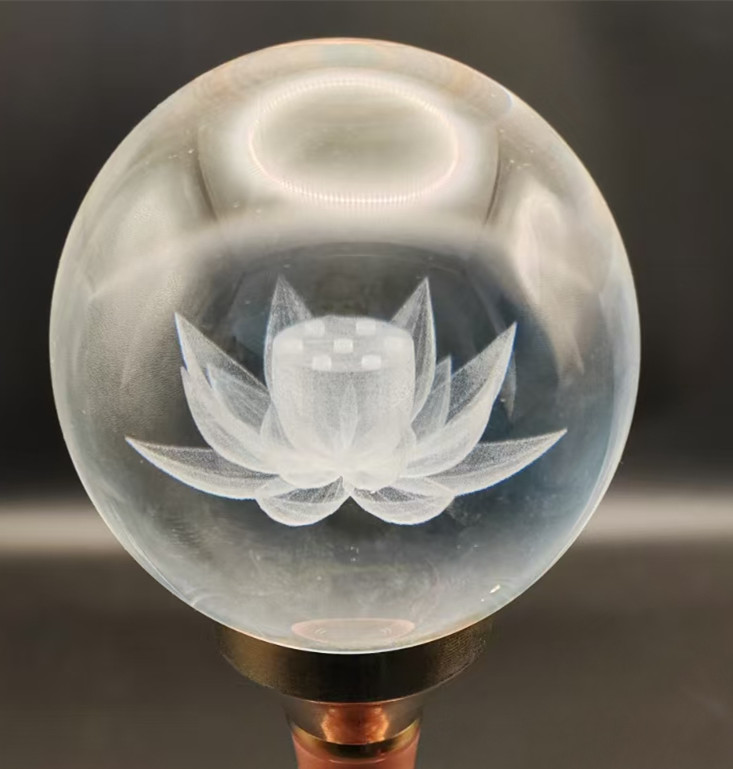
Create depth illusions without multi-material printing: - Refractive Layer Stacking: 3+ bonded sheets with engraved light channels
- Subsurface Laser Diffusion: Internal "floating" elements
- Example: 15mm-thick museum display appearing 50mm deep
Eliminates 80% assembly labor versus traditional methods 3. Small-Batch Optimization - Nesting Algorithms: Fit 37% more parts per sheet
- Just-In-Time Material Sourcing: Local acrylic suppliers reduce lead times
- Modular Tooling: Change designs in minutes, not weeks
▌ Case Study: Aerospace Lighting Manufacturer
Challenge: Needed 12 acrylic lens prototypes ($18k quote, 14-week lead)
Our Solution:
- Used 3D Engraving for optical surfaces
- Implemented multi-axis polishing