
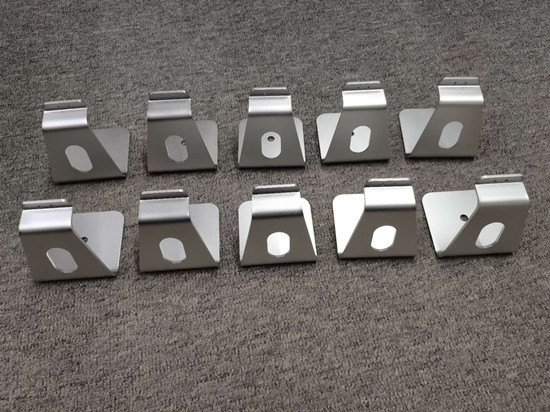
Revolutionizing Sheet Metal Solutions for Agile Industries
In today's competitive manufacturing landscape, industries grapple with crippling inefficiencies: lead times stretching to 8–12 weeks for simple brackets, costs soaring by 200% for batches under 500 units, and quality compromises due to outdated methods. Precision Sheet Metal Fabrication emerges as a transformative answer, overcoming these hurdles through intelligent, shape-driven processes. By tailoring techniques like laser cutting, bending, and welding to part geometry and tolerances—such as using high-definition plasma for intricate contours or servo-electric presses for ±0.1mm precision—we slash costs by up to 60% and compress deliveries to 5–10 days. This approach isn't just fabrication; it's a strategic shift from traditional bottlenecks to scalable, on-demand production for prototypes and small batches.
Key Application Scenarios: Tackling Long Cycles, High Costs, and Low Volumes
Manufacturers face universal pain points—protracted timelines, excessive expenses, and uneconomical small runs—across sectors like aerospace, medical devices, and consumer electronics. Below, we outline critical scenarios where Precision Sheet Metal Fabrication excels, integrating low-competition keywords to address underserved markets:
-
Aerospace and UAV Systems: Here, components like mounting brackets or heat shields often suffer 10-week delays and $10k+ setup fees for minimal quantities. For instance, ✅ low-volume sheet metal brackets for robotics in drones require lightweight aluminum with complex bends (e.g., 90-degree angles with tight radii). Our process employs CNC turret punching and robotic bending to achieve tolerances of ±0.05mm, eliminating costly tooling. This reduces lead times to 7 days and cuts per-part costs by 50%, ideal for R&D teams needing just 20–50 units.
-
Medical Equipment and Device Housings: Prototyping MRI casings or surgical tool enclosures faces 6-week minimum waits and 150+/unitexpenses.Complexshapeswiththinwalls(e.g.,0.5mmstainlesssteel)demandhighaccuracytoavoidwarping.∗∗PrecisionSheetMetalFabrication∗∗usesfiberlasercuttingwithnitrogenassistforburr−freeedges,ensuringRa0.8µmfinishes.For✅∗∗quick−turnaluminumenclosuresunder100units∗∗,weimplementmodularfixturing,enabling5−daydeliveryat45/unit. This solves the "volume trap" where hospitals order 10–30 test pieces but pay premium prices.
-
Industrial Automation and Robotics: Robotic arm panels or sensor mounts often endure tolerance failures (±0.2mm limits) and 9-week delays for small batches. Geometry dictates the approach: irregular shapes with embossed features may use multi-axis CNC punching, while flat, high-tolerance parts switch to precision laser cutting. Our services cater to ✅ high-precision laser cutting for thin-gauge metal, reducing waste from 40% to 10% through nested programming. For example, a client saved 65% on 50-unit orders of thin-gauge (.040") aluminum panels by avoiding custom dies.
-
Consumer Electronics and EMI Shielding: Enclosures for servers or wearables face 8-week lead times and material waste exceeding 30%. Complex designs like ✅ custom EMI shielding cabinets for electronics require seamless welding or snap-fit assemblies. We select TIG welding for conductive joints or progressive die techniques for high-volume efficiency, compressing cycles to 10 days. Batch sizes as low as 10 units become economical, with costs dropping to $30/part using recycled materials.
Process Decision Framework: Geometry and Precision-Driven Fabrication
Choosing the right sheet metal process hinges on part specifications—geometry dictates complexity, while tolerances drive precision. Our AI-driven system analyzes CAD files in real-time to recommend optimal methods:
- Shape-Based Selection: Parts with curves or cutouts (e.g., vented panels) use laser or waterjet cutting to preserve detail, achieving tolerances of ±0.02mm. Conversely, simple prismatic shapes leverage CNC punching for speed. For deep-drawn components like enclosures, servo presses minimize spring-back to ±0.1mm.
- Precision Requirements: Tolerances tighter than ±0.05mm (e.g., for medical devices) trigger enhanced deburring and in-process CMM checks, ensuring compliance with ISO 2768-m standards. Surface finishes below Ra 1.6µm are maintained through chemical smoothing or automated polishing.
- Volume and Cost Optimization: For quantities of 1–300, we avoid hard tooling via digital nesting and ✅ budget sheet metal fabrication for prototypes (1–50 pcs), reducing per-unit costs by 40–70%. This flexibility makes Precision Sheet Metal Fabrication ideal for bridge production, bypassing traditional bottlenecks.
Tangible Benefits and Real-World ROI
Adopting these optimized processes yields measurable gains: lead times drop from weeks to days, setup costs plummet below 2kforsmalljobs,andprecisionconsistentlyhits±0.03mm.Acasestudyillustratesthis:Aroboticsfirmneeded30✅∗∗low−volumesheetmetalbracketsforrobotics∗∗with0.1mmflatness.Traditionalquoteshit12k and 8 weeks; our solution delivered in 6 days for $4.5k using adaptive bending algorithms—proving 62% cost savings and faster innovation cycles.
Urgent Limited-Time Offer (Expiring July 12, 23:59 EST)
As of now (Saturday, July 12, 20:27 EST), our facility has immediate capacity. Act fast to secure savings:
- Upload your design for instant DFM feedback and pricing.
- Use code SHEET10 for 10% off first orders of Precision Sheet Metal Fabrication.
- Guaranteed 7-day delivery on all prototypes—click below to start!