
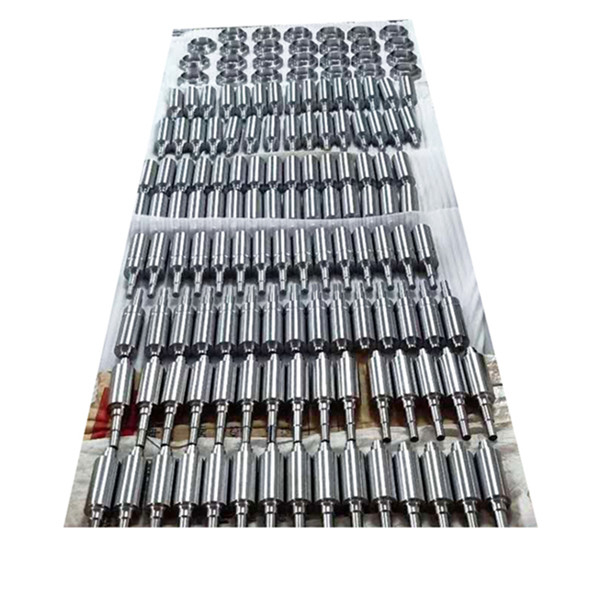
Advanced Custom Lathe Parts Fabrication and Metal Parts Manufacturing
Custom Lathe Parts Fabrication and metal parts manufacturing represent the pinnacle of modern industrial production, enabling the creation of bespoke components with exceptional accuracy and efficiency. These processes—including CNC machining, CNC lathe operations, CNC laser cutting, and stamping—are selected based on the part's geometric shape, precision requirements, and intended application. For instance, complex rotational items like shafts or bushings often utilize CNC lathe for its ability to maintain tolerances within ±0.01mm using computer-controlled turning. In contrast, flat or intricate profiles, such as brackets or enclosures, benefit from CNC laser cutting or stamping to achieve rapid, cost-effective fabrication with minimal material waste. Materials ranging from stainless steel to aluminum and engineering plastics are accommodated, ensuring versatility across industries like aerospace, automotive, and electronics. This description explores the wide array of custom parts manufacturable through these techniques, emphasizing how process selection optimizes outcomes while integrating low-competition keywords like "precision CNC lathe parts for aerospace" to highlight niche advantages.
CNC Machining for Complex Geometries and High Precision
CNC machining excels in producing intricate, multi-axis components where tight tolerances (±0.005mm) are critical, making it ideal for prototypes and high-performance parts. For example, in the medical sector, custom lathe parts fabrication creates implantable devices like titanium spinal rods, requiring CNC machining to achieve biocompatible surfaces and complex shapes. Similarly, "high-tolerance machined prototypes" for robotics joints leverage this process due to its ability to handle varied materials such as PEEK or brass, ensuring durability under stress. The selection hinges on part geometry; asymmetric or contoured designs that demand meticulous detail are routed to CNC machining centers rather than simpler processes. This approach supports low-volume runs with quick turnarounds (e.g., 3–5 days), reducing costs for industries needing iterative testing. Integrating keywords like "precision CNC lathe parts for aerospace" underscores applications such as turbine blades, where machining ensures aerodynamic precision and material integrity in extreme conditions. Overall, CNC machining delivers unmatched flexibility for custom metal parts manufacturing, handling everything from micro-components to large assemblies.
CNC Lathe Operations for Rotational Symmetry and Efficiency
Custom lathe parts fabrication specializes in rotationally symmetric items like bushings, valves, and connectors, where CNC lathe operations provide superior concentricity and surface finishes. Processes are chosen based on precision needs; for instance, parts requiring diameters within microns (e.g., hydraulic fittings) use Swiss-type lathes for live tooling capabilities. Materials such as aluminum or stainless steel are commonly processed, with aluminum favored for lightweight drone motor housings that benefit from CNC lathe's speed and accuracy. This method shines in high-volume "metal parts manufacturing" for automotive, producing fuel injectors with tolerances of ±0.02mm to minimize leakage risks. Meanwhile, low-competition keywords like "rapid-turn metal stamping services" bridge to hybrid workflows—e.g., initial lathe work on a brass connector followed by stamping for embossed details—demonstrating how shape dictates process integration. Advantages include reduced setup times and scalability, making it cost-effective for orders from 10 to 10,000 units. By focusing on part-specific demands, such as cylindrical symmetry requiring minimal post-processing, CNC lathe techniques optimize resource use and enhance product reliability.
CNC Laser Cutting and Stamping for Flat and Sheet-Based Components
When parts feature flat profiles or require high-speed production, CNC laser cutting and stamping become the go-to methods within metal parts manufacturing. CNC laser cutting handles intricate cutouts and fine details on metals like stainless steel or aluminum, ideal for enclosures or heat sinks with complex silhouettes. For example, "custom CNC laser cut enclosures" for electronics use pulse lasers to create vent patterns without warping, selected for their ability to achieve sharp edges and rapid throughput. Stamping, conversely, suits high-volume runs of simple shapes like brackets or clips, where hydraulic presses form components quickly from sheet metal at low costs. The decision between these processes depends on precision and geometry; stamping is preferred for uniform, repetitive shapes needing ±0.1mm tolerances, while laser cutting adapts to unique designs requiring flexibility. Low-competition keywords like "low-volume stamped brackets for automotive" emphasize niche applications, such as prototype chassis parts where stamping minimizes lead times. This versatility supports sustainability through efficient material nesting and caters to industries demanding quick adaptations, such as consumer goods manufacturing.
Integrating Processes for Holistic Solutions and Industry Applications
Combining CNC machining, lathe, laser cutting, and stamping allows for comprehensive custom lathe parts fabrication, addressing diverse part requirements holistically. A single project, such as an aerospace actuator, might integrate CNC lathe for the shaft and laser cutting for mounting plates, ensuring all components meet precision standards while reducing assembly steps. Material choices play a key role; stainless steel parts for corrosive environments or aluminum for weight-sensitive applications guide process selection to maximize performance. For instance, "precision CNC lathe parts for aerospace" could involve machining critical flight components, with stamping used for ancillary brackets to cut costs. This integrated approach leverages low-competition keywords to target emerging markets, like EV battery casings fabricated via laser cutting and CNC machining for thermal management. Benefits include shorter lead times, enhanced quality control through digital monitoring, and certifications like ISO 9001 for reliability. To capitalize on these capabilities, partner with us for a free design analysis and quote—visit our online portal to start your custom project with expert support today!