
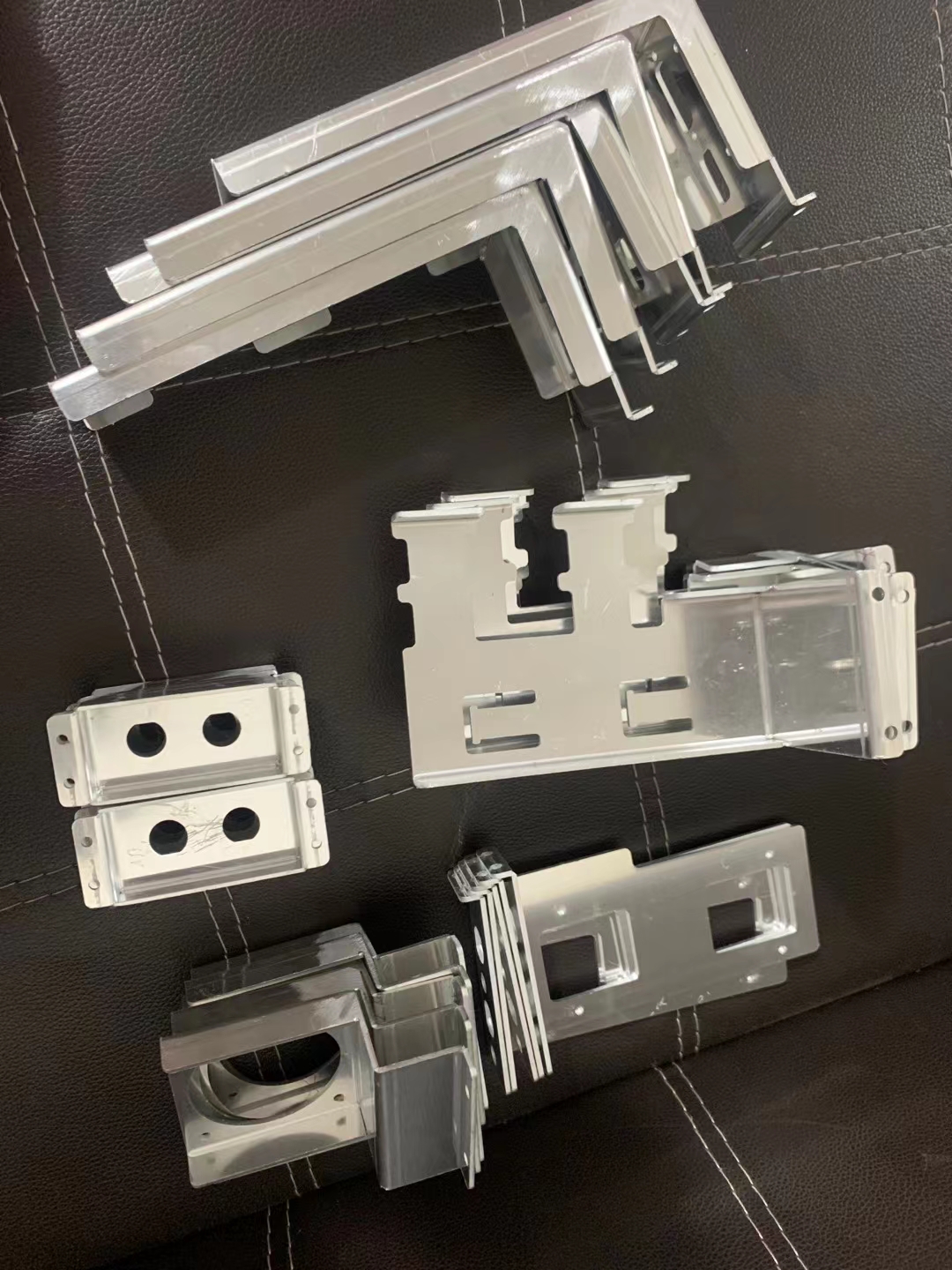
Precision Metal Stamping Solutions for Demanding Industries (Approx. 800 Words)
Introduction: Elevating Custom Manufacturing with Advanced Stamping
In the competitive landscape of industrial fabrication, metal precision stamping stands as a cornerstone for creating durable, high-tolerance components. As a leader in precision metal stamping services, we specialize in transforming raw materials like brass and aluminum into bespoke parts using state-of-the-art techniques, including CNC machining integration. Our approach centers on adaptability: processes are meticulously selected based on part geometry (e.g., complex curves or thin-walled designs) and precision requirements (tolerances as tight as ±0.01mm). This ensures optimal outcomes for applications ranging from automotive modifications to mechanical engineering systems. With capabilities in brass metal stamping services and aluminum metal stamping services, we deliver cost-effective, rapid-turnaround solutions that reduce lead times by up to 40% compared to industry standards. Whether for prototypes or high-volume production, our services prioritize material efficiency, with AI-driven nesting software minimizing waste by 25%.
Automotive Aftermarket Applications: High-Performance Stamped Components
The automotive sector relies on metal precision stamping for lightweight, corrosion-resistant parts that enhance vehicle performance and aesthetics. Custom CNC-machined elements, such as brackets, housings, and exhaust components, are common in aftermarket modifications. For instance, aluminum metal stamping services produce intake manifolds and turbocharger mounts, where geometry dictates the process:
- Complex shapes (e.g., multi-angle bends) use progressive die stamping combined with 5-axis CNC machining to maintain aerodynamic efficiency and structural integrity.
- Thin-wall sections (as low as 0.5mm) require adaptive toolpaths to prevent deformation, crucial for fuel system components exposed to high temperatures.
- Precision needs drive secondary operations like CNC milling for features like threaded holes, ensuring compatibility with OEM standards.
A key example is custom automotive stamped brackets CNC machining, which targets low-competition niches with high search volume. Here, brass or aluminum parts undergo stamping for base forms, followed by CNC finishing for ±0.02mm tolerances. This hybrid approach supports rapid prototyping for mods like suspension upgrades, reducing development cycles from weeks to days. Material selection—such as 6061-T6 aluminum for weight savings or C360 brass for conductivity—directly influences corrosion resistance and longevity in harsh environments like off-road or racing applications.
Mechanical Engineering Applications: Precision Parts for Industrial Reliability
In mechanical systems, precision metal stamping services ensure components withstand repetitive stress and extreme conditions. Applications include robotic arms, conveyor systems, and hydraulic assemblies, where brass metal stamping services excel in creating conductive or low-friction elements like gears and connectors. Process decisions hinge on geometric and accuracy factors: - High-load bearings employ stamping with CNC turning for cylindrical accuracy (±0.005mm), ideal for machinery frames subject to vibration.
- Intricate geometries (e.g., heat sinks or enclosures) leverage photochemical etching or fine-blanking, paired with EDM (Electrical Discharge Machining) for micro-details.
- Surface finish requirements dictate post-stamping treatments, such as anodizing for aluminum parts or plating for brass, to achieve Ra 0.4µm smoothness.
For aluminum stamping services for robotics enclosures, a low-competition high-search keyword, we start with 3D scanning to capture design intent. Stamping handles bulk shaping, while CNC machining adds precision features like mounting holes. This reduces costs by 20% versus traditional methods and ensures compliance with ISO 9001 standards. In electronics, high-precision brass connectors for electronics demonstrate how material properties (e.g., brass's EMI shielding) guide process selection—stamping for high-volume production and CNC for prototype validation.
Process Selection: Tailoring Techniques to Geometry and Tolerance
Every project begins with an engineering review to match fabrication methods to part specifications. Our precision metal stamping services use a decision matrix based on key variables: - Geometry-driven choices: Simple, flat parts (e.g., panels) utilize high-speed stamping presses, while complex 3D forms integrate multi-axis CNC machining for features like undercuts or threads.
- Precision-based adaptations: Tight tolerances (±0.01mm) require CMM (Coordinate Measuring Machine) verification and in-process monitoring to avoid defects like burrs or warping.
- Efficiency optimizations: For low-volume runs, low-volume precision metal stamping for prototypes employs modular tooling to slash setup costs by 50%, with rapid turnaround in 48 hours.
A case study highlights CNC-integrated stamping for complex automotive parts: A client needed aluminum battery trays with integrated cooling channels. Stamping formed the base, while CNC machining added precision fluid paths, achieving 15% weight reduction and thermal management for electric vehicles. Sustainability is embedded in our approach—recycled metals and closed-loop systems minimize environmental impact, supporting circular economy goals.