
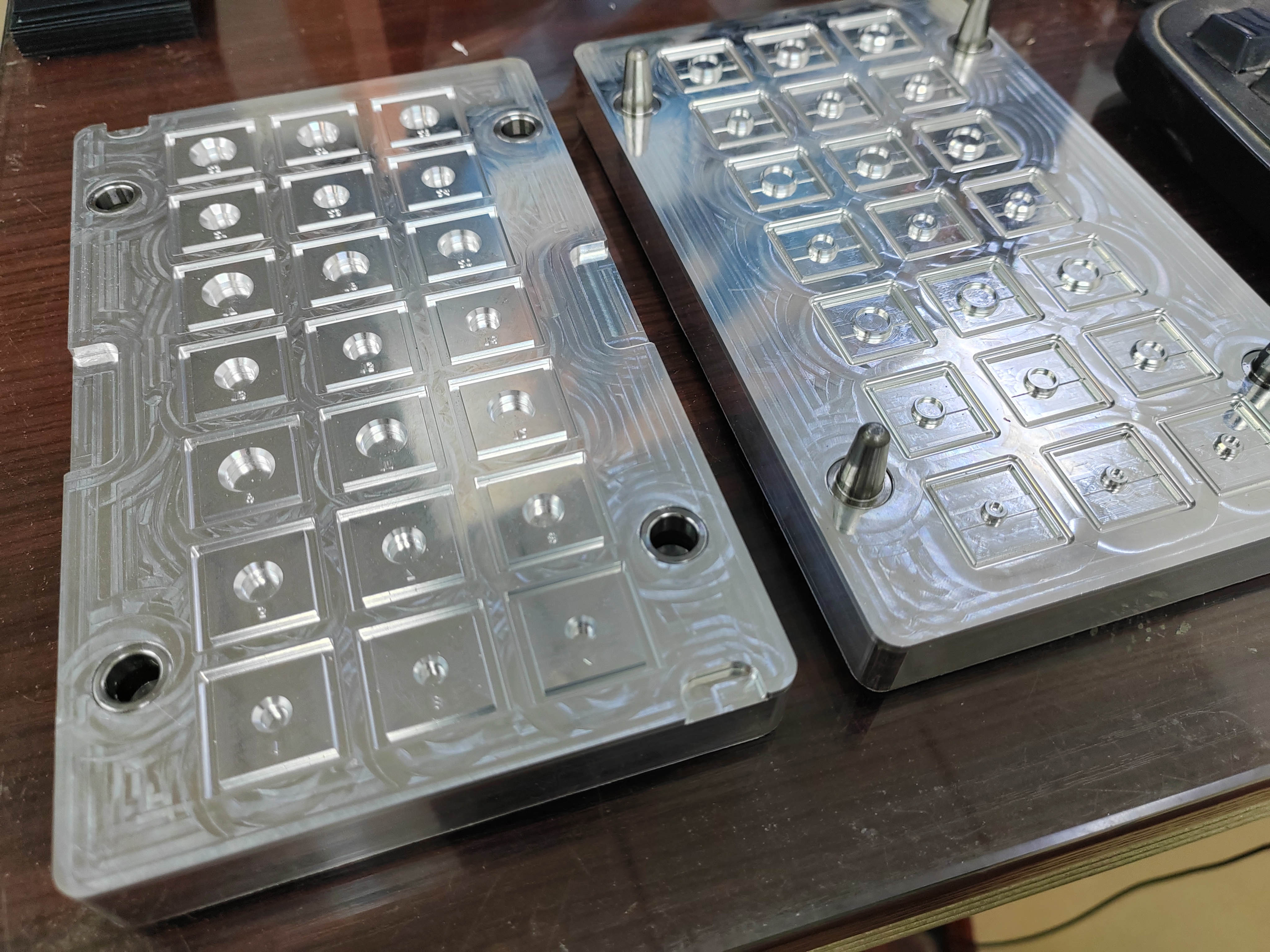
When design geometry and flexibility requirements exceed conventional plastic manufacturing
Many engineering and product development projects require components that must remain flexible, compressible, or resilient under repeated use. Standard rigid plastics cannot always provide the right balance between elasticity, sealing capability, and dimensional stability. This is where working with a custom silicone parts manufacturer becomes a practical solution.
Projects that involve sealing edges, vibration isolation, soft interface components, or flexible housings usually face challenges such as:
-
complex edge profiles or soft-touch features
-
tolerance control in compressible areas
-
small-batch development before mass production
-
material selection based on application behavior
Instead of forcing a design to fit traditional rigid molding processes, silicone manufacturing allows the part to follow its functional purpose — whether the goal is cushioning, sealing, or compliant motion.
Why the part shape and precision requirements determine the manufacturing process
Not all silicone components are produced using the same method. The choice of process depends on:
-
wall thickness and compression zones
-
undercuts and internal details
-
expected production quantity
-
assembly interface tolerances
For simple profiles and higher volumes, compression molding or transfer molding may be suitable. For small-batch builds or complex geometries, liquid silicone rubber prototyping or soft tooling approaches may be considered.
Functional areas that mate with rigid parts may require tighter tolerance control, while non-critical surfaces allow more flexibility. The objective is not to promise absolute uniformity, but to align the manufacturing method with how the part will actually perform in use.
Application scenarios where custom silicone parts are commonly used
Custom silicone components are often selected for projects where flexibility, sealing capability, or soft-touch performance is essential. Typical application areas include:
-
soft covers and protective housings
-
cushioning and impact-absorption interfaces
-
vibration isolation pads and spacers
-
flexible buttons and control components
-
sealing rings, gaskets, and edge barriers
-
small-batch pilot production parts
Across industries, silicone parts are frequently applied in:
-
consumer electronics enclosures and accessories
-
robotics and light-duty mechanisms
-
industrial equipment prototypes
-
engineering verification builds
-
pilot production and short-run assemblies
In these environments, the ability to produce custom silicone parts in small quantities allows design teams to validate geometry and material feel before long-term tooling commitments.
Material behavior and tolerance planning for silicone components
Unlike rigid plastics or metals, silicone materials compress and deform during use. Because of this, dimensional accuracy is often planned around:
-
mating features and sealing interfaces
-
screw boss contact areas
-
controlled compression regions
Surfaces that require repeatable fit may receive:
-
secondary trimming
-
edge finishing
-
tolerance review during sampling
Meanwhile, flexible areas retain their natural deformation characteristics.
This approach supports:
-
realistic functional testing
-
consistent assembly fit
-
practical production expectations
Rather than applying uniform tolerances across the entire part, precision is concentrated where mechanical interaction matters most.
Choosing the right silicone manufacturing route based on geometry
Different geometries support different processing approaches:
Thin-wall flexible features
May suit liquid silicone rubber or soft tooling
Solid cushioning blocks
May be produced via compression molding
Parts with embedded details or inserts
May require overmolding or staged forming
Small-volume engineering builds
Often benefit from rapid silicone prototyping paths
The manufacturing decision is evaluated case-by-case, based on design priorities rather than a single fixed process.
Supporting low-volume development and iterative engineering cycles
Many projects involving custom silicone parts begin with short production runs. These early stages focus on:
-
ergonomic testing and surface feel
-
compression behavior under load
-
interface fit with surrounding assemblies
-
real-world environmental exposure
Low-volume production enables development teams to refine:
-
edge geometry
-
thickness balance
-
material hardness selections
before transitioning toward larger-scale tooling — if required.
Practical positioning — performance guided by application needs
The purpose of working with a custom silicone parts manufacturer is to provide a manufacturing route aligned with the part’s functional role. This includes:
-
flexibility where motion or sealing is required
-
tolerance control in mating areas
-
appropriate selection of processing methods
Rather than overstating capability, the focus remains on matching material behavior, geometry, and production intent.