
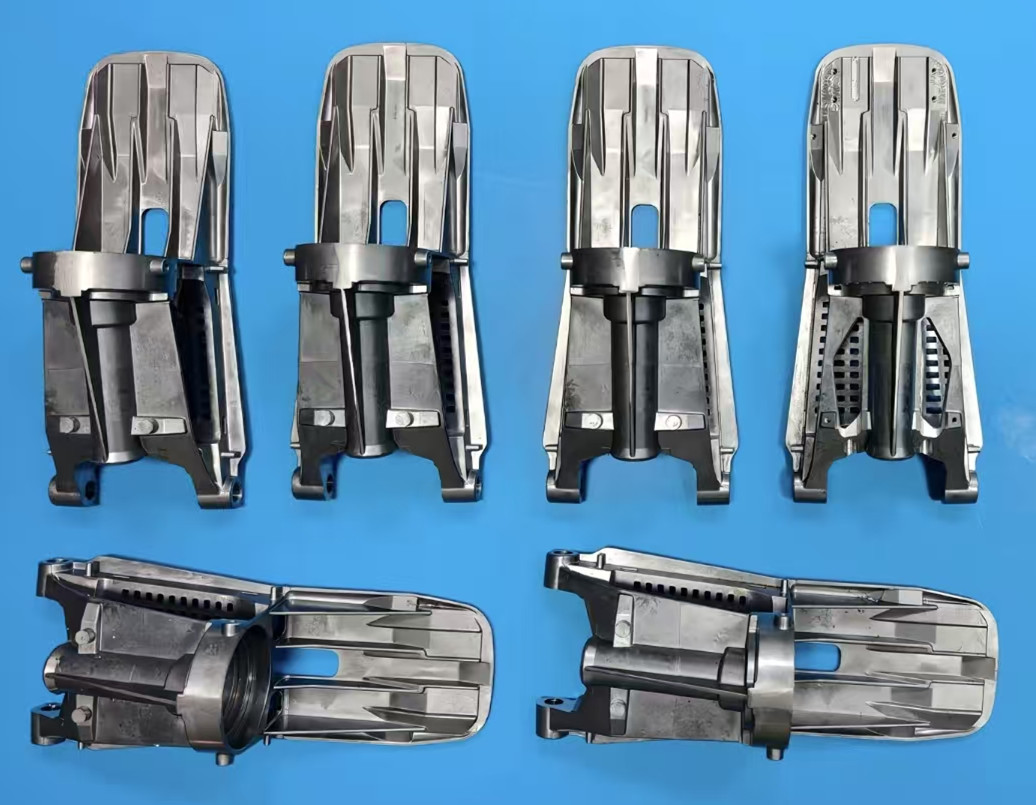
How to Achieve Stable Geometry and Assembly Accuracy in Advanced Robotics Parts?
In many robotics projects, challenges arise during early design validation: thin-wall components may deform, hole alignment can shift during processing, or structural edges may not match assembly expectations. These issues are especially visible in advanced robotics parts, where multiple mounting points, bearing seats, and bracket interfaces must remain consistent across mating components.
For this reason, precision metal fabrication for robot assemblies focuses on selecting machining processes according to the shape, material condition, and tolerance requirement of each feature — instead of applying a single default method.
Q1: What type of components are typically included in advanced robotics parts?
Advanced robotics parts often include structural and functional elements such as:
-
robot chassis frames and support brackets
-
joint housings and connection interfaces
-
sensor and controller mounting plates
-
structural ribs and reinforcement areas
-
lightweight functional panels and covers
These parts are designed to balance structural rigidity, weight control, and assembly accessibility. The fabrication approach is defined by:
-
wall thickness distribution
-
area stiffness
-
tolerance sensitivity
-
required surface finish in functional zones
The objective is to maintain stable geometry while supporting downstream assembly and testing.
Q2: How does precision metal fabrication for robot assemblies select the right machining process?
In precision metal fabrication for robot components, the process route is determined by part geometry and functional expectations rather than production volume alone.
Typical process choices include:
-
CNC milling for flat surfaces and structural planes
-
multi-axis machining for angled faces and intersecting contours
-
turning for circular housings and shaft interfaces
-
coordinated drilling for positioning and alignment features
For areas requiring tighter fit:
-
reference datums are established early
-
finishing passes are reserved for functional surfaces
-
thermal influence is minimized during final machining
This helps maintain consistent positional accuracy without overstating achievable tolerances.
Q3: Where are advanced robotics parts commonly applied?
These components are widely used in:
-
mobile robotics platforms
-
collaborative robot base structures
-
inspection and monitoring robots
-
research and educational robotics
-
robotic arm support frames
-
service and logistics robots
In these applications, advanced robotics parts support functions such as load distribution, equipment mounting, cable routing, and modular expansion for future upgrades.
During prototyping and validation, functional integrity and repeatable assembly fit are typically prioritized over cosmetic finishing.
Q4: How does process selection depend on the shape and structural layout of each part?
The machining strategy is adapted based on structural behavior:
-
Thin-wall panels → staged roughing to reduce deformation
-
Deep cavities → gradual pocket milling with controlled tool engagement
-
Reinforced corners → localized finishing near interface points
-
Curved outer housings → multi-axis machining to maintain contour continuity
For precision-critical regions such as:
-
bearing seats
-
alignment bosses
-
joint connection faces
finishing operations are coordinated to a single reference plane to support assembly consistency.
Q5: How are materials and surface finishes considered in precision metal fabrication for robots?
Material selection depends on loading conditions and interface requirements. Common options include:
-
aluminum alloys for lightweight structural frames
-
stainless steel for wear-exposed components
-
titanium or hardened steel for localized stress points
Surface finishing is chosen according to the working environment:
-
bead-blasted matte for general handling
-
natural machined surfaces for inspection clarity
-
protective coating or anodizing where practical
Selection is based on functional purpose rather than appearance alone.
Q6: How does prototyping support design iteration and technical evaluation?
During early development, precision metal fabrication for robot parts allows engineers to:
-
verify spatial layout and mounting access
-
confirm wiring paths and component clearance
-
evaluate structural response during operation
Instead of replacing other manufacturing methods, metal fabrication works as an engineering bridge between:
-
conceptual design
-
functional prototype
-
pilot-run assemblies
This enables practical design adjustments while maintaining geometric stability suitable for validation testing.
Conclusion — A Process-Driven Approach for Advanced Robotics Parts
The development of advanced robotics parts relies on matching fabrication processes to part geometry, functional interfaces, and tolerance expectations. By combining structured reference planning, selective finishing, and material-appropriate machining strategies, precision metal fabrication for robot assemblies supports reliable prototype evaluation and controlled transition to further development stages.